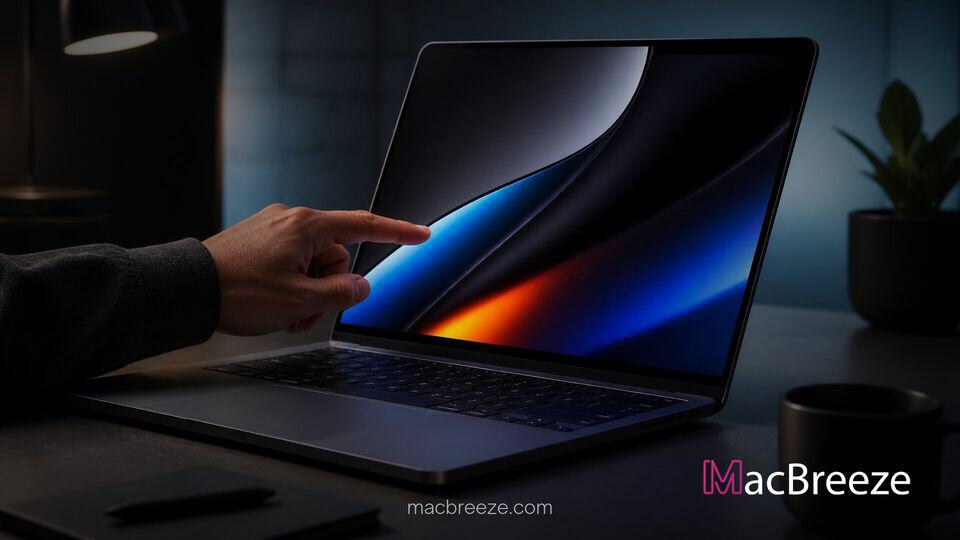
Industry reports and supply chain leaks indicate that Apple is developing an ultra-premium laptop tier tentatively named the MacBook Ultra. The upcoming device is expected to debut as Apple's first laptop with a multi-touch OLED display, creating a distinct product segment positioned directly above current flagship portable workstations.
By introducing a touch-enabled panel alongside next-generation silicon choices, the Cupertino tech giant aims to expand its professional hardware lineup. Early details suggest this new tier will introduce significant structural changes, including a thinner chassis and structural screen enhancements designed specifically to support direct finger input.
MacBook Ultra Touchscreen Display Leaks and Features Overview
Recent macbook ultra touchscreen display leaks reveal that Apple is re-engineering its display hardware to bring touch support to macOS without compromising viewing angles or panel structural rigidity. Reports from display industry analysts indicate that Samsung Display is supplying tandem OLED panels engineered with integrated touch sensors. This shift from traditional mini-LED backlighting promises deeper contrast ratios, true black levels, and enhanced power efficiency for intensive creative workflows.
To support touch interaction on a traditional laptop screen, supply chain sources note that Apple has designed a reinforced hinge assembly. This mechanism minimizes screen wobble when users tap or swipe across the display. Additionally, software findings in internal test builds point toward dedicated touch gestures within macOS, such as pull-to-refresh actions and contextual touch menus tailored for video editors and digital artists.
Reports Point to New Top-Tier 'MacBook Ultra' Laptop
Touchscreen Integration and Display Upgrades
The integration of touch technology represents a major strategic shift for Apple's Mac line. For over a decade, company executives emphasized that touch input was better suited for iPad hardware while laptops were optimized for trackpad and keyboard interaction. However, the growing demand for high-end creative tools has pushed Apple to bridge the gap between laptop performance and direct display manipulation.
Beyond touch capabilities, the display is slated to feature a Dynamic Island cut-out rather than the traditional camera notch. This interactive system element expands dynamically to show background processing tasks, media playback controls, and system notifications. The adoption of OLED panel technology also allows for thinner display bezels and a lighter overall top-case construction. While some rumors questioned whether Apple might phase out existing panel options, analysts indicate Apple plans to retain mini-LED MacBook Pro models alongside OLED configurations to offer diverse price points.
Positioning Above Current MacBook Pro Lineup
Rather than acting as a direct replacement for existing professional laptops, the MacBook Ultra is structured as a higher tier. Industry estimates suggest that the inclusion of tandem OLED displays and on-cell touch panels could increase manufacturing costs, driving the retail price roughly 20 percent higher than current top-end machines.
This tiered hardware strategy reflects Apple's broader product segmentation across device categories. Following the introduction of entry-level portables, the Ultra moniker establishes a high-end luxury category targeting power users, enterprise executives, and specialized creative studios willing to pay a premium for cutting-edge screen hardware.
Expected Hardware Specifications and M5 Chip Options
Performance Expectations and Thermal Design
Inside the chassis, test units have been tied to high-performance M-series processors paired with advanced thermal management solutions. Reports indicate that early production configurations utilize M5 Pro and M5 Max processor architectures, leveraging optimized efficiency cores to deliver sustained performance under heavy multi-threaded workloads. Users seeking to verify system health on existing machines can review how to run Apple Diagnostics to test your MacBook for hardware issues to evaluate current thermal performance.
The updated industrial design relies on an ultra-thin aluminum chassis influenced by recent iPad Pro engineering, maintaining essential ports such as Thunderbolt connections, HDMI, and an SD card reader. The redesigned internal layout improves heat dissipation while accommodating the slightly thicker battery cell assemblies needed to support high-brightness OLED operation.
Planned Release Timeline and Market Impact
Supply chain timelines suggest that component mass production is ramping up, with preliminary assembly schedules pointing toward a launch window in late 2026 or early 2027. Software references inside beta releases suggest Apple is internally testing the touchscreen hardware alongside preliminary macOS software builds. Meanwhile, rumor channels note that standard entry-level updates like the M6 14-inch MacBook Pro will target earlier release windows to maintain standard annual refresh cycles.
Industry analysts expect the MacBook Ultra to set a new technical benchmark for high-end laptops. By combining workstation-class processing power with multi-touch OLED technology, Apple aims to offer a unified computing experience that directly challenges competing Windows flagship convertibles and creative laptops.
In conclusion, the leaked reports regarding the MacBook Ultra signal a major evolution in Apple's Mac strategy. By merging touch interaction, OLED display technology, and top-tier M-series silicon into a distinct product tier, Apple is preparing to deliver its most feature-packed portable computer to date.