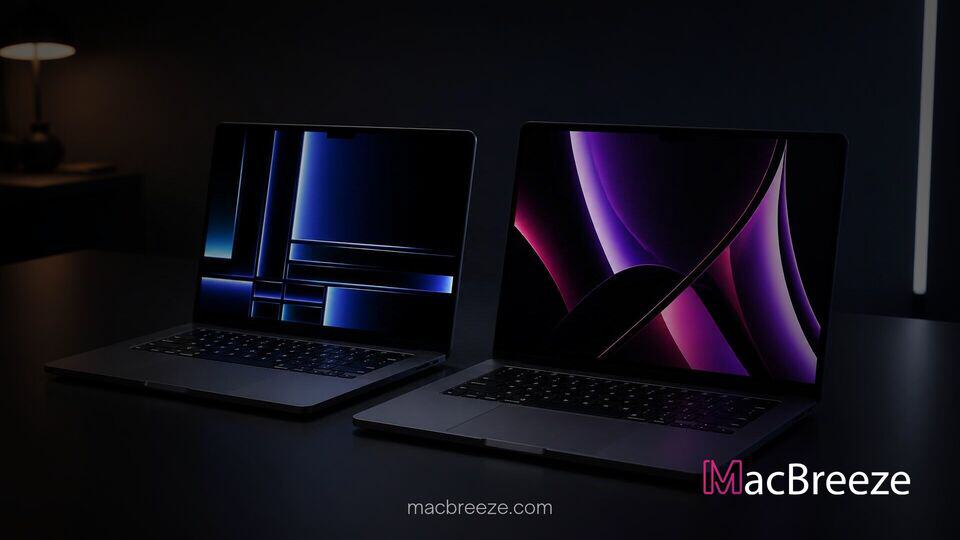
Apple plans to maintain its current mini-LED display technology in the MacBook Pro lineup alongside next-generation OLED models until at least 2028. According to updated market intelligence, rising component costs and high panel prices have led the tech giant to adopt a multi-tier display strategy for its premium laptops.
Rather than executing a complete transition across the high-end portable Mac family, Apple intends to introduce OLED displays at the top end of the lineup while preserving mini-LED options for standard Pro tiers. The move ensures the company can deliver ultra-premium display upgrades without pricing mid-range professional buyers out of the market.
Apple Extends Mini-LED MacBook Pro Availability
Research firm Omdia published an updated display roadmap indicating that Apple will keep 14-inch and 16-inch mini-LED MacBook Pro configurations on store shelves well into 2028. Previous projections assumed Apple would rapidly phase out LCD-based mini-LED panels once tandem OLED technology debuted on its laptop line. Instead, the revised data suggests both display technologies will coexist across multiple product generations.
Industry analysts point out that Apple faced a similar hurdle when transitioning its iPad lineup. While the M4 iPad Pro successfully moved to dual-stack tandem OLED, hardware costs remain significantly higher for larger laptop-sized panels. By maintaining mini-LED manufacturing lines that have already achieved operational efficiency, Apple can stabilize retail prices across its core professional laptop portfolio.
Component Costs Drive Extended Dual-Tier Strategy
The decision to prolong mini-LED availability stems largely from broader macroeconomic pressures across the electronics supply chain. Global memory price inflation and complex manufacturing processes for laptop-scale OLED panels have raised production costs for hardware makers. Suppliers like Samsung Display and LG Display have invested heavily in 8th-generation OLED production lines, but yield rates for large-format tandem panels remain tightly constrained.
By retaining mini-LED models as an entry point into the MacBook Pro family, Apple avoids passing steep panel costs directly onto consumer baseline prices. Customers who require color accuracy, high brightness, and ProMotion refresh rates can continue choosing mini-LED models without paying a steep price premium for OLED.
How LCD and OLED Models Will Coexist
Under the revised roadmap, Apple is expected to launch its first OLED MacBook Pro models in late 2026 or early 2027. These cutting-edge systems are rumored to feature redesigned chassis, thinner profiles, integrated touch capabilities, and significantly deeper contrast ratios. Some supply chain reports hint that Apple may position these top-tier machines under a distinct nameplate, such as the OLED MacBook Pro tier or even a rumored "MacBook Ultra" branding.
Meanwhile, standard 14-inch and 16-inch MacBook Pro configurations equipped with M-series chips will retain Liquid Retina XDR mini-LED screens. This tiered system mirrors Apple's approach with its desktop and mobile ranges, where baseline hardware continues utilizing mature display technologies while experimental or extreme-performance tiers pioneer newer panel innovations.
What This Means for Upcoming MacBook Pro Buyers
For consumers and enterprise buyers, Apple's prolonged support for mini-LED ensures a predictable purchasing environment over the next several years. Buyers who do not require absolute pixel-level black levels or touchscreen functionality will not be forced into higher price tiers just to acquire a high-performance Mac.
Furthermore, current Liquid Retina XDR panels already offer peak HDR brightness levels reaching 1,600 nits alongside variable 120Hz ProMotion refresh rates. For most professional workflows including video editing, software engineering, and graphic design, mini-LED remains an exceptionally capable display solution that easily rivals mainstream competition.
This strategy also prevents inventory disruption while Apple engineering leadership shifts focus toward future architectural leaps. Customers planning routine fleet refreshes can upgrade with confidence, knowing their mini-LED hardware will not be rendered immediately obsolete by a sudden, complete sunset of the display format.
Long-Term Outlook for Apple Laptop Displays
Apple's long-term goal remains a complete transition toward self-emissive display technology across all consumer and professional hardware. However, the timeline for complete adoption across the Mac family is taking longer than initially anticipated. While the iPad Pro made the leap early and smaller devices like an OLED iPad mini prototype continue moving through development, larger displays require substantial supply chain maturity.
Reports indicate that the mainstream MacBook Air lineup may not adopt OLED technology until 2028 or 2029 at the earliest due to similar cost sensitivity. By keeping mini-LED active on the MacBook Pro through 2028, Apple establishes a balanced, multi-year runway that gives panel manufacturers ample time to scale production, improve yields, and ultimately drive down retail prices.
In summary, Apple's decision to maintain mini-LED MacBook Pro configurations alongside incoming OLED flagships highlights a pragmatic approach to supply chain realities. Users seeking bleeding-edge display tech can look forward to OLED options in late 2026 or 2027, while those prioritizing value and proven performance will continue enjoying mini-LED options for years to come.