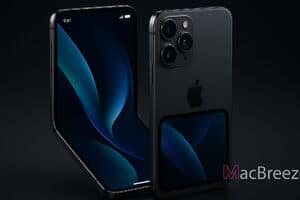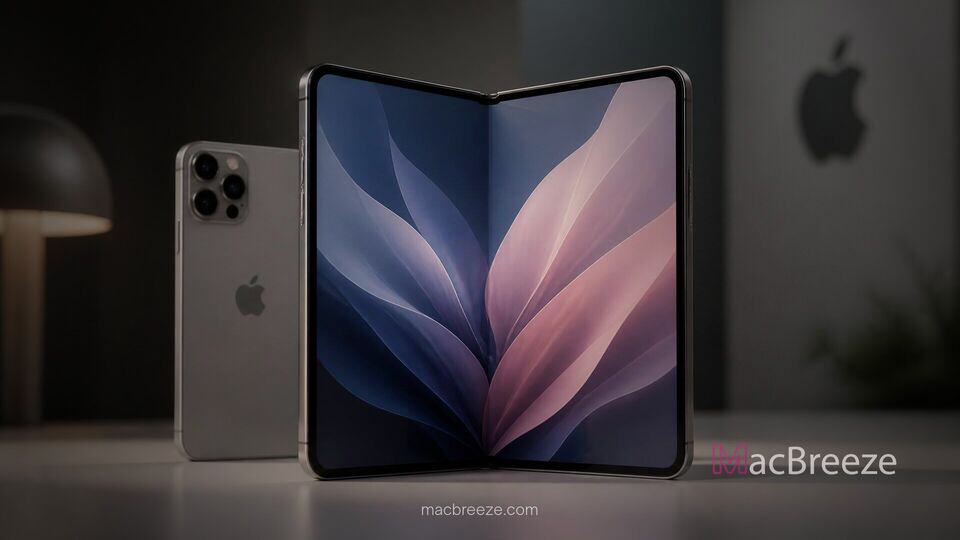
Apple has unveiled its long-anticipated entry into the foldable smartphone market, introducing the iPhone Duo during its keynote event in Cupertino. The flagship device features a 7.6-inch foldable inner screen, a 5.4-inch outer cover screen, and a grade 5 titanium enclosure engineered to redefine premium mobile hardware.
Powered by the next-generation A20 Pro silicon, the dual-display device introduces custom multitasking capabilities within iOS 27 alongside an advanced hinge design built for long-term structural durability. The announcement marks a significant expansion of Apple's flagship product portfolio alongside the newly announced iPhone 18 Pro lineup.
Apple Unveils Foldable iPhone Duo With 7.6-Inch Inner Display
The newly launched device showcases a passport-style folding form factor that opens into a expansive 7.6-inch main workspace. When closed, users interact with a 5.4-inch cover screen designed for easy one-handed operation while retaining 90 percent of the standard screen area offered on pro-tier smartphones. Both displays share a matching aspect ratio to ensure uninterrupted visual continuity when moving applications between folded and unfolded states.
Apple has incorporated a custom nano-texture display finish alongside a micro-lens array engineered using laser lithography to minimize reflection and obscure the visible center fold line. Underneath the flexible OLED panel, a multi-layer lamination system featuring viscoelastic adhesives allows internal layers to glide smoothly during repeated folding movements without causing material fatigue.
Dual Displays and Titanium Design
The exterior chassis of the device is constructed from mirror-polished grade 5 titanium, flanked by Ceramic Shield on the outer rear cover and Ceramic Shield 2 on the front panel. Unfolded, the device measures just 5.2 millimeters in thickness, making it the thinnest iPhone chassis produced to date. When folded, the profile sits at 11.3 millimeters, maintaining a compact footprint that fits into standard pockets.
To support the complex folding mechanism, Apple designed a proprietary hinge comprising over 100 precision micro-components. Supported by carbon fiber plates and a titanium structural foundation, the assembly achieves an IP68 rating for splash, water, and dust resistance, matching the environmental protection standards of traditional solid-slate iPhones. Biometric authentication is handled via a Touch ID sensor integrated directly into the side power button.
A20 Pro Performance and Vapor Chamber Thermal Architecture
At the center of the internal hardware architecture is the A20 Pro chip. To maintain sustained output across intensive workloads, Apple implemented an advanced thermal management system incorporating a custom-designed vapor chamber. Heat generated by the system-on-chip is dissipated evenly through the dual titanium halves of the enclosure.
Power supply demands are met through a dual-battery arrangement distributed across both sides of the hinge. According to official testing figures, the device provides up to 31 hours of continuous video playback on the internal 7.6-inch panel and up to 44 hours when using the exterior cover display. Mixed utilization yields an estimated 24 hours of standard active usage before requiring charging.
Key Features and iOS 27 Multitasking Capabilities
Operating system integration plays a major role in the functionality of the new foldable form factor. Apple has modified iOS 27 to include native side-by-side multitasking through Split View on an iPhone for the first time. Users can run two separate applications concurrently, open multiple windows of a single app, or save app pairs to instantly launch side-by-side setups.
Software features adapted for the expanded screen estate include:
- Split View and App Pairing: Enables two full-featured apps to operate side by side with customizable window sizing and instant drag-and-drop file transfers.
- Dual-Capture Camera Modes: Integrates the 48-megapixel main sensor and 48-megapixel ultrawide camera with internal sensors to record simultaneously during video calls or content creation.
- Apple Pencil Support: Broadens input versatility by bringing digital stylus compatibility to both the inner and outer display surfaces.
- Continuity Integration: Complements features such as iPhone Handoff, allowing seamless communication routing across linked hardware.
The camera array incorporates dual 48-megapixel sensors housed within a rear camera module. The folding geometry allows the device to act as its own tripod when partially folded, unlocking new hands-free recording modes, 4K video capture at 120 frames per second, and dual-view video streams during FaceTime calls.
Pricing and Official Release Schedule
Apple CEO John Ternus highlighted the broader significance of the release during the event presentation, noting that hardware and software engineering were developed in tandem to reframe expectations for flexible mobile devices. The introduction comes amid ongoing shifts in Apple's broader release cadence, following reports that the base iPhone 18 launch timeline has been adjusted toward early 2027.
The iPhone Duo will be offered in two color finishes: Star White and Night Sky. Storage configurations span 256GB, 512GB, 1TB, and 2TB options. In the United States, pricing for the base 256GB model starts at $1,999. Pre-orders officially open on Friday, October 16, with full commercial availability in stores and global delivery starting Friday, October 23.
With the release of the iPhone Duo, Apple establishes a new premium tier within its device lineup, combining laptop-grade processing power, a large tablet-style canvas, and pocketable phone hardware into a single flagship package.