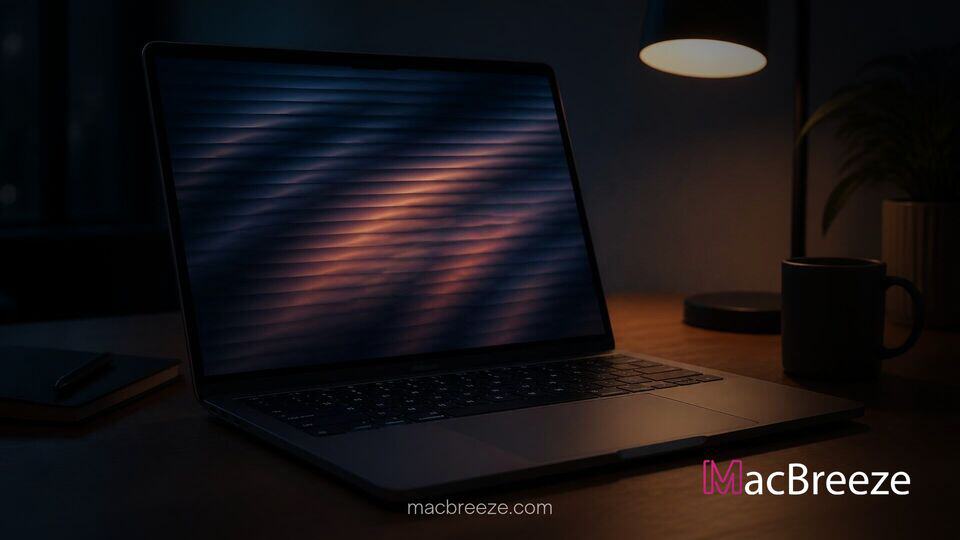
Early buyers of Apple's newly released MacBook Pro featuring the PROLED XDR display are reporting noticeable eye strain, headaches, and visual fatigue during prolonged use. Independent technical measurements reveal that the new tandem OLED panel relies on a significantly lower pulse-width modulation (PWM) dimming frequency compared to previous Liquid Retina XDR displays.
While the overall response to the flagship laptop's brightness, color accuracy, and performance has been overwhelmingly positive, photosensitive users and software developers who spend extended hours reading text on dark backgrounds are raising concerns online. The shift in backlight technology has sparked widespread community discussion, leading a portion of early adopters to initiate returns.
Low-Frequency PWM Dimming Triggers Display Complaints
Following the debut of the flagship laptops, tech enthusiasts and display testing laboratories began examining the behavior of the PROLED XDR screen. Initial display analysis from outlet Notebookcheck revealed that at any brightness setting below 100%, the display exhibits PWM flickering at a frequency of 240Hz with a modulation amplitude of roughly 56%.
By comparison, previous-generation Mini-LED MacBook Pro models utilized high-frequency dimming measured at roughly 14,880Hz. Because the previous Mini-LED screen cycling occurred tens of thousands of times per second, the human eye was virtually incapable of detecting the rapid backlight pulses. On the new tandem OLED display, however, the lower 240Hz cycling creates a strobing effect that can provoke subconscious ocular fatigue, dry eyes, and dizziness in susceptible individuals.
Reports began circulating on community platforms such as Reddit and the MacRumors forums shortly after customer deliveries began. Affected users noted that symptoms often surfaced within 30 to 60 minutes of continuous focus work, particularly when reading bright text on dark background backgrounds or working in low-light environments.
Understanding PWM Dimming on Tandem OLED Panels
Pulse-width modulation is a standard technique used in display engineering to regulate perceived screen brightness. Rather than lowering the continuous electrical voltage delivered to individual pixels, PWM rapidly toggles the light source between fully active and inactive states. By adjusting the ratio of active time versus inactive time within each cycle, the screen appears dimmer or brighter to the human eye.
Tandem OLED architecture stacks two organic light-emitting layers to achieve extreme peak brightness, enhanced energy efficiency, and deep contrast. However, managing power consumption and heat dissipation across stacked layers often necessitates tighter control over pixel switching. This trade-off results in lower PWM frequencies when operating at reduced brightness levels.
For a vast majority of users, 240Hz cycling remains completely imperceptible. The brain seamlessly integrates the high-speed flashes into a steady, uniform picture. However, for users sensitive to flicker vertigo or ocular micro-spasms, the repetitive expansion and contraction of pupils attempting to compensate for the light pulse can cause physical discomfort. The launch comes during a busy period for Apple hardware, which recently saw strong momentum in Mac revenue surges driven by silicon updates.
Impact on Sensitive Users and Return Requests
Complaints about display flicker are not entirely unique to the Mac lineup. Apple has utilized OLED screens across its iPhone product lines for several generations, and similar discussions regarding PWM sensitivity occasionally emerge with mobile devices. However, the key difference highlighted by users is spatial exposure. Laptops feature larger display surfaces that occupy a far greater portion of a user's primary field of view for continuous work sessions.
Several early buyers stated on community forums that while they experienced no issues with OLED smartphones, using a 14-inch or 16-inch PROLED screen for coding, creative editing, or document management brought on distinct symptoms. Some users noted that dark mode environments aggravated the issue due to high contrast shifts between illuminated text and off pixels.
As a result, a growing number of sensitive customers have reported returning their PROLED MacBook Pro units during the standard 14-day return window. In many instances, buyers are opting to keep or purchase prior-generation Mini-LED laptops or shift toward external desktop displays. Despite these specific display complaints, Apple's broader portable lineup remains widely recognized, as seen when TechRadar named MacBook Neo as laptop of the year for general consumers.
Apple's Current Position and Potential Display Adjustments
As of publication, Apple has not issued an official public statement regarding the PWM dimming reports on the PROLED MacBook Pro. Retail staff and technical support channels continue to handle customer feedback on a case-by-case basis through standard return and replacement guidelines.
Industry experts suggest Apple could potentially address screen comfort through future macOS software updates. On recent mobile software builds, Apple introduced accessibility toggles designed to smooth brightness pulses. A similar feature added to macOS could adjust pixel modulation behavior or introduce optional software-based DC dimming modes, although such modifications might slightly affect panel power efficiency or low-light color uniformity.
Apple continues to refine its visual hardware technologies across multiple product lines, with recent industry reports indicating that Apple is planning OLED iPad Air launches in the future. Furthermore, persistent rumors suggest long-term development on upcoming laptops, such as reports that Apple is developing M7 touchscreen MacBook Pro models for subsequent hardware cycles.
For now, users experiencing discomfort are advised to test the laptop at higher brightness levels, maintain adequate ambient lighting, or take frequent visual breaks. Customers who remain highly sensitive to screen flicker may want to audition the display in store prior to making a purchase.