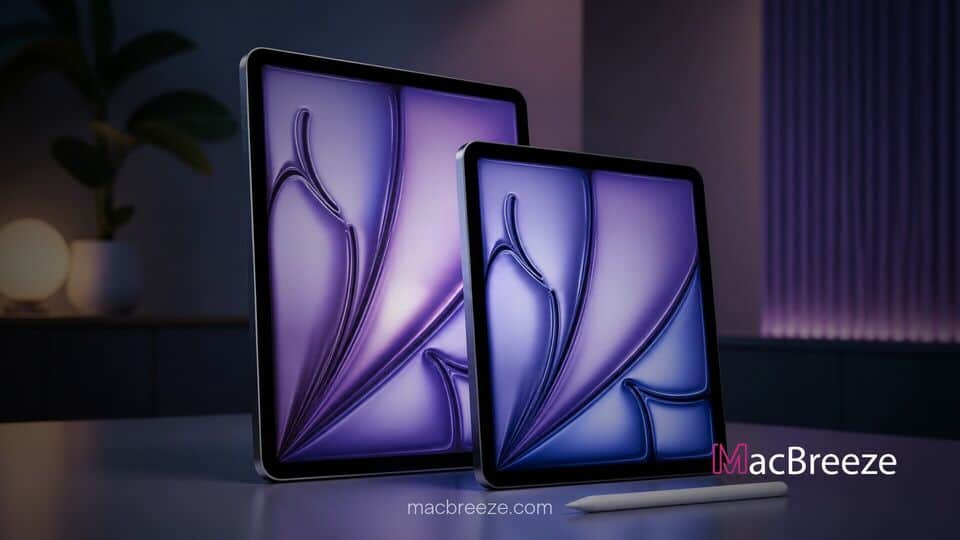
Apple is actively working on expanding its display upgrade roadmap, with plans to introduce organic light-emitting diode technology to both sizes of the iPad Air in the first half of 2027. Fresh supply chain reports indicate that the upcoming 11-inch and 13-inch iPad Air models will replace legacy liquid crystal displays with vibrant OLED panels, marking a major milestone in Apple's broader screen transition.
While the hardware revision will deliver deeper black levels and dramatic contrast improvements to Apple's mid-range tablet, distinct engineering differences will maintain clear separation between the iPad Air and the higher-tier iPad Pro. Recent reporting highlights how Apple plans to balance component costs, display efficiency, and product positioning across its tablet catalog.
OLED Technology Expected for 11-Inch and 13-Inch iPad Air
According to research data from industry tracking firms including DigiTimes and ZDNet Korea, Apple's planned update will bring single-stack OLED panels to both the 11-inch and 13-inch iPad Air variants. This dual-size transition ensures parity across the mid-tier hardware family, matching the display form factors Apple introduced when expanding the iPad Air line to two physical screen options.
The move follows previous display modernizations across Apple's mobile hardware ecosystem. Apple initially brought OLED screens to the iPad Pro lineup in 2024 and subsequently introduced the technology to the 8.5-inch iPad mini. Transitioning the iPad Air leaves the entry-level standard iPad as the only remaining tablet family relying primarily on conventional LCD panel architectures.
Single-Stack Display Panels and 60Hz Refresh Rate Limits
Although the inclusion of self-emissive pixels will offer substantial visual enhancements over previous display generations, supply chain sources emphasize that the screen specifications will differ noticeably from Apple's top-tier tablets. The upcoming OLED iPad Air models are expected to utilize a single-stack OLED panel architecture layered over a low-temperature polycrystalline silicon backplane.
This panel setup matches the display structure used in smaller consumer hardware rather than the ultra-bright tandem OLED design found in flagship devices. Consequently, trade reports indicate the OLED iPad Air will retain a standard 60Hz refresh rate, leaving variable high-refresh ProMotion technology up to 120Hz exclusive to the iPad Pro family.
Similar architectural differentiation is already apparent across Apple's computing and mobile lineups. Consumers interested in touch interface innovations have watched Apple iterate high-end hardware, such as when Maxon brought touch controls for Cinema 4D to the touchscreen MacBook Pro. Meanwhile, rumors suggest Apple may phase out non-touch high-end MacBook Pros to solidify premium feature tiers.
Supply Chain Reports Point to H1 2027 Release Timeline
Multiple industry reports converge on the first half of 2027 as the targeted launch window for the refreshed iPad Air lineup. This timeline aligns with earlier expectations voiced by market analysts, indicating that manufacturing pipelines for large-format single-stack OLED panels require extensive qualification phases before commercial mass production can ramp up.
Initial shipment forecasts for the OLED iPad Air range between 4 million and 5 million units during its debut year across both screen sizes. Analysts project similar unit volumes for the iPad mini, while annual shipments for the flagship iPad Pro are projected around 3 million to 4 million units due to higher pricing structures.
Panel Orders Split Between Samsung Display and BOE
Component sourcing strategy reports suggest Samsung Display will secure the largest volume of OLED panel production for the 2027 iPad Air refresh. By supplying screens for both the iPad mini and the upcoming iPad Air, Samsung is expected to become Apple's largest overall supplier of OLED tablet panels by total volume.
Concurrently, Chinese display manufacturer BOE is actively bidding to supply panels for at least one of the two iPad Air screen sizes. However, trade sources note that BOE must still meet Apple's stringent yield and quality qualification benchmarks before securing final orders. Meanwhile, LG Display is expected to maintain its primary role as the main panel vendor for the complex tandem OLED screens used in the iPad Pro.
Hardware Differences Between iPad Air and iPad Pro OLED Screens
The distinction between single-stack LTPS panels and tandem-stack LTPO panels represents the key boundary separating Apple's mid-tier and flagship tablets. Tandem OLED displays utilize two stacked light-emitting layers to achieve dramatically higher peak brightness and extended operational longevity without overwhelming thermal limits.
In contrast, single-stack OLED displays feature a single emissive layer. This approach substantially reduces manufacturing complexity and bill-of-materials costs, enabling Apple to offer OLED technology at a lower retail price point. However, single-stack screens generally achieve lower maximum full-screen brightness compared to tandem configurations.
Additionally, the LTPS backplane technology planned for the iPad Air lacks the ultra-low power consumption characteristics of oxide-based LTPO backplanes. LTPO enables dynamic refresh rate adjustments down to low single-digit frequencies during static content viewing, serving as a fundamental prerequisite for dynamic power saving and ProMotion performance.
Beyond display tech, Apple continues to push platform-wide software and hardware integration. As the company expands software capabilities such as registering Apple Intelligence for Mac and iPad use in China, hardware efficiency across mid-range and pro tiers remains critical to supporting demanding processing tasks.
The upcoming hardware revision reflects Apple's broader philosophy of cascading advanced display capabilities down its product matrix. While power users seeking peak brightness levels and high refresh rates will still look to top-tier hardware, bringing single-stack OLED panels to the iPad Air in early 2027 will deliver notable image quality upgrades to a much wider segment of tablet buyers.