With Apple's major product event approaching, technical details regarding the long-rumored foldable smartphone continue to surface. Recent industry reports and insider interviews have provided a clear look at how the tech giant plans to balance hardware engineering with software capability on its upcoming flagship device.
Confirmation from key supply chain observers indicates that Apple has overcome early design challenges to retain iconic hardware features while adapting its mobile operating system for a dual-screen experience.
iPhone Ultra MagSafe Charging and iOS 27 Multitasking Details Revealed
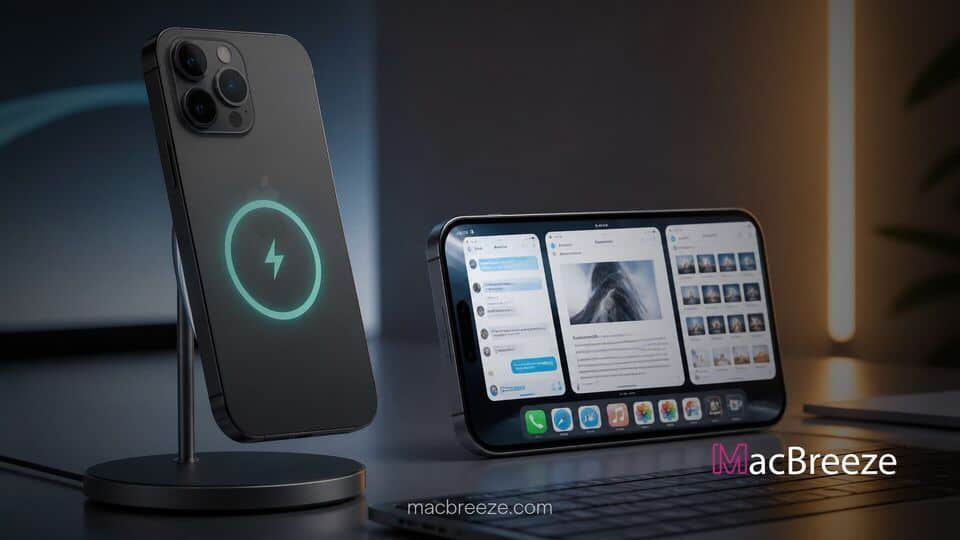
According to reports following an interview with Bloomberg analyst Mark Gurman, the upcoming foldable smartphone, dubbed the iPhone Ultra, will retain full compatibility with magnetic wireless accessories. Despite early dummy models suggesting the magnetic array might be removed to save internal space, latest findings confirm that iPhone Ultra MagSafe charging is fully integrated into the thin chassis. On the software side, iOS 27 will introduce dedicated split-screen multitasking tools and direct drag-and-drop file transfers tailored specifically to take advantage of the internal foldable display.
Fresh iPhone Ultra Display and Charging Specs
Hardware engineering for Apple's first foldable handset has focused heavily on maintaining a slim profile without sacrificing core infrastructure. Industry rumors previously raised questions about whether magnetic coils could fit inside a chassis estimated to be around 4.5 millimeters thick when unfolded. However, Apple reportedly adapted the compact magnetic layouts used in recent ultra-thin devices to ensure full ecosystem compatibility.
MagSafe Compatibility in a 4.5mm Foldable Frame
Integrating a magnetic array into a double-sided folding mechanism presents significant thermal and physical constraints. By refining internal shielding and utilizing high-density magnetic coils, engineers managed to preserve alignment for snap-on chargers, battery packs, and mounting brackets. Users will not have to choose between a flexible form factor and standard ecosystem accessories, addressing a major concern held by long-time device owners.
Display Sizes and Crease Reduction Progress
The device is reported to utilize a book-style folding architecture. The exterior features a 5.5-inch cover screen for quick interactions, while opening the device reveals a expansive 7.8-inch internal display. To tackle the persistent issue of display creasing, Apple has employed a proprietary liquid metal hinge mechanism designed to disperse strain across the flexible panel. While early testers note the center seam remains slightly visible under direct light, the structural crease is significantly reduced compared to previous generations of folding hardware.
iOS 27 Multitasking and Software Integration
Hardware improvements are paired with structural updates inside the operating system. Previous software leaks showed that Apple altered long-standing navigation mechanics, including how users swipe for system controls, to lay the groundwork for expanded side-by-side workflows. As detailed in recent disclosures regarding iOS 27 gesture updates, the operating system is designed to seamlessly adapt between closed single-screen and open dual-screen modes.
Drag and Drop Support Across On-Screen Apps
One of the central productivity additions coming to iOS 27 on the foldable hardware is universal drag-and-drop support. Users will be able to touch and hold images, text blocks, file attachments, or web links in one active window and pull them directly into a secondary adjacent application. This functionality mirrors desktop-class interaction models, reducing the reliance on pop-up context menus and manual copy-paste commands.
Parallel App Layouts for the Foldable Form Factor
The expansive 7.8-inch main panel allows iOS 27 to adopt layout principles derived from iPadOS. Users can run two full-featured applications side by side in fixed or adjustable split ratios. Third-party developers have been provided updated interface frameworks to ensure their apps auto-resize dynamically when transitioning from the cover panel to the main internal screen.
Expected Price and Simultaneous Launch Window
Initial speculation suggested potential manufacturing hurdles might force Apple to push back the retail arrival of its foldable hardware. However, updated supply chain reports indicate the device remains on track for a simultaneous release window alongside traditional flagship models. Apple recently confirmed its official fall press event, where the new lineup will be revealed to the public. Recent schedules outline how Apple manages product release timelines across different global markets.
Given the inclusion of premium materials like the liquid metal hinge, dual high-resolution OLED panels, and advanced processing silicon, market observers expect the starting price to land above $2,000. While positioned at the absolute top tier of the consumer mobile market, the combination of complete accessory compatibility, robust construction, and desktop-inspired multitasking positions the device as Apple's most ambitious hardware undertaking in years.
As the official keynote approaches, final confirmation on battery life, camera configurations, and regional availability will soon be established. For users interested in how Apple plans to bridge the gap between smartphones and tablets, the upcoming unveil marks a pivotal transition in mobile hardware design.