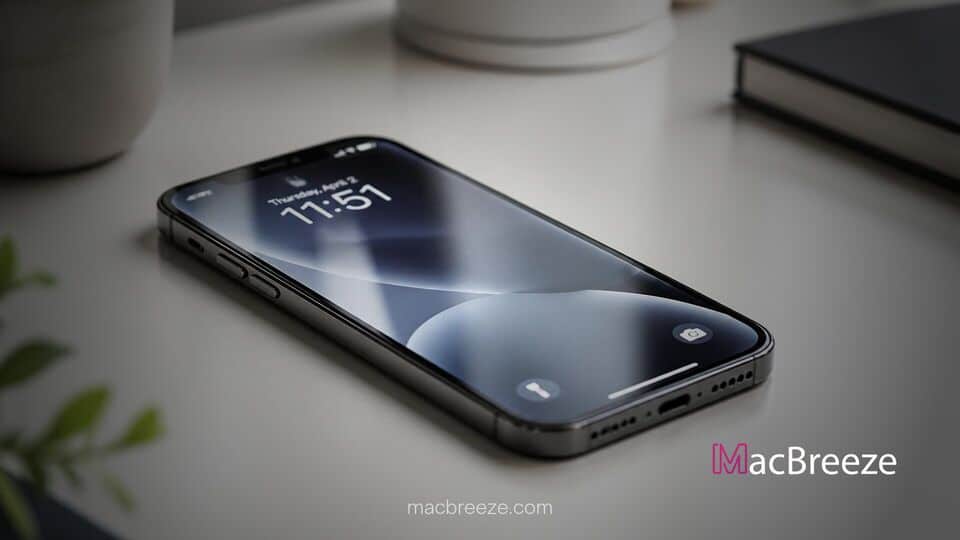
Apple has introduced a noticeable change to the core user interface of its mobile platforms in the latest developer build of iOS 27 and iPadOS 27. The updated software alters the traditional gesture used to invoke Notification Center, reallocating prime screen real estate to accommodate deeper system-wide artificial intelligence tools.
The modification shifts a decade-old touch pattern that millions of iPhone and iPad users rely on daily. Under the new gesture mapping, swiping down from the top-center of the screen no longer brings up missed alerts and incoming messages, prompting an adjustment for early beta testers and developers exploring the preview release.
iOS 27 Notification Center Swipe Gesture Updated in Latest Preview
The primary change in the latest iOS 27 beta shifts the standard iOS 27 Notification Center swipe gesture entirely to the top-left portion of the display screen. While previous iterations allowed users to pull down notifications from both the top-left corner and the top-center region, the system now restricts access exclusively to the top-left edge across supported iPhone and iPad models.
This shift represents a fundamental refinement of how screen boundaries function on modern iOS devices. By narrowing the trigger region for Notification Center, Apple has reclaimed the middle portion of the top status bar for new interface interactions. Control Center remains anchored to the top-right corner, ensuring that system control toggles, volume sliders, and connectivity settings maintain their established gesture path without interruption.
Siri AI Takeover Alters Top-Edge Screen Gestures
The reallocation of display space comes as Apple continues to embed its next-generation artificial intelligence framework more deeply into the operating system. Over successive software generations, the top status bar area has served as critical real estate for active system indicators, dynamic notifications, and quick action triggers.
By dedicating specific zones of the upper screen to dedicated tasks, Apple aims to minimize accidental gesture triggers while standardizing how context-aware artificial intelligence features interact with active application windows. Software engineers familiar with the developer builds note that isolating gestures to defined physical regions reduces system input lag and provides cleaner touch target handling across varied screen sizes.
Top-Center Swipe Reallocated to Siri AI Invocation
Taking over the top-center pull-down gesture is a dedicated contextual trigger for the revamped Siri AI environment. Swiping down from the center notch or Dynamic Island area now summons an expanded, ambient intelligence overlay that analyzes on-screen content instantly.
Rather than opening a full Notification Center shade, pulling down from the center activates an inline assistant capable of summarizing on-screen text, pulling context from open apps, and offering proactive workflow suggestions. This shift highlights Apple's strategy of prioritizing immediate intelligence tools over passive alert logs in primary gesture real estate.
How to Access Notification Center in iOS 27
For users running the developer or public beta releases of iOS 27 and iPadOS 27, adapting to the modified navigation system requires minor adjustments to daily habits. Notification Center remains fully accessible, though its entry point is more tightly defined than in previous software builds.
Apple has updated its internal onboarding tutorials within the Settings app to guide beta testers through the updated layout, offering visual cues that highlight the distinct touch zones located along the top edge of the screen interface.
Swiping From the Top-Left Screen Corner
To reveal Notification Center on an iPhone or iPad running iOS 27, place your finger at the far top-left edge of the screen, adjacent to the clock or carrier indicator, and perform a continuous downward swipe. The notification shade will lower smoothly over your current app or Home Screen, displaying your unread alerts, summary stacks, and interactive widgets.
When performing the gesture on larger displays, such as iPad models or pro-tier iPhones, paying attention to hand positioning is essential. Dragging down even slightly toward the middle display area will invoke the contextual Siri AI overlay instead of your expected notification shade.
User Experience Impact and Muscle Memory Adjustment
Changes to core platform navigation routinely generate discussion among tech enthusiasts and early adopters. Because the top-center pull-down action has been standard across iOS devices for many years, resetting user muscle memory presents an initial learning curve during early testing phases.
Early feedback on developer forums indicates mixed reactions. While power users welcome the rapid access to ambient Siri AI capabilities directly from the Home Screen or within apps, others note that reaching for the far top-left corner on larger handheld devices can prove challenging during one-handed use. Accessory makers and app developers are also monitoring how these system gesture shifts might impact custom top-edge pull controls in third-party software.
Expected Final Implementation in Fall Release
Because iOS 27 remains in active beta testing, Apple routinely evaluates gesture responsiveness, touch hitboxes, and overall user interaction based on telemetry and developer reports. Software mechanics introduced in early developer builds are frequently polished, adjusted, or given customizable options prior to general release.
Industry observers expect Apple to refine touch sensitivity along the top status bar in upcoming beta iterations to ensure clear visual separation between Siri AI triggers and Notification Center. The final implementation of these gesture updates will roll out to the general public as part of the official iOS 27 and iPadOS 27 release scheduled for later this fall.