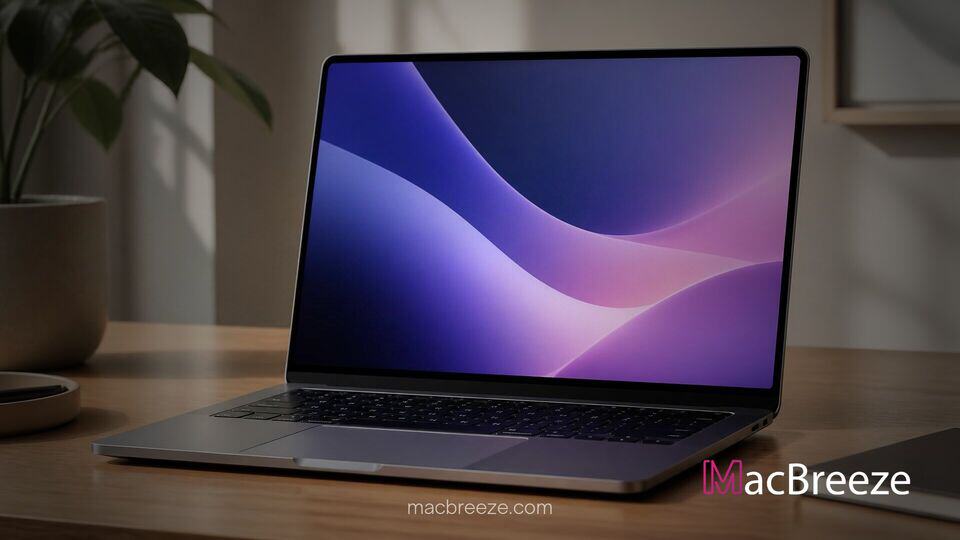
An updated display industry roadmap suggests Apple is exploring an all-new 13.8-inch MacBook featuring an OLED display and an under-display camera. Industry research firm Omdia indicates the compact notebook could debut around 2029, creating a distinct mid-tier category between the consumer MacBook Air and high-end MacBook Pro lineups.
According to research details shared by Omdia, the proposed device represents a shift in Apple's long-term hardware strategy. Rather than simply upgrading existing form factors, the tech giant appears to be preparing a completely new screen size that combines cutting-edge panel innovations while maintaining a price point below flagship professional laptops.
Display Roadmap Hints at Notch-Free 13.8-Inch OLED MacBook
The latest research from Omdia reveals that Apple has added a 13.8-inch laptop project to its multi-year display roadmap, targeting a tentative launch window of 2029. The core feature of this unannounced laptop is a 13 inch oled macbook under display camera setup, designed to hide the front-facing camera lens beneath the active display layer. This approach would eliminate the camera notch introduced across modern Mac designs, providing an unobstructed, edge-to-edge viewing surface.
Earlier market intelligence from ZDNet Korea previously noted that Apple issued Requests for Information (RFIs) to major panel suppliers including Samsung Display, LG Display, and BOE regarding 13.8-inch panel specifications. While early expectations assumed those panels were destined for a future OLED MacBook Pro or an upgraded Air, Omdia's updated projection lists the 13.8-inch machine as an entirely independent hardware category.
Under-Display Camera and Touch Technology Integration
The reported panel relies on an Under-Panel Camera (UPC) design, allowing light to pass directly through specialized OLED pixels to reach the image sensor when the webcam is active. When the camera is idle, the surrounding pixels illuminate normally, creating a seamless visual field without optical cutouts.
In addition to under-display camera tech, the 13.8-inch display panel is expected to incorporate touch-sensing capabilities directly into the encapsulation layer, known as Touch Sensor on Encapsulation (TOE). This feature suggests Apple could introduce native touch input to this specific tier, pairing touch interactivity with a lightweight notebook design.
Hybrid Panel Construction and Performance Expectations
To keep production costs balanced, Omdia reports that Apple plans to use a single-stack hybrid OLED panel with an LTPO+ backplane for the 13.8-inch machine. This hybrid construction combines glass substrates with thin-film encapsulation to deliver a thin profile while mitigating manufacturing complexity.
By opting for a single-stack layout, the panel will feature one light-emitting layer rather than the dual-stack tandem OLED structure reserved for top-tier professional devices. The architecture also reportedly integrates Color Filter on Encapsulation (COE) technology, which improves light efficiency and overall energy consumption.
Where the New Laptop Fits Between MacBook Air and Pro Lines
A 13.8-inch display size places the new model directly between the 13.6-inch MacBook Air and the 14.2-inch MacBook Pro. Industry analysts speculate that this positioning could allow Apple to serve users who desire advanced screen technology and modern aesthetics without committing to the thermal overhead and price tag of a Pro device.
Interestingly, Omdia's roadmap indicates that the standard MacBook Air line may continue utilizing LCD displays until 2030, keeping it anchored as an accessible entry point alongside compact offerings like the budget-focused laptop tier. Positioned above LCD Air models, the 13.8-inch laptop would offer premium OLED contrast, thinner bezels, and touch capabilities at a mid-range price point.
This mid-tier introduction aligns with recent adjustments in Apple's supply chain strategy. Reports indicate Apple has streamlined other experimental projects, such as shelving certain large-format foldable concepts, to focus on refining core laptop form factors. Readers following broader lineup changes can review reports on how Apple cancels foldable MacBook models to concentrate on standard display innovations.
Apple Long Term Display Strategy and Release Horizon
Apple's display transition spans several device generations and panel technologies. While top-tier Pro models are slated to adopt tandem OLED panels in upcoming hardware cycles, Apple continues to maintain existing screen options across its portfolio. Recent reports suggest mini-LED MacBook Pro models will remain alongside OLED versions for a multi-year transition period.
While the prospect of a notch-free 13.8-inch OLED MacBook with an under-display camera offers an intriguing look at Apple's long-term engineering goals, analysts emphasize that 2029 timelines remain subject to change. Component costs, yield rates, and evolving consumer demand will ultimately determine whether this mid-tier OLED design reaches retail shelves.