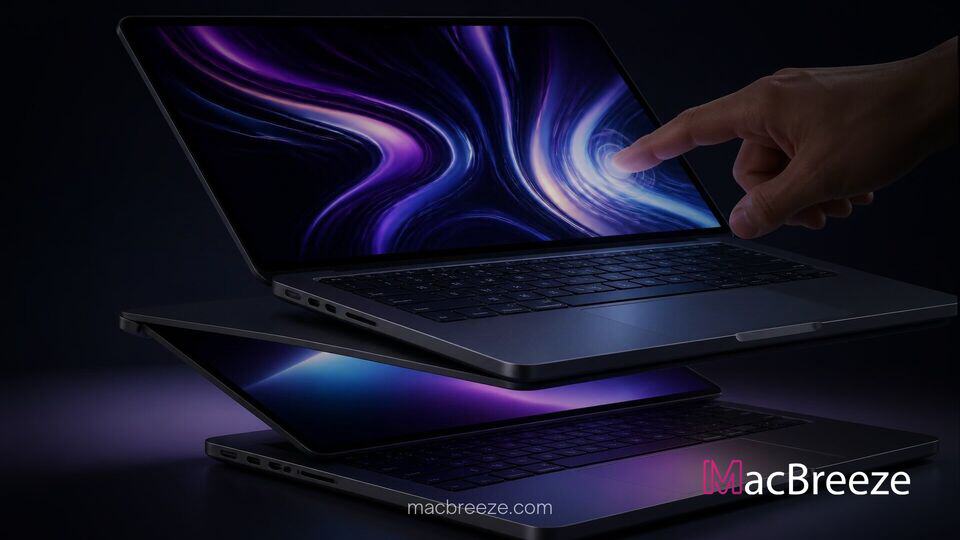
Apple is reportedly preparing to launch a new flagship laptop tier named the MacBook Ultra, designed to sit directly above the current MacBook Pro in the company's personal computer hierarchy. Leaked supply chain data and internal reports indicate that the upcoming high-end portable computer will mark Apple's official entry into touchscreen Mac displays after years of keeping touch interaction exclusive to the iPad and iPhone lines.
The upcoming device is expected to retain the traditional laptop form factor while introducing direct screen interaction alongside the physical keyboard and trackpad. According to industry insiders, the move represents the most significant architectural and visual overhaul to the Mac portable line since the shift to Apple Silicon, establishing a premium tier for professional users who require cutting-edge display technology and alternative input methods.
Touchscreen MacBook Ultra Leak Details Point to New Flagship Position
Supply chain sources report that Apple is positioning the MacBook Ultra as a super-premium tier above existing M-series laptops rather than a direct replacement for the standard 14-inch and 16-inch MacBook Pro models. Recent macOS Tahoe 26.7 beta leaks referencing unreleased Mac models suggest that Apple is testing separate hardware configurations under distinct device identifiers.
The entry-level MacBook Pro line is expected to maintain its current design language and target mainstream users, while the MacBook Ultra will cater to high-end creative professionals and enterprise users willing to pay a premium for next-generation hardware. Industry analysts note that this strategy mirrors Apple's expansion of the Apple Watch lineup with the introduction of the Watch Ultra, creating a high-end tier with exclusive feature sets.
Software hints discovered within operating system test builds show that macOS is gaining touch-optimized interface elements. System updates feature expanded menu bar spacing and contextual touch menus that activate when a user taps directly on the display panel. Rather than converting macOS into a pure tablet interface, the operating system will treat touch input as an auxiliary control method to complement trackpad navigation and keyboard shortcuts.
Skipping M6 Pro Chips for Advanced Architecture
Detailed reports regarding internal chip roadmaps suggest Apple may adjust its traditional processor release cycle for the new hardware classification. Leaks indicate that while a standard entry-level MacBook Pro will adopt the baseline M6 system-on-chip, Apple plans to skip M6 Pro and M6 Max configurations entirely for the Ultra tier. Instead, the initial wave of MacBook Ultra laptops is slated to utilize high-performance M5 Pro and M5 Max chips, with subsequent refreshes moving directly to next-generation M7 architecture.
This staggered rollout strategy allows Apple to separate its standard consumer hardware updates from major platform shifts. A leak detailing the base M6 MacBook Pro with a 2nm chip highlights how baseline models will continue receiving incremental performance updates while the Ultra line pioneers new silicon capabilities. The shift to advanced node technology in future M7 processors will provide the extra thermal headroom and graphic throughput required to drive high-resolution touch displays without sacrificing battery endurance.
The processing architecture will also work in tandem with dedicated neural engine cores optimized for on-device machine learning tasks. With expanded memory bandwidth across the lineup, the new hardware platform is structured to support heavy computational workloads, real-time video rendering, and system-level artificial intelligence tools without performance bottlenecks.
Expected Design and Hardware Features for MacBook Ultra
Beyond touchscreen functionality, the MacBook Ultra is slated to bring substantial structural changes to the laptop lineup. The notebook is widely expected to be Apple's first laptop equipped with a custom OLED screen, stepping away from the mini-LED backlighting used in recent pro-tier laptops. A recent report on the MacBook Ultra OLED display using a high-mobility oxide backplane underscores how the display hardware will achieve higher energy efficiency and superior contrast ratios.
Industry reports confirm that manufacturing partners are scaling dedicated assembly lines to supply stacked Tandem OLED panels. This panel construction delivers higher peak brightness and extended longevity while reducing screen thickness. The switch to OLED technology allows Apple to noticeably trim down the overall thickness of the aluminum enclosure.
Additional design modifications under development include:
- Dynamic Island Integration: Replacing the traditional camera notch with a scaled-down Dynamic Island module for system status updates and sensor housing.
- Thinner Bezel Footprint: Narrower borders around the active screen area to maximize viewing room within 14-inch and 16-inch chassis options.
- Haptic Touch Controls: Contextual touch response across the screen surface designed to provide tactical feedback during direct manipulation.
- Enhanced Structural Rigidity: Re-engineered display hinges designed to minimize screen movement when tapping or dragging items across the panel.
Analysts monitoring supply chain activities indicate that broader screen changes across Apple's lineup are accelerating. A comprehensive DigiTimes report outlining Apple's OLED display roadmap shows that high-end tablets and notebooks are leading the transition toward organic light-emitting diode panels, laying the foundation for unified visual hardware standards across product families.
Potential Release Window and Impact on Mac Lineup
Market analysts and supply chain observers project that mass production for the MacBook Ultra will begin in late 2026, targeting a commercial release in late 2026 or early 2027. While baseline M6 hardware refreshes remain anticipated for earlier launch windows, the flagship Ultra model requires extensive software optimization and specialized display manufacturing processes before reaching retail channels.
The introduction of a touch-capable flagship represents a significant shift in corporate policy. For over a decade, executives publicly maintained that touch interfaces belonged exclusively on mobile devices like the iPad. However, changing software workflows, unified app frameworks, and competition from Windows touchscreen laptops have pushed Apple to re-evaluate user input preferences for high-end workstation devices.
Although the company has not publicly confirmed the existence of the machine, leaked technical specifications, component orders, and software references confirm that development is moving forward. If the project proceeds according to current schedules, the MacBook Ultra will redefine the upper limit of Apple's laptop family and usher in a new era of multi-input desktop computing.
As production plans solidify over the coming months, additional details regarding final pricing, chassis dimensions, and software features are expected to surface from supply chain partners.