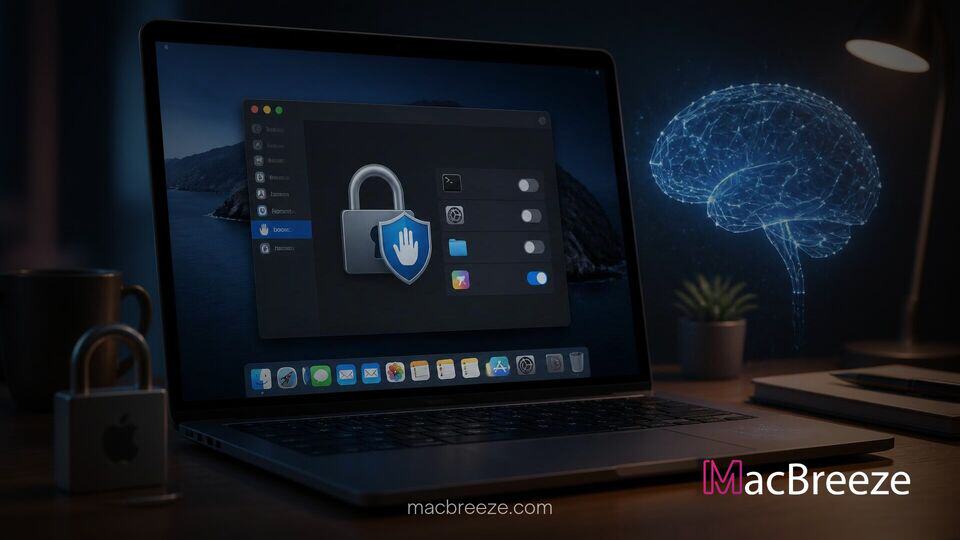
Apple has announced upcoming changes to how macOS handles Full Disk Access permissions, citing growing data privacy risks associated with autonomous AI software. The company released a policy notice on its official developer hub warning that certain third-party applications are abusing system permissions designed primarily for full-system backup utilities.
Under the planned update, granting an application unchecked access to a Mac file system will require significantly more explicit user verification. The move comes as desktop AI tools increasingly request sweeping permissions to read local documents, chat logs, and browser databases.
Apple Tightens macOS Full Disk Access Controls Over Escalating AI Privacy Concerns
In a developer update titled Updates to Full Disk Access in macOS, Apple outlined its rationale for changing how power permissions operate across the operating system. The tech giant emphasized that while standard macOS sandbox controls protect user data, Full Disk Access largely circumvents those safeguards to support system utilities and backup tools. Apple cautioned that developers of emerging software suites are encouraging users to grant full privileges without transparently explaining the risks.
Why AI Agent Permissions Triggered Privacy Concerns
The decision to alter Full Disk Access permissions follows a surge in desktop AI tools designed to analyze user files, index personal emails, and execute complex workflows. Applications like Meta's Muse, OpenAI's desktop clients, and autonomous productivity assistants often ask users to toggle Full Disk Access during setup so they can contextualize local data. While these integrations allow assistants to pull answers from personal documents, they also grant broad read and write access to the entire storage volume.
Security researchers and industry commentators have raised flags over how much data these integrations expose. If an AI tool receives Full Disk Access, it can read sensitive databases, including stored passwords, browser histories, private iMessages, and confidential work files. Apple noted in its developer announcement that when communication software accesses broad privileges, the privacy of non-users on the other end of conversations is compromised as well.
Concerns over permission handling escalated recently after tech columnists reported instances where AI tools accessed local messaging databases. Developers maintained that users explicitly opted into the features during onboarding, but privacy advocates argued that multi-step system prompts often obscure the full scope of file system entry. Additionally, security vulnerability patches in desktop AI frameworks highlighted how compromised agents could potentially execute unauthorized commands across a drive.
How System Permissions Are Changing for Mac Applications
Apple explained that while APIs provide robust building blocks for third-party tools, Full Disk Access was created for specific use cases like backup utilities. Going forward, Apple will require explicit user action before an application can receive that permission tier. Although Apple has not detailed the exact user interface changes or confirmed whether they will arrive in an upcoming macOS security update, the company confirmed that the goal is to prevent accidental or uninformed authorization.
Apple stated in its note to developers:
"Full Disk Access largely sidesteps these controls in order to allow backup apps to function properly on the Mac. Some developers are using Full Disk Access in ways that could put users at risk, exposing everything on their systems, including files, mail, messages, and even browsing history, without users' full knowledge and understanding. As AI agents become increasingly capable and autonomous, the risks associated with this level of access will grow substantially."
The company noted that addressing this behavior is critical to maintaining system privacy as automated agent software evolves. Rather than removing Full Disk Access entirely, Apple intends to insert higher friction points into the configuration flow so users fully comprehend what data they are making visible. This strategy aligns with Apple's wider efforts to secure desktop operating systems, which include updating developer certificate requirements and protecting users against emerging vector attacks like malware targeting macOS systems.
What the Updates Mean for Mac Users and Developers
For everyday Mac users, the forthcoming permission changes mean that enabling broad privileges for third-party utilities will no longer be a simple single-click confirmation. Software developers will likely need to adjust their onboarding flows to guide users through updated system dialogs or adopt more granular, targeted APIs. Industry observers suggest that Apple may encourage developers to use scoped document pickers or specialized file access APIs rather than demanding sweeping disk access.
Developer reaction to the news has been mixed. While privacy-focused software creators applaud steps to curb overreaching data collection, others note that modern AI assistants genuinely require access to local files to deliver personalized responses. Developers building advanced utilities, such as natural language extensions like those seen in recent updates to Safari custom extension tools, will need to balance functionality with strict user consent protocols.
Apple has not announced an exact release timeline or specified whether the new Full Disk Access prompt controls will roll out in a point update or a future major macOS release. However, the formal warning gives developers ample notice to audit their software permissions, reassess data access requirements, and prepare for tighter system security checks on Mac devices.