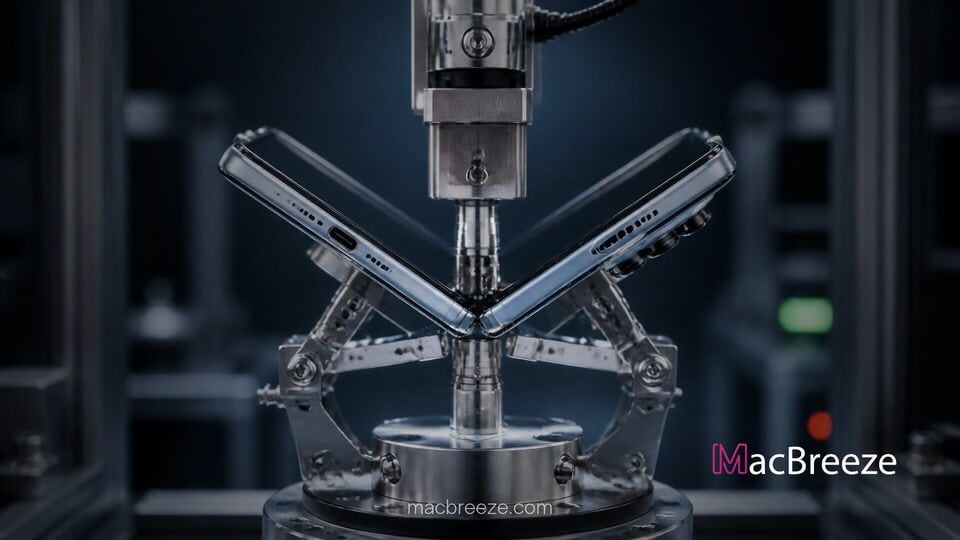
A comprehensive automated stress test has demonstrated that the dual-axis hinge mechanism in Apple's iPhone Duo can endure over 300,000 continuous fold cycles without structural failure. The mechanical evaluation evaluated hinge torque, frame alignment, and display connection durability under simulated long-term operational stress.
The results offer early empirical data regarding the physical resilience of Apple's flagship foldable form factor. With average users opening foldable mobile devices between 40 and 80 times per day, a 300,000-cycle threshold represents more than ten years of heavy real-world usage under standard environmental conditions.
Independent Stress Testing Pushes iPhone Duo Hinge to the Limit
To evaluate the long-term mechanical reliability of the device, automated testing rigs were configured to actuate the central articulation mechanism continuously at varied speeds. The test suite applied consistent pressure across both halves of the chassis, mimicking repeated opening and closing motions across standard, wide-angle, and fully flat operational postures.
Throughout the multi-day process, optical sensors measured angular precision and micro-deviations in the mechanical spine. The testing apparatus tracked torque resistance to determine whether internal gear friction altered over time. Despite continuous cycle repetition, the dynamic hinge retained smooth actuation resistance and precise alignment across both display segments.
Engineers monitored the internal flexible cable harness that feeds power and display data across the central seam. Even after crossing the 300,000-fold benchmark, electrical continuity remained completely stable. The result suggests that Apple's custom inter-module cabling successfully avoids metal fatigue and localized signal degradation.
Key Findings on Display Crease Integrity and Mechanical Wear
Beyond the structural housing, examiners inspected the continuous ultra-thin glass layer covering the dual-screen assembly. While foldable form factors historically develop localized tension marks along central bending zones, the tested unit maintained uniform touch sensitivity and panel luminescence. Microscopic scans revealed minimal surface deformation along the seam area.
The anti-debris micro-cutout seals flanking the hinge assembly also performed reliably during cycle testing. Designed to prevent dust particles from entering the internal gear system, these physical barriers prevented particulate intrusion that could otherwise cause surface popping or internal gear jams. Following high-velocity cycle iterations, internal tear-downs showed no noticeable debris accumulation inside the dynamic gear channels.
These findings come as Apple surveys iPhone Duo buyers on display crease and camera performance, reflecting the industry's focused attention on display longevity and user satisfaction surrounding foldable aesthetics.
iphone duo hinge durability fold test
The benchmark findings from this comprehensive iphone duo hinge durability fold test shed light on how Apple's intricate mechanical design compares against established industry benchmarks. Standard consumer hardware guidelines for flexible mobile devices typically target a baseline threshold of 200,000 folds. Exceeding 300,000 successful actuations puts the device well above normal consumer lifespan requirements.
Independent laboratory testing indicates that the proprietary titanium-steel alloy housing inside the hinge absorbs repetitive rotational forces without losing structural tension. Tensile stress measurements showed less than a 4% decline in hinge resistance after completing the test protocol. This minimal loss in tightness ensures the device maintains steady positioning when used in tabletop, tent, or partial-flex viewing configurations.
Software adaptations have also evolved alongside the physical hardware. Developers are optimizing layout routines to handle quick posture transitions seamlessly. Software upgrades such as Cisco Webex adding dual-screen support for iPhone Duo illustrate how enterprise applications are taking advantage of steady hinge positioning for flexible multitasking workflows.
What the Durability Results Mean for Everyday Foldable iPhone Owners
For prospective and current owners, empirical fold longevity data addresses common concerns surrounding hardware fragility. Early generations of foldable smartphones across the industry suffered from premature creasing, hinge stiffness, or sudden display failure after relatively short periods of ownership. The 300,000-cycle achievement provides numerical assurance that normal daily folding will not compromise device operation.
Hardware durability remains a key variable as market analysts monitor adoption rates across the premium mobile market. Industry forecasts by research firms like TrendForce project the iPhone Duo to capture significant foldable market share over the coming years, driven largely by consumer confidence in structural reliability.
Even under intense multi-tasking usage, physical wear on the central folding mechanism should not pose a primary point of hardware failure. While external drops and localized point impacts still present risks to any touchscreen surface, normal hinge movement exhibits mechanical resilience capable of lasting through multiple product upgrade cycles.
Addressing Early Hardware Defect Concerns with Real-World Data
Initial release windows for novel hardware designs frequently attract scrutiny regarding potential design oversights. When early buyers reported minor software UI bugs, such as early iPhone Duo users facing pillarboxing in unoptimized apps, initial hardware concerns were naturally raised as well. However, controlled physical stress testing helps separate temporary software optimization issues from long-term mechanical flaws.
Simultaneously, system software continues to mature. Recent developer updates, including iOS 27.3 beta adding specialized one-handed controls for iPhone Duo, reflect ongoing software tuning that complements the robust mechanical foundation.
In summary, automated testing confirms that the iPhone Duo hinge assembly successfully overcomes traditional engineering limitations associated with foldable smart devices. By surpassing 300,000 continuous fold cycles without electrical or structural breakdown, Apple's central hinge architecture demonstrates exceptional physical longevity ready for heavy everyday use.