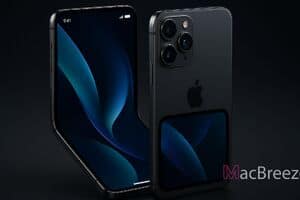
Apple has rolled out its latest developer build, introducing customized software adjustments aimed at improving thumb navigation across dual-screen devices. The updated system software specifically refines how users interact with expansive displays during single-handed operation.
As hardware aspect ratios evolve, maintaining comfortable reachability across larger surface areas remains a key priority for interface designers. The new update directly addresses ergonomics on foldable hardware by introducing adaptive screen-shifting options and fine-tuned edge triggers.
iOS 27.3 beta iPhone Duo reachability controls streamline outer and inner display navigation
With the release of the latest developer preview, the implementation of iOS 27.3 beta release features brings targeted modifications to hardware-specific access settings. The software package introduces a dedicated sub-menu within Accessibility settings that detects whether the device is folded or completely opened. When operating in single-screen mode, the system adjusts touch targets dynamically, ensuring primary UI controls remain within comfortable thumb range without sacrificing screen real estate.
Side-Swipe Gestures for Outer Display Navigation
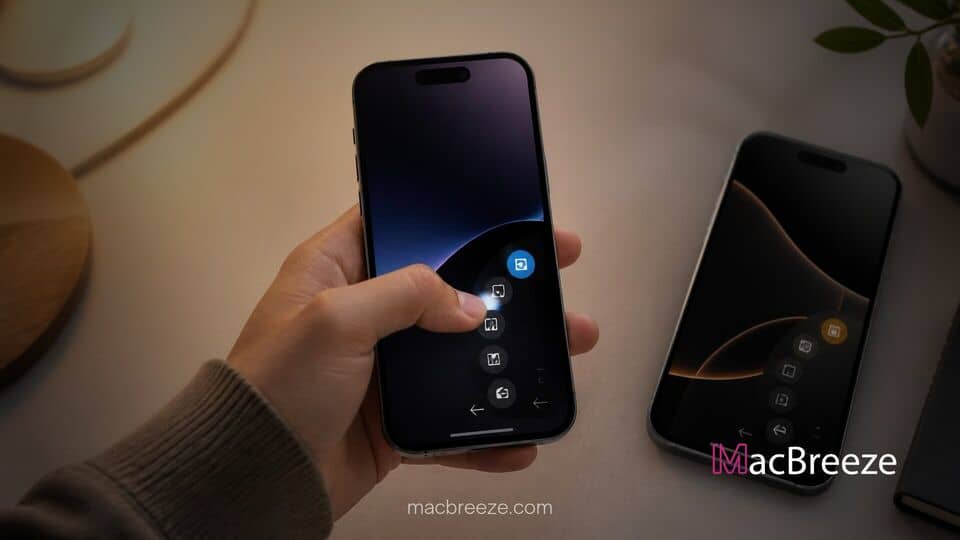
Beyond traditional downward screen shifting, the updated firmware introduces lateral trigger zones along the outer frame. Users can execute a slight pull inward from either side margin to slide top-corner elements into lower central regions. This approach builds upon traditional Reachability options, modifying layout behavior depending on dominant hand preferences configured in system settings.
Early testing shows that notifications, Control Center toggles, and app-specific top navigation bars temporarily re-anchor near the bottom third of the display. This adjustment minimizes hardware repositioning while holding the device on the move, offering a seamless shift between resting grip angles and active tapping zones.
Updated External Keyboard Layout and Ergonomic Tweaks
In addition to edge swiping, the system software includes dedicated updates for virtual keying interfaces. When expanded into dual-screen or landscape view, the software keyboard can automatically split or shift to the left or right edge based on active device orientation. This ensures typing remains accessible without requiring two hands during quick messaging sessions.
Apple has also extended gesture customizations within system apps. For instance, recent updates to productivity tools like the iWork suite with iPhone Duo support demonstrate how application workflows are being rewritten to accommodate flexible form factors. The software now remembers distinct thumb-reach profiles for folded and unfolded state configurations, automatically switching layouts upon hinge movement.
How iOS 27.3 Improves One-Handed Foldable Usability
Software adaptation for alternative form factors has been a central focus since the device made its market entry. Early adopters previously encountered minor layout challenges, such as pillarboxing in unoptimized apps when transitioning between display modes. The refined control mapping in iOS 27.3 works to mitigate these scaling issues by forcing legacy interfaces into standardized accessible containers.
Developers now have access to updated API hooks that notify applications when the user triggers system-level Reachability gestures. This allows third-party tools to lower top-anchored controls, floating action buttons, and navigation tabs simultaneously rather than shifting the entire display canvas uniformly. The approach prevents visual clipping while maintaining interface functionality across varying window sizes.
Furthermore, this update builds on hardware support additions introduced in earlier releases, such as expanded digital stylus integration seen when iOS 27.2 brought Apple Pencil support to flexible displays. By unifying hardware inputs with adaptive touch zones, the operating system continues to bridge the gap between large-screen versatility and practical daily handling.
Release Timeline for Upcoming iOS 27.3 Public Rollout
The current developer build represents an initial step in testing these specialized ergonomic options. As developer feedback comes in regarding swipe sensitivity and palm rejection near display margins, further refinements are expected in upcoming software iterations. A public beta build is anticipated in the coming weeks, following standard preview distribution schedules.
General public availability for the software update is expected later this quarter. Users participating in Apple's Beta Software Program will likely receive access to the new single-handed controls once preliminary stability checks across early preview builds conclude.
Overall, the addition of tailored single-handed navigation tools in iOS 27.3 demonstrates a ongoing effort to refine interaction models for non-traditional form factors. By combining dynamic interface shifts with user-configurable gesture margins, the platform continues to prioritize physical usability alongside hardware expansion.