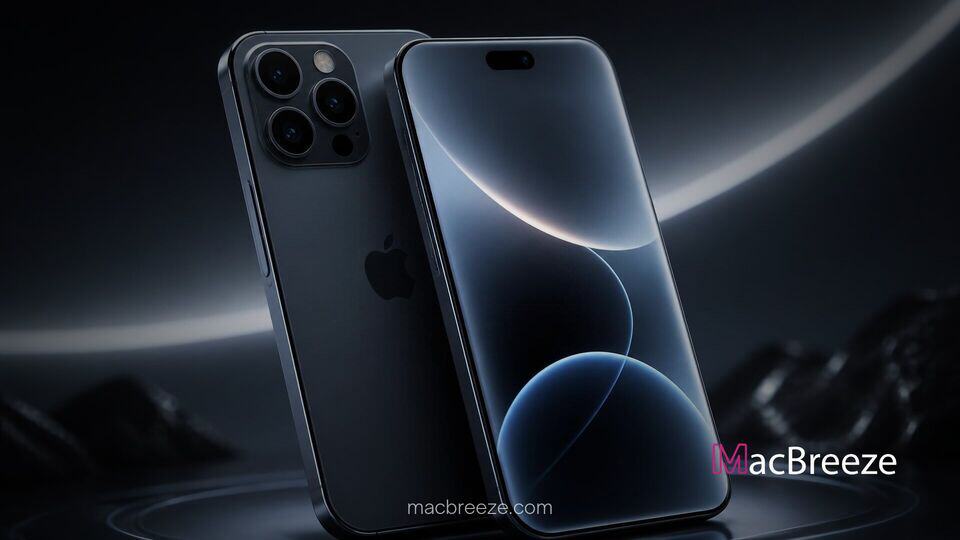
Early engineering details regarding future flagship smartphones indicate that Apple is preparing a major visual overhaul for upcoming generations. According to recent supply chain reports, the iPhone 20 Pro may feature a quad-curved glass panel alongside a significantly reduced cutout for Face ID and front-facing camera components.
While consumers are accustomed to incremental annual changes, hardware prototypes circulating within display component manufacturing facilities highlight a bolder direction. The upcoming designs suggest that Apple intends to push borderless screen technology closer to a seamless edge-to-edge aesthetic than ever before.
iPhone 20 Pro Quad Curved Display Leak Details Major Visual Overhaul
The latest iphone 20 pro quad curved display leak outlines an ambitious shift away from the modern flat-edge aesthetic that Apple has refined over recent release cycles. Early component schematics show a front glass panel contoured softly along all four borders, creating a fluid curve that blends directly into the device's mid-frame. This design philosophy aims to minimize the visual presence of surrounding bezels while offering improved ergonomics when performing edge-swipe gestures.
According to reports from industry insiders monitoring display panel development, the four-sided curve requires advanced glass substrate shaping and upgraded touch-rejection algorithms to prevent accidental input. Rather than adopting the severe side waterfall bends seen in older rival smartphones, Apple's implementation appears to favor a subtle micro-curvature that maintains uniform pixel density across the active screen area while maintaining durable structural integrity.
Early iPhone 20 Pro Prototype Leaks Surface
Informational leaks stemming from testing facilities indicate that internal engineering validation for these displays is already underway. Prototype hardware currently being evaluated focuses on balancing glass durability with the precise optical clarity required for high-end mobile displays. Testers note that the subtle curve across the top and bottom glass borders softens the device's silhouette while giving content an elevated appearance on screen.
This development aligns with broader trends across the technology ecosystem where display manufacturing yields have improved for complex glass geometries. Earlier reports about Apple backend hardware identifiers pointing to new devices suggest that engineers are constantly running long-term validation passes on experimental form factors years before full commercial deployment.
Display Size Increases and Screen Resolutions
Because the quad-curved design curves gently away at all four edges, the usable surface area expands slightly without noticeably expanding the physical dimensions of the phone chassis. Supply chain sources suggest that panel resolutions will scale upward to accommodate the extended pixel boundaries near the curved corners, ensuring that text and high-definition media retain crisp pixel density across the entire panel surface.
Engineers are reportedly testing customized OLED drivers capable of maintaining uniform luminance across contoured edges. This hardware adjustment addresses common drop-offs in brightness and visual artifacts historically observed on curved glass displays, delivering a consistent visual experience across various viewing angles and lighting environments.
Four-Edge Curved Glass Design Details
Achieving a balanced four-edge curve involves high-precision manufacturing techniques. Glass panels are shaped under high thermal conditions before receiving custom anti-reflective and oleophobic coatings. The resulting structure presents a smooth transitional curve from the center of the display down into the chassis frame, helping reduce sharp physical edges in hand.
To support this glass configuration, structural protective elements inside the frame have been re-engineered. Apple appears focused on ensuring that the four-edge curved glass retains shock-absorption capabilities comparable to flat-glass designs, mitigating glass fracture risks during impact events or accidental drops.
Refined Dynamic Island and Camera Placement
Beyond the quad-curved glass panel, early reports emphasize a substantial reduction in the size of the Dynamic Island cutout. Advances in sensor miniaturization and optical packaging allow Apple to condense the TrueDepth sensor array into a noticeably smaller physical area. The infrared projector and ambient light sensors are reportedly being moved deeper beneath the active display pixels, leaving only essential lens elements exposed.
This refinement builds upon iterative hardware updates over preceding generations. For context, earlier reports detailed how Apple redesigned the Dynamic Island on the iPhone 18 Pro to optimize screen area, and the future iPhone 20 Pro design appears to take this evolution further. Shrinking the cutout increases the screen-to-body ratio and decreases software interference during full-screen video playback and interactive gaming sessions.
Impact on Apple Product Upgrade Cycles
Industry analysts view these hardware leaks as a clear indicator that Apple is building toward a major design milestone for its flagship lineup. Over recent years, minor updates to chassis materials and software features have satisfied standard incremental release windows. However, introducing a quad-curved front panel alongside under-display sensor upgrades represents a significant hardware transformation intended to stimulate replacement demand among long-term owners.
Consumers holding onto older devices often wait for distinct visual changes before upgrading. As trade-in values fluctuate and software features expand, significant hardware evolutions remain a primary driver for buyer migration. For example, recent shifts in Apple trade-in values for Macs and iPhones underscore how hardware life cycles influence consumer upgrade habits, making distinct visual overhauls particularly impactful for new device adoption.
Furthermore, these display changes are expected to complement expanding software functionality. As operating system features become more demanding, such as expanding local AI processing requirements seen in iOS 27 storage expansions for Apple Intelligence, pairing advanced internal processing power with redesigned exterior display hardware offers a compelling package for incoming buyers.
While the iPhone 20 Pro remains deep within development and testing phases, early details highlight a clear trend toward seamless glass integration and reduced cutout profiles. If these prototype configurations transition into mass production, the resulting design will mark one of the most visible architectural shifts in the history of the product line, setting a new design standard for future mobile hardware iterations.