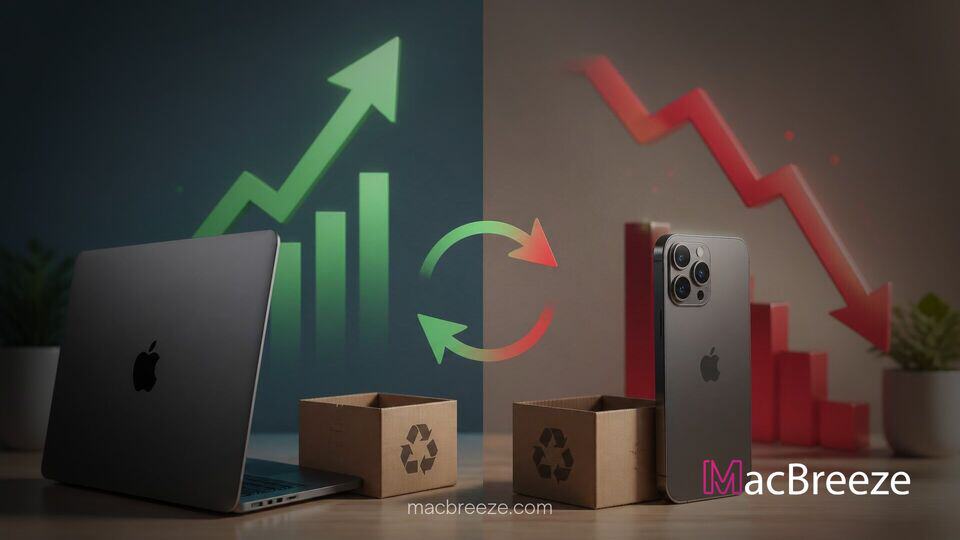
Apple has officially revised its hardware trade-in estimates across the United States, introducing a substantial shakeup to its trade-in matrix. While customers looking to trade in older iPhones will see reduced valuation estimates, owners of Mac computers and iPads are receiving a noticeable boost in estimated trade-in credit.
The updated valuations shift the economic calculations for consumers considering a hardware upgrade. With maximum trade-in offers for Mac laptops and desktops rising significantly, upgrading to current-generation Apple Silicon hardware has become considerably more accessible for long-term Mac users.
apple mac trade in values increase as iPhone estimates fall
Under the revised pricing schedule, apple mac trade in values increase across almost every category in the Mac family. Premium professional laptops saw the largest gains, with the maximum estimated trade-in credit for the MacBook Pro jumping from $855 to as high as $1,315 depending on configuration and condition. Desktop units also recorded healthy gains: the Mac mini trade-in estimate climbed from $480 to $620, while the Mac Studio rose to $1,460. The entry-level MacBook Air also received a boost, moving up to a maximum estimate of $705.
In contrast, payout estimates for previous-generation iPhones experienced broad reductions. The iPhone 16 Pro saw its maximum trade-in value drop to $510, down from $630, while the iPhone 16 Pro Max dropped from $720 to $610. Payouts across the iPhone 15 and iPhone 14 series were similarly trimmed down by $30 to $120 depending on the model. This divergence highlights a strategic shift where Apple is encouraging desktop and laptop upgrades while managing inventory and trade-in margins on mobile devices.
Apple Revises U.S. Trade-In Estimates for Mac and iPad
The adjustment to Apple’s U.S. trade-in matrix extends beyond computers and smartphones. The iPad lineup experienced valuation bumps similar to those seen in the Mac catalog. The iPad Pro saw its maximum trade-in credit climb from $720 to $905, representing one of the highest percentage jumps in the tablet category. The iPad Air, iPad mini, and entry-level iPad models also received modest valuation increases across the board.
Apple Watches and wearable accessories followed a pattern similar to the iPhone, with trade-in estimates remaining largely flat or seeing slight reductions. Industry observers note that trade-in pricing fluctuates based on component supply chains, secondary market demand, and refurbished inventory turnover. By enhancing payouts for higher-tier hardware like Macs and iPads, Apple provides additional incentive for customers holding onto legacy systems to step up to newer devices.
Significant Trade-In Valuation Increases Across Mac Lineup
The aggressive increases across the Mac catalog reflect strong demand for pre-owned Mac hardware in the secondary market. A comparison of recent trade-in rates reveals the extent of the gains:
- MacBook Pro: Up to $1,315 (previously $855)
- Mac Studio: Up to $1,460 (previously $1,305)
- MacBook Air: Up to $705 (previously $580)
- Mac mini: Up to $620 (previously $480)
- iMac Pro: Up to $340 (previously $315)
- iMac: Up to $385 (previously $380)
The Mac Pro remains the sole exception in the computer lineup, holding steady at its previous maximum valuation of $2,195.
Cuts to iPhone Estimates Following New Hardware Announcements
Reductions in iPhone trade-in values are routine following major product refresh cycles. When new hardware enters the market, secondary market supply increases as consumers trade in existing phones, naturally pushing trade-in valuations downward. However, users planning to purchase new mobile hardware can still leverage special carrier promotions. Major telecommunication providers frequently offer enhanced trade-in credits that exceed Apple’s direct trade-in values, provided customers commit to multi-year service contracts.
Impact on Mac Owners Upgrading to Apple Silicon
For Intel-based Mac owners and early M-series adopters, the revised valuations offer a compelling reason to upgrade. As upcoming operating system releases introduce advanced features, older hardware architecture is gradually phased out. Notably, Apple confirmed that all macOS compatible Macs support Apple Intelligence natively without feature fragmentation, provided they run on Apple Silicon chips.
Furthermore, Apple has implemented a refined granular condition grading system. Under this updated framework, minor cosmetic blemishes like minor scuffs or hairline display scratches no longer trigger the steep valuation penalties they once did. This ensures that users trading in well-maintained devices receive credit closer to the maximum published estimate.
Beyond hardware upgrades, system security remains a focal point for Mac users considering their trade-in timing. Recent software maintenance efforts show Apple actively maintaining modern systems, as seen when Apple patched over 100 vulnerabilities in security updates across operating system versions. Maintaining an active upgrade path ensures hardware remains fully compatible with current security standards and system features.
How to Check Your Mac Trade-In Eligibility and Value
Customers interested in trading in hardware can evaluate their devices directly through Apple's online store or at physical retail locations. To obtain an accurate quote, users must provide their device serial number and answer questions regarding functional condition, display status, and enclosure integrity.
Once accepted, trade-in credit can be applied directly toward an instant purchase discount or loaded onto an Apple Gift Card for future use. Alternatively, customers can choose third-party marketplaces, though trading in directly through Apple eliminates shipping fees and potential buyer dispute complications.
With Mac trade-in valuations at multi-year highs and iPhone rates resetting downward, Apple's latest pricing structure reflects evolving market demand. Computer owners looking to modernize their desk setup now enjoy a rare window of heightened trade-in leverage.