Apple has officially confirmed that select iPhone 18 Pro Max devices operating on AT&T network bands suffer from an irreversible cellular hardware defect. Affected users experiencing persistent connection drops and permanent emergency signal states must submit their devices for a full hardware replacement at authorized service locations.
The announcement follows weeks of customer reports regarding sudden cellular disconnection events that left premium flagship devices completely unable to register on cellular towers. Apple confirmed that while initial diagnostics pointed to potential carrier configuration errors, deeper technical evaluations revealed a localized component degradation within specific cellular transceivers.
AT&T iPhone 18 Pro Max Cellular Outage Details
Reports of severe connectivity issues began surfacing shortly after the device rollout, specifically impacting users connected to AT&T high-frequency 5G spectrum bands. Customers noted that their flagship devices would abruptly lose primary network connection, failing to re-establish a link even when moving into areas with strong signal coverage.
Engineers analyzing customer returns pinpointed the failure to a specific revision of the baseband RF front-end module integrated into select production batches. When exposed to particular network handoff sequences on AT&T mid-band and millimeter-wave infrastructure, the component suffers power regulation instability that causes the internal modem to enter an unrecoverable failure state.
Symptoms and Permanent SOS Mode Issues
The primary symptom affecting impacted units is the immediate drop of carrier signal, quickly followed by the device falling back to an internal SOS-only status indicator. Unlike typical signal attenuation or temporary tower outages, affected devices remain stuck in this emergency state indefinitely.
Standard user troubleshooting steps offer no relief for the hardware issue. Toggling Airplane Mode, performing full system reboots, re-provisioning eSIM profiles, and performing network setting resets fail to restore normal network communications once the baseband transceiver triggers its protective lockdown mode.
Apple Software Patches and Carrier Settings Updates
In an effort to mitigate widespread customer impact, Apple initially deployed targeted iOS maintenance updates alongside carrier bundle revisions designed to adjust modem power delivery limits. These software countermeasures successfully protected unaffected devices from triggering the baseband fault state during active cell tower handoffs.
However, testing proved that software adjustments could not reverse physical damage on components that had already undergone electrical degradation. Devices that had already entered the permanent breakdown state remain incapable of establishing carrier authorization, making physical intervention mandatory.
Why Software Fixes Cannot Restore Affected Hardware
Modern mobile platforms rely on complex micro-architecture within internal modem modules to manage rapid multi-band handoffs. When micro-component voltage thresholds are permanently exceeded during specific tower handshakes, physical physical degradation occurs within the internal signal amplification pathway.
Because software logic cannot bypass physically damaged copper traces or fused semiconductor layers, Apple confirmed that terminal modem faults cannot be resolved over the air. Internal restructuring efforts across Apple engineering teams, similar to recent adjustments under Apple hardware engineering leadership, have focused on isolating supply chain batches to ensure replacement inventory remains completely free of affected transceiver silicon.
iphone 18 pro max att hardware replacement Guidelines for Affected Owners
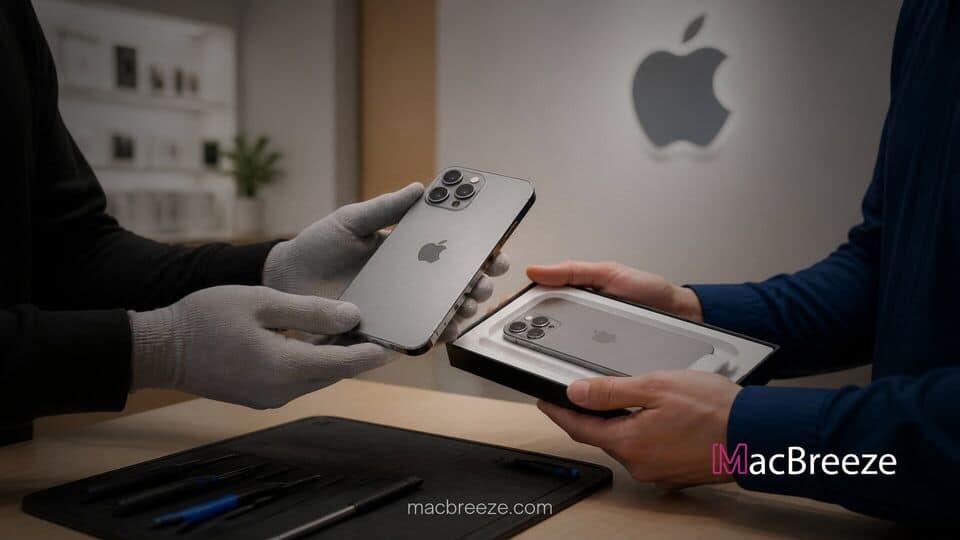
Apple and AT&T have established a streamlined exchange policy to assist impacted owners without charging additional service fees or requiring active AppleCare+ coverage. Devices diagnosed with the specific transceiver modem fault will receive a full unit replacement rather than an in-shop component repair, ensuring device enclosure integrity and IP68 water resistance remain intact.
Subscribers experiencing permanent cellular loss on their AT&T units are instructed to book a technical appointment at any Apple Store Genius Bar or Authorized Apple Service Provider. Technicians utilize an updated diagnostic suite capable of reading internal modem fault logs to immediately verify eligibility for a whole-unit swap.
For customers without local retail access, Apple Support offers mail-in replacement options with expedited shipping. Replaced units feature fully updated RF architecture designed to operate seamlessly across all AT&T 5G frequency allocations without risk of recurrent transceiver failure.
This swift exchange initiative highlights Apple's effort to address hardware vulnerabilities promptly while maintaining trust among premium device owners. Impacted users are urged to perform an iCloud backup prior to visiting service centers to expedite the device transfer process.