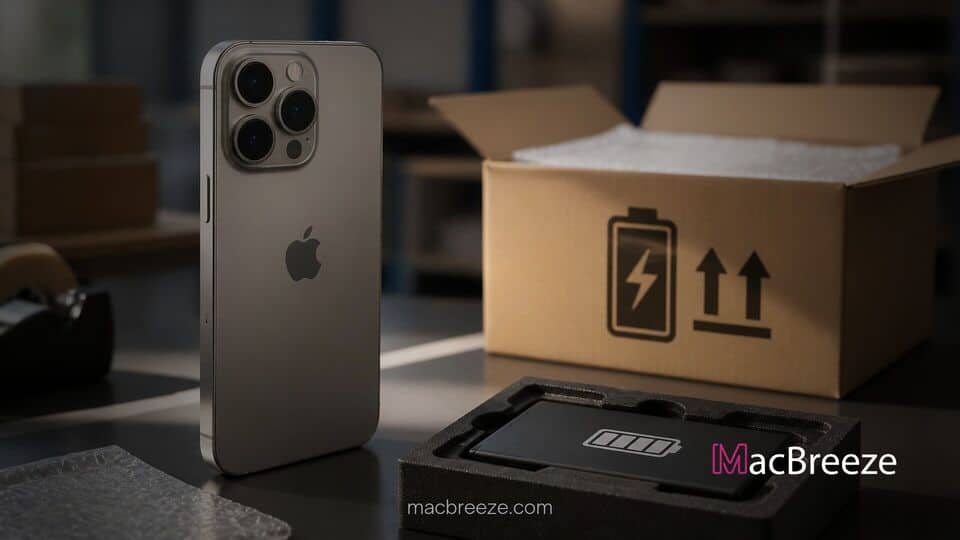
Apple has introduced a dedicated feature in iOS 27 designed to simplify compliance with international hazardous material transport regulations. The new system toggle prepares high-capacity smartphones for air freight shipment prior to servicing, trade-ins, or mail returns.
Engineered specifically for flagship hardware equipped with larger energy cells, the feature adjusts hardware states and limits maximum charge thresholds to satisfy dangerous goods shipping guidelines.
Apple Support Document Outlines New 20Wh Battery Shipping Limits
Apple published an updated support document detailing strict compliance measures for handling high-capacity lithium-ion cells. International air transport guidelines updated by commercial shipping authorities impose rigorous packaging, handling, and state-of-charge testing on single-cell lithium batteries with energy ratings approaching or exceeding 20 watt-hours (Wh).
When Apple debuts iPhone 18 Pro models equipped with larger power packs to support advanced processing and high-brightness displays, meeting these strict transport standards becomes essential. To facilitate smooth logistics, Apple established concrete operational boundaries that govern how devices are packaged and shipped globally.
Understanding Global Transport Regulations for High-Capacity Single-Cell Batteries
Under international dangerous goods rules enforced by aviation safety agencies, single-cell batteries entering commercial transport networks as cargo must adhere to explicit maximum state-of-charge (SoC) guidelines. Devices exceeding specific capacity limits require specialized hazard labeling, restricted air transport routing, and lower state-of-charge thresholds to minimize risks associated with thermal runaway during high-altitude transit.
By implementing strict battery software limits, device manufacturers can continue utilizing standard ground and air freight routes without encountering regional logistics delays or additional dangerous goods surcharge fees.
iOS 27 Prepare to Ship Setting Streamlines Compliance
To give consumers and technicians an easy method for bringing high-capacity devices into full regulatory compliance before sending them through logistics networks, Apple integrated the target option directly into the system software settings. Using the ios 27 prepare to ship setting, users can instantly start an automated battery conditioning process that prepares the internal cell for safe courier transport.
This automated system reduces high battery levels down to safe shipping thresholds and limits maximum charging capabilities while active. It ensures that any device handed over to a parcel service fully abides by international transport limits without requiring complex manual discharge procedures.
Discharging Battery Capacity Below 20Wh for Safe Transport
When a user turns on the setting under Settings > General > Reset or Transfer, iOS 27 initiates a controlled power discharge routine. The operating system leverages background processing tasks and display management routines to lower the active capacity below the critical 20Wh threshold.
Once the system reaches this reduced energy target, iOS software places a temporary firmware lock on the charging controller. This hardware lock prevents the battery from accepting a charge above the 30% state-of-charge limit, keeping the device fully compliant with air transport standards throughout its shipping transit.
Restoring Full Battery Capacity Upon Device Activation
Restoring the smartphone back to full functionality after transport is straightforward. When the parcel arrives at an authorized repair center or reaching its final retail recipient, connecting the device to an original fast charger while initiating standard device setup automatically unlocks the battery controller.
The system clears the temporary transport restrictions and restores the full charging potential of the battery pack. Users can then charge their device up to 100% capacity without needing to manually modify developer menus or perform firmware restores.
Impact on iPhone 18 Pro Max Trade-Ins, Repairs, and Returns
The introduction of the iOS 27 shipping routine directly affects how customer trade-in kits, official mail-in repairs, and online returns are managed. When customers arrange a hardware exchange following Apple trade-in updates, return documentation will instruct them to enable the shipping setting before placing their device inside the provided prepaid mailer.
This automated preparation process helps eliminate package rejections at regional air hubs and prevents shipping delays similar to those seen when iPhone 18 Pro Max delivery estimates slip due to logistics backlogs. By ensuring all returned units comply with air transit mandates, Apple aims to maintain consistent processing times across service facilities.
Furthermore, this software utility helps address broader software stability and system management demands introduced in the latest release cycle, functioning alongside stability improvements such as the fix for the iOS 27 rapid swipe bug.
In summary, the dedicated Prepare to Ship setting in iOS 27 gives users a straightforward, reliable tool to manage high-capacity smartphone batteries in full accordance with international aviation safety regulations.