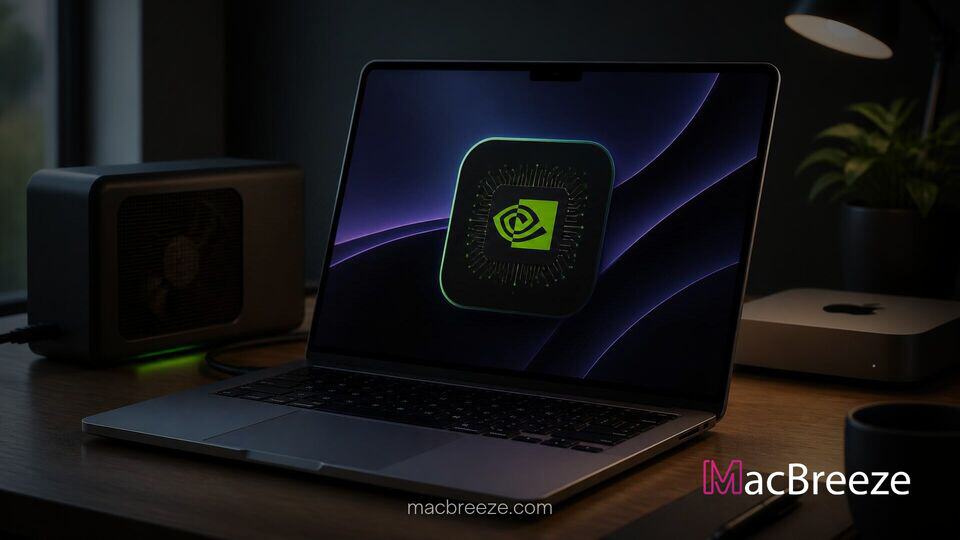
An ambitious open-source development project has made significant strides by bringing native Nvidia driver support and Metal 3 hardware acceleration to Intel-based Macs and custom Hackintosh hardware. The community-driven software stack bridges a long-standing compatibility gap between modern graphics hardware and recent releases of macOS.
By leveraging open-source kernel components alongside Mesa architecture, the newly released driver enables full desktop compositing, application rendering, and API translation. The breakthrough allows legacy Intel Mac Pro workstations and custom PC builds to run modern graphics cards natively under recent macOS updates, including macOS Sequoia.
Intel Mac Nvidia Driver Metal 3 Hackintosh Project Expands GPU Capabilities
For nearly a decade, the relationship between Apple and Nvidia remained stalled, leaving Mac users without official drivers for graphics architectures released after the Pascal generation. As Apple shifted its software ecosystem toward the proprietary Metal graphics API, official macOS support for Nvidia GPUs ceased after macOS High Sierra. Apple allows developers to drop Intel Mac support in newer app updates, which further signaled the fading official footprint of legacy x86 hardware.
The newly unveiled open-source initiative reverses years of hardware stagnation by providing a custom driver pipeline that interfaces directly with macOS. Developed by independent creator NullMoth, the software stack integrates Nvidia kernel modules with the Mesa NVK Vulkan driver framework to map graphics commands directly to Apple's Metal 3 system libraries.
New Third-Party Driver Brings Nvidia GPU Acceleration to macOS
The core objective of the project is to provide functional hardware acceleration across everyday macOS desktop workflows, productivity applications, and 3D graphics software. Rather than relying on simple software rendering or basic display outputs, the custom driver stack registers supported Nvidia graphics cards as native Metal compute devices directly within the macOS operating system.
This deep integration allows macOS system components, including the primary WindowServer compositor, to utilize the dedicated video memory and processing cores of external or internal Nvidia expansion cards. As a result, systems running the software experience fluid desktop animations, multi-monitor display outputs, and accelerated window rendering.
Integration With Mesa NVK Vulkan Driver Architecture
To achieve compatibility with macOS, the project adapts the open-source Mesa NVK Vulkan driver infrastructure originally developed for Linux environments. By wrapping Vulkan execution pipelines inside custom macOS kernel extensions, the driver intercepts Apple's Metal 3 shading instructions and translates them into GPU commands that Nvidia silicon can execute natively.
This architectural approach eliminates the need for official, proprietary drivers from Nvidia or Apple. The translation layer handles complex graphical features such as argument buffers, indirect drawing calls, multi-sample anti-aliasing, and block-compressed texture formats required by modern Mac applications.
Current GPU Compatibility and Hardware Scope
In its initial public release, the open-source driver explicitly targets specific modern Nvidia desktop graphics cards, with initial validation focused on mid-range hardware such as the GeForce RTX 5060. Additional testing is underway across Turing, Ampere, Ada Lovelace, and newer card families.
Hardware support encompasses both internal PCI Express expansion slots on Intel Mac Pro towers and external eGPU chassis connected via Thunderbolt. Hackintosh desktop configurations built on Intel motherboards can similarly utilize the driver to run recent macOS builds without needing to rely exclusively on AMD Radeon graphics cards.
Metal 3 Performance and System Functionality Overview
Early benchmark reports and community testing demonstrate that the driver achieves reliable Metal 3 feature coverage. The implementation supports key capabilities introduced in recent macOS versions, enabling software that depends on Apple's graphics frameworks to launch and render correctly.
System stability remains a primary focus, as third-party graphics drivers running inside kernel space must handle memory allocations, power management, and sleep states without triggering system panics. The development team has systematically updated the codebase to refine hardware handoffs and address graphical artifacts.
Desktop Rendering and Graphics Acceleration Capabilities
Under active testing, systems equipped with the driver successfully run native macOS desktop applications, media playback tools, and 3D rendering workloads. Metal 3 features enable smooth scaling, HDR color output where supported, and accelerated frame rates in creative software packages.
The driver also supports background compute operations, allowing local artificial intelligence workflows and machine learning models to leverage Nvidia CUDA hardware features translated through Vulkan and Metal backends. While local AI demand continues to grow across the Mac ecosystem, challenges persist on older OS releases; for instance, macOS 27 Apple Intelligence storage footprint exceeds 30GB on some Macs, making modular open-source tools an attractive alternative for x86 hardware owners.
Installation Process and Setup Utility Requirements
To simplify deployment, the project includes a dedicated graphical installer and configuration utility. The setup software assists users with injecting required kernel extensions, configuring boot arguments through open-source bootloaders like OpenCore, and managing System Integrity Protection settings.
Despite the inclusion of automated tools, setting up the driver still requires manual system configuration. Users must ensure their system bootloader passes the correct device properties to allow macOS to recognize the non-standard graphics pipeline during boot.
Limitations and Future Outlook for Intel Mac Power Users
While the release represents a monumental technical accomplishment for the Hackintosh and legacy Mac communities, the project remains in an early, active stage of development. Early adopters are advised to maintain full system backups, as kernel-level drivers can occasionally cause instability or require cold power cycles following unexpected system halts.
Furthermore, broader hardware platform changes across Apple's software roadmap continue to impact long-term utility. As Apple phases out legacy features—such as when macOS 27 removes Time Machine backup support for AirPort Time Capsule—community maintainers increasingly shoulder the responsibility of keeping older Intel hardware functional.
Lack of Apple Silicon Compatibility
The driver stack is designed strictly for x86-64 CPU architecture and standard PCIe or Thunderbolt bus topologies found on Intel Macs and PC motherboards. It offers zero compatibility with Apple Silicon Macs powered by M-series processors.
Apple Silicon hardware utilizes a unified memory architecture tightly coupled with custom integrated AGX graphics processing units, which operate on an entirely different driver model. Consequently, external Nvidia GPU acceleration remains impossible on Apple Silicon systems.
Community Development Roadmap and Expansion Plans
The open-source development team plans to expand device compatibility, optimize shader translation overhead, and streamline the installer utility. Community contributors are actively working to extend full verification across additional Nvidia card generations, including popular consumer models from the RTX 3000 and RTX 4000 series.
By publishing the driver repository publicly, the project encourages collaborative reverse-engineering efforts. Developers across the Hackintosh community can submit patches, refine Metal API translation, and help maintain graphics acceleration for Intel-based Mac hardware well into the future.
In summary, the release of an open-source Nvidia Metal 3 driver marks a major victory for desktop customization enthusiasts and legacy Intel Mac owners. By bypassing long-standing driver lockouts through open-source translation layers, the community has provided a viable path forward for running modern graphics hardware on macOS platforms.