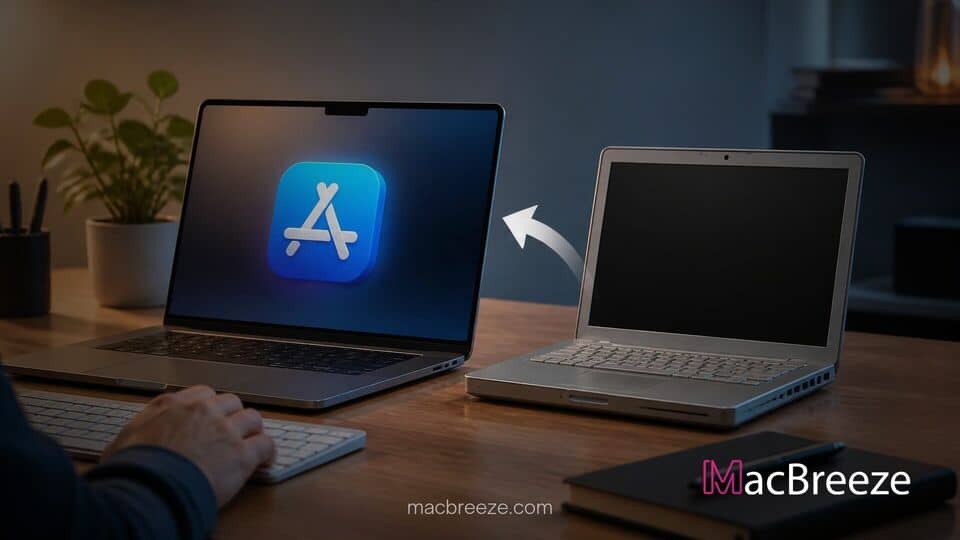
Apple has officially revised its Mac App Store distribution policies, permitting software creators to remove support for legacy Intel-based hardware in future application updates. The move allows developers to publish updates exclusively for Apple silicon, streamlining app development and shrinking download sizes.
Under the updated guidelines, universal Mac applications that target macOS 13 Ventura or later are no longer mandated to bundle x86_64 binaries alongside arm64 code. While the change remains optional, it represents a pivotal shift in how legacy hardware is supported across the Mac software ecosystem.
Apple Updates Mac App Store Policy for Intel Hardware
Previously, Apple maintained strict guidelines preventing developers from removing Intel compatibility once an application had been published as a universal binary. A developer could update a single-architecture app to support both Intel and Apple silicon, but reversing that decision on the Mac App Store was not permitted through standard submission workflows.
With this updated policy, developers can adjust their target build configurations in Xcode to "arm64" only, rebuild their projects, and submit updates directly to App Store Connect. Apple informed developers via official communications that dropping x86_64 binaries offers tangible benefits, including optimized download packages, reduced installation footprints on local drives, and simplified quality assurance testing.
Ending Mandatory Compatibility for Older Chips
Apple originally introduced universal binaries in 2020 during the unveiling of the M1 chip to ensure smooth software transitions for users upgrading from Intel machines. Universal binaries combine compiled code for both processor architectures inside a single application package. While effective, this approach increases app download sizes and forces developers to maintain legacy build targets.
By lifting the mandatory inclusion of x86_64 binaries, Apple is encouraging developers to pivot their engineering resources toward Apple silicon optimization. Developers who maintain heavy, graphics-intensive apps or complex professional software suites stand to save considerable storage and compilation time by targeting M-series architecture exclusively.
Impact on Legacy Mac Users and Software Developers
For individuals still utilizing Intel-powered Mac computers, this policy change does not mean installed applications will immediately stop functioning. Existing app versions downloaded from the Mac App Store remain fully operational on supported machines. However, when a developer opts to remove x86_64 binaries from a future update, Intel Mac users will simply stop receiving newer software builds.
To preserve access for legacy hardware, the Mac App Store's delivery mechanisms automatically serve the last compatible version available to Intel systems. Nevertheless, these users will miss out on new feature additions, internal performance improvements, and ongoing bug fixes introduced in arm64-only releases.
Requirements for Future macOS App Updates
Developers who wish to drop x86_64 code must meet specific criteria defined by Apple:
- The application must target macOS 13 Ventura or a newer release.
- The build configuration must be updated specifically to output arm64 architecture.
- Developers who wish to continue servicing Intel users can maintain universal builds optionally, as Apple is not forcing mandatory removal.
This software adjustment arrives alongside hardware changes across Apple's lineup. For example, recent hardware developments like the M6 Mac Mini soldered SSD storage configuration demonstrate Apple's ongoing effort to tightly integrate hardware and custom silicon architectures.
Apple's Broader Shift Toward Pure Apple Silicon
This distribution update is part of a larger, coordinated effort to phase out Intel architecture entirely from the Mac platform. With macOS 27 removing key legacy toggles and focusing strictly on Apple silicon capabilities, operating system updates are rapidly leaving x86 hardware behind.
Furthermore, Apple has signaled the eventual sunsetting of Rosetta 2, the translation layer that allows x86_64 software to execute on M-series chips. System prompts in recent software releases warn users when legacy translated apps are opened, urging them to upgrade to native software before full deprecation takes effect. The shift also comes during broader industry movements, such as a global memory shortage triggering Mac price increases, which push buyers toward modern, efficient M-series hardware upgrades.
As developer adoption of arm64-only builds accelerates, the option for developers to drop Intel support marks another definitive step in closing the transition chapter that began six years ago. Intel Mac owners should anticipate a gradual tapering of third-party App Store updates throughout the coming year.