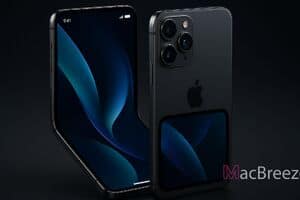
Apple is reportedly targeting four major hardware enhancements for future generations of the iPhone Duo as engineering teams work to resolve key design compromises introduced in the first-generation foldable. Industry reports indicate that Apple's engineering priorities focus on bringing flagship hardware features to the foldable lineup while making the device lighter and thinner.
According to details shared by Bloomberg's Mark Gurman, Apple has established a hardware development roadmap for future iterations of its dual-screen foldable. While some of these changes are being prototyped for the next model cycle, technical challenges tied to the ultrathin chassis could influence which updates arrive in the immediate successor versus subsequent revisions.
Future iPhone Duo Hardware Upgrades Rumor Points to Four Major Enhancements
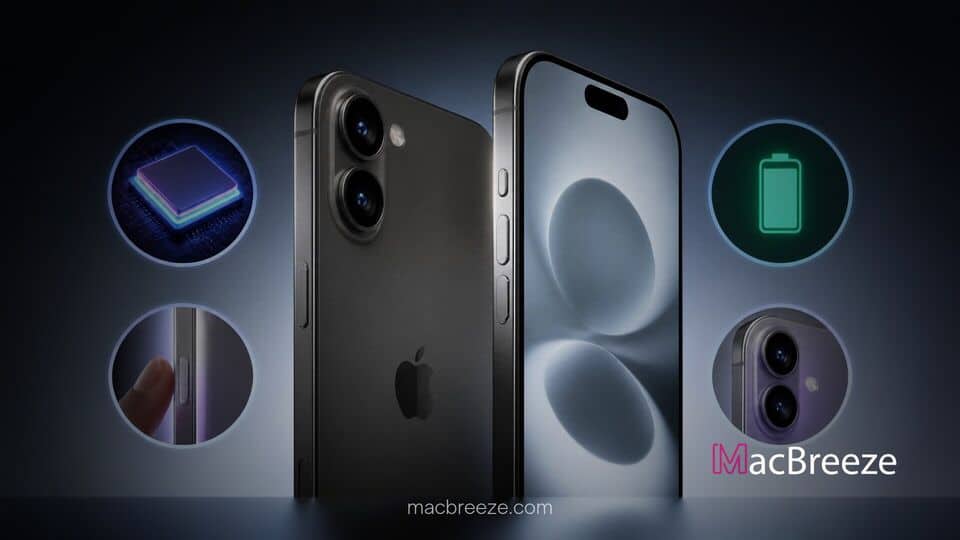
Recent reports regarding the future iPhone Duo hardware upgrades rumor highlight an ambitious hardware roadmap aimed at bringing parity between Apple's foldable flagship and its traditional Pro tier. Apple is actively evaluating four core hardware targets: under-display Face ID integration, a dedicated physical Action button, an upgraded optical telephoto camera, and a significantly reduced weight and chassis profile.
Leaked Roadmap Outlines Key Improvements for iPhone Duo Successors
Following the debut of the original iPhone Duo, consumer feedback and internal benchmarks highlighted several areas where the ultra-slim folding form factor required hardware trade-offs. Early adopters noted the reliance on a side-mounted Touch ID sensor in place of facial recognition, as well as the absence of a dedicated telephoto camera lens found on standard Pro models. The latest supply chain details suggest Apple is directly addressing these compromises across upcoming model cycles.
Face ID Integration and Action Button Addition
The top priority for Apple engineers is integrating Face ID into the outer secondary display. Prototypes of the second-generation model have reportedly been tested with depth-sensing camera modules situated beneath the glass. However, fitting the necessary TrueDepth hardware into a device shell measuring roughly 5 millimeters when unfolded presents acute spatial constraints. Because hardware specifications for the next iteration must be finalized soon to meet a late 2027 release window, engineers face a tight schedule to confirm whether Face ID will ship on the next generation or be deferred to a later release.
Alongside facial recognition, Apple plans to introduce a physical Action button to the foldable body. While current models rely on software shortcuts, introducing a physical control button would bring customized macro actions and fast app toggles to the dual-display design. Reports suggest Apple could also explore integrating Action button functionality into existing edge controls to avoid adding extra physical cutouts to the thin frame. Earlier reports regarding potential changes to physical inputs, such as plans to remove dedicated Action button controls on traditional iPhones, highlight Apple's broader efforts to streamline physical controls across its product catalog.
Telephoto Camera Upgrade and Slimmer Chassis Design
Another major objective in the roadmap is the addition of a dedicated telephoto lens module. The first-generation iPhone Duo relied on a dual-camera setup tailored to fit within the constrained internal space. Adding a periscope or optical telephoto lens would enhance zoom capabilities, helping justify the premium price tag against traditional camera flagships.
Additionally, Apple is aiming to reduce the total weight and thickness of the device. Weighing around 254 grams, the initial model is among the heavier devices in the foldable category. Advances in hinge materials, lighter chassis alloys, and stacked component layouts are expected to help shave down overall mass without sacrificing structural integrity. Recent stress tests have demonstrated impressive mechanical durability, showing how the iPhone Duo hinge survives over 300,000 fold cycles during rigorous testing.
Engineering Challenges and Expected Launch Timeline
Bringing these four hardware upgrades to market involves significant manufacturing and design challenges. Squeezing depth sensors, additional camera lenses, and larger thermal structures into a folding chassis forces compromises in battery volume and internal layout. Industry analysts note that miniaturizing components while maintaining structural rigidity remains the primary bottleneck for Apple's hardware teams.
While software optimizations continue to expand dual-screen capabilities—such as recent updates bringing specialized multitasking features like dual-screen support in Cisco Webex for iPhone Duo and system-level additions like specialized one-handed controls in iOS 27.3—hardware revisions require longer lead times. Apple is expected to launch its next foldable in the fall of 2027, though features that fail to meet strict miniaturization deadlines could be pushed to a third-generation release in 2028.
Impact on Apple's Foldable Smartphone Strategy
The clear focus on addressing hardware trade-offs highlights Apple's long-term commitment to the foldable category. Rather than treating the first device as an experimental niche product, Apple appears intent on systematically upgrading the hardware to match its most capable traditional iPhones. As supply chain yields improve and component miniaturization progresses, these planned upgrades could redefine expectations for ultra-premium smartphones.
Apple's strategic hardware investments across its lineup reflect broader supply chain shifts, similar to reports that Apple has delayed base iPhone 18 launch plans to align with next-generation manufacturing schedules. As development progresses, the success of Apple's next foldable will largely depend on whether its engineering teams can overcome technical hurdles to deliver Face ID and advanced optics in an ultrathin form factor.
In conclusion, while the initial iPhone Duo established Apple's entry into foldable hardware, the planned roadmap targets its biggest compromises. If Apple successfully integrates Face ID, a telephoto camera, an Action button, and a lighter chassis, future models could set a new benchmark for foldable utility and design.