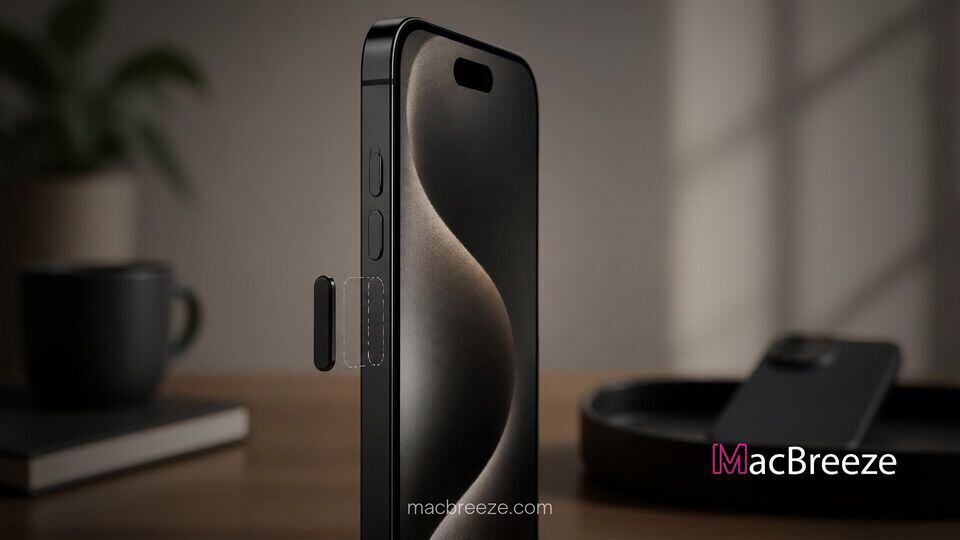
Apple is reportedly preparing a significant hardware alteration for future iPhone models by removing the dedicated Action button introduced with the iPhone 15 Pro series . Supply chain leaks indicate that Apple aims to merge customizable quick actions directly into the existing Camera Control button on upcoming generations .
The proposed transition would preserve core functionality while paring back the total number of physical keys on the device chasses . By consolidating shortcuts and capture tools into a unified input zone, Apple could streamline its external enclosure design ahead of major device milestones .
apple remove dedicated action button iphone
According to insider claims, Apple plans to remove the dedicated Action button on future iPhones in favor of a consolidated button layout starting in late 2027 . Under the reported system, a single press will continue to open the camera, while holding down the button will execute the user's mapped shortcut .
Leak Details Apple's Plan to Eliminate the Action Button
The latest report stems from tech industry leaker Instant Digital on Chinese social platform Weibo, who disclosed that Apple intends to phase out the physical Action button on flagship iPhones arriving in the second half of 2027 . The standalone mechanical button situated above the volume controls was introduced to replace the traditional Ring and Silent toggle, giving users an assignable key for flashlight access, voice recording, Focus modes, or custom automation .
According to the leak, the dedicated hardware space will be completely reclaimed on future Pro devices . However, the ability to launch personal shortcuts will remain intact through software reconfiguration of the lower button layout, ensuring that existing user habits are not entirely disrupted .
Merging Action Shortcuts Into Camera Control
Under the proposed hardware configuration, Apple plans to integrate the Action button features directly into the Camera Control key located on the lower right edge of the frame . A brief single press of Camera Control will continue to launch the camera interface, whereas a sustained long press will trigger whichever user assignment was previously set to the Action button .
Previously, a long press on Camera Control summoned Visual Intelligence features . However, recent software updates like iOS 27.3 have integrated Visual Intelligence tools directly into the Camera app via Siri mode, freeing up the press-and-hold gesture for general custom actions .
Why Apple Is Streamlining Physical Buttons on iPhone
Industrial design consolidation is a recurring theme for Apple engineering teams . Reducing physical cutouts in the aluminum or titanium frame improves structural integrity, enhances water resistance ratings, and frees up valuable interior volume for larger battery modules or updated cooling components .
Furthermore, early hardware precedents already exist in Apple's portfolio. For instance, specialized form factors like the iPhone Duo launched without a dedicated Action button altogether while keeping Camera Control, demonstrating that Apple is comfortable shipping high-end hardware without separate side keys . Streamlining inputs also avoids user confusion between the Action button and adjacent volume keys .
Impact on User Workflows and App Shortcuts
The Action button has developed a passionate following among power users who rely on Siri AI integrations and multi-step automated workflows to launch complex app sequences with one press. Shifting this trigger to the bottom right side of the device could alter one-handed usability depending on how users hold their phones during daily use .
Ergonomic reactions from analysts note that while consolidation keeps the exterior clean, Camera Control placement was optimized primarily for landscape photo taking . Reassigning custom actions to that position may require users to adapt how they trigger everyday utilities like silent toggles or flashlights .
Expected Timeline for Next-Generation iPhone Hardware
The rumored button removal is slated for launch alongside Apple's late 2027 major device refresh, coinciding with the 20th anniversary of the original iPhone . Reports suggest Apple is testing radically updated chassis designs, featuring quad-curved displays and minimal bezel footprints that complement simplified physical controls .
Meanwhile, mid-cycle updates like the iPhone 18 Pro continue to ship with the existing dedicated button arrangement . As Apple continues evaluating supply chain feedback, hardware prototypes will reveal whether this button merger becomes a permanent standard across future product lines .
While Apple has not officially commented on unannounced products, hardware consolidation fits the company's long-standing trend of simplifying physical interfaces in favor of streamlined, multi-functional controls .