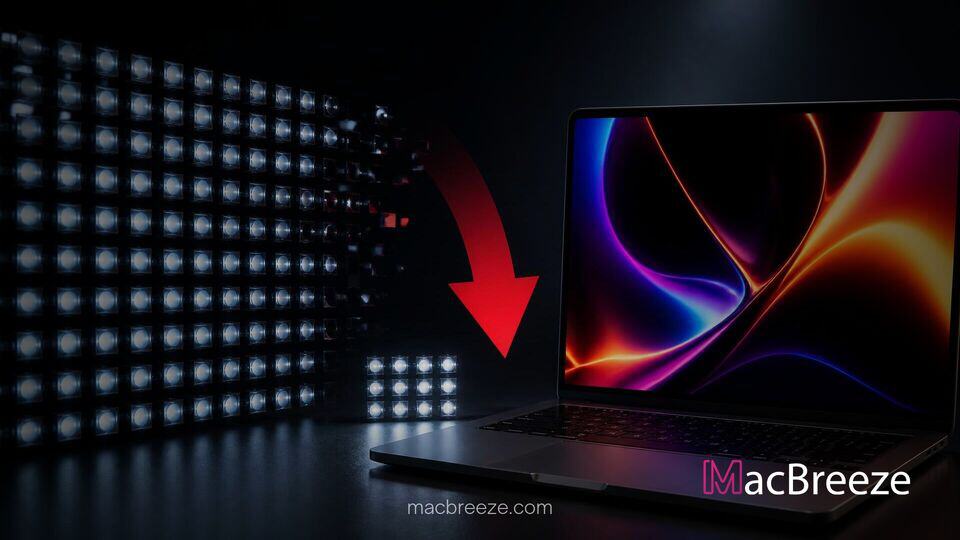
Global shipments of mini-LED panels for laptops are projected to drop by roughly 75 percent over the next two years as Apple transitions its MacBook Pro lineup to OLED technology, according to market analysis from Counterpoint Research. The industry shift underscores how strongly Apple's hardware roadmap dictates component supplier volumes across the broader consumer electronics market.
Counterpoint Forecasts Sharp Drop in Mini-LED Laptop Panels
According to data released by Counterpoint Research, global notebook mini-LED display shipments will decrease by 38 percent in 2026, followed by an additional 60 percent decline in 2027. The cumulative contraction will leave mini-LED panel shipments at approximately one-quarter of their 2025 levels. In contrast, OLED notebook panel shipments are expected to grow 50 percent in 2026 and another 24 percent in 2027, driven largely by Apple's adoption of the technology for upcoming flagship laptops.
Key Takeaways From the Display Market Report
- Mini-LED laptop panel shipments are forecast to fall by 75 percent between 2025 and 2027.
- OLED display shipments for notebooks will expand by 50 percent in 2026 and 24 percent in 2027.
- Advanced notebook displays as a category are projected to grow 11 percent in 2026, even while overall laptop display shipments shrink by 3 percent due to broader PC market headwinds.
- OLED is expected to capture 75 percent of the advanced notebook display market share in 2026, up from 56 percent in 2025.
Impact of Apple's Transition to OLED Technology
Apple introduced mini-LED technology, marketed as Liquid Retina XDR, to its high-end laptop lineup in late 2021. The backlighting system allowed the 14-inch and 16-inch MacBook Pro models to offer high peak brightness and deep contrast ratios. However, supply chain reports indicate Apple is preparing to replace mini-LED panels with advanced tandem OLED screens. Anticipation around this transition is already creating momentum across display manufacturers, with rumors linking the shift to an upcoming touchscreen MacBook Pro announcement.
Because Apple represents the largest single purchaser of premium notebook display panels, changes to its procurement strategy drastically impact the economics of panel fabrication. Display makers including Samsung Display and LG Display have diverted capital expenditures toward Gen 8.6 IT OLED production lines to secure orders for future laptops. As production capacity shifts toward OLED, component manufacturers are scaling down investments in mini-LED assembly lines intended for personal computers.
The move mirrors Apple's previous display transitions in other product lines. When Apple migrated the iPad Pro from mini-LED to tandem OLED screens, mini-LED shipment volumes in the tablet sector contracted rapidly. Analysts anticipate a nearly identical trajectory for the laptop market over the coming two-year cycle.
Future Outlook for Premium Laptop Screen Technologies
Industry analysts note that OLED technology offers key physical advantages that make it an attractive replacement for mini-LED in portable computers. OLED displays eliminate the need for a dedicated backlighting layer, enabling thinner and lighter chassis designs. Emerging rumors regarding redesigned hardware suggest future machines may incorporate thinner enclosures alongside rumors of features like vapor chamber cooling. Additionally, tandem OLED architectures, which stack two light-emitting layers, resolve historical brightness and longevity limitations that previously held OLED back in laptop applications.
While mini-LED panel shipments for laptops face a steep downturn, the technology is expected to remain relevant in other consumer segments. Large-format televisions and desktop monitors continue to leverage mini-LED backlighting to achieve high peak brightness at competitive price points without risk of image retention. Furthermore, current MacBook Pro models powered by M5 Pro and M5 Max processors will continue to serve users who prioritize sustained full-screen brightness. Readers following Apple's silicon updates can review detailed benchmarks on M6 MacBook Pro upgrades to understand upcoming architecture changes.
In summary, Counterpoint's forecast highlights a structural shift in laptop display manufacturing. As Apple prepares to roll out OLED screens across its professional Mac portables, mini-LED technology will quickly cede its dominant position in the high-end notebook segment to self-emissive panel solutions.