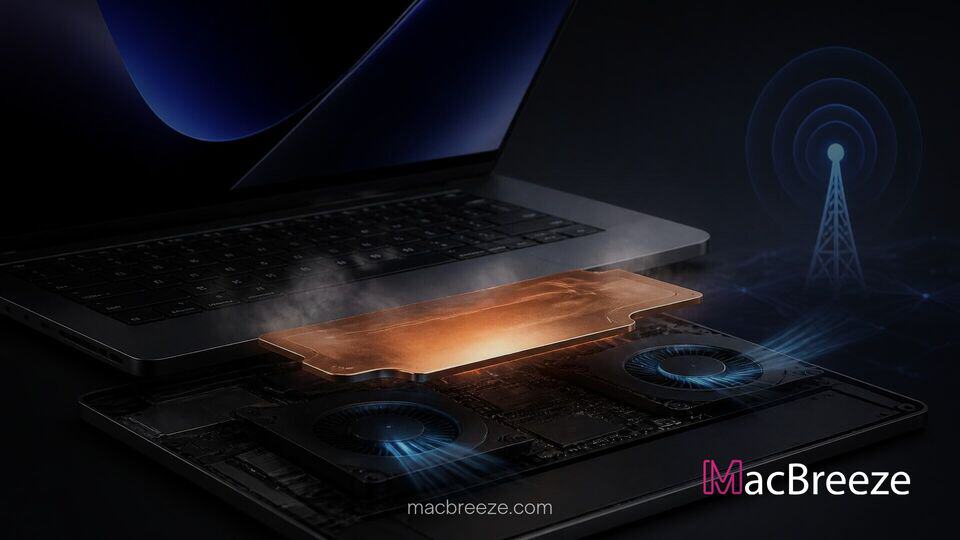
Leaked technical schematics and supply chain reports suggest Apple is preparing an extensive overhaul for its flagship professional laptop lineup. Unofficial details highlight a thinner enclosure backed by advanced internal thermal management and native cellular connectivity.
The leak arrives just ahead of Apple's scheduled media showcase in Los Angeles, where industry analysts expect the company to unveil its next-generation hardware developments.
MacBook Pro Redesign Vapor Chamber Cellular: What the Leaks Reveal
>Supply chain disclosures indicate that Apple is moving away from traditional heat pipe systems in favor of advanced vapor chamber cooling and native eSIM connectivity to maintain high performance in a noticeably slimmer chassis. According to leaked component manifests, the upcoming 14-inch and 16-inch laptops will combine a custom dual-fan copper vapor chamber assembly with an integrated C2 cellular modem, allowing professional workflows to run sustained workloads without local Wi-Fi dependencies.
The transition marks a pivotal shift for Apple's portable computing lineup. For years, the company relied on conventional single or dual heatpipe designs to transfer thermal energy away from its system-on-chip package. However, as enclosure profiles slim down, thermal density increases, necessitating a more efficient liquid-to-gas phase change architecture to spread heat across a broader surface area before active exhaust engagement.
Leaks Detail Thermal and Connectivity Upgrades
The core architectural updates focus heavily on structural thermodynamics and unethered mobility. Industry reporting surrounding the next-generation MacBook Pro updates suggests the new chassis reduces total thickness by approximately 1 to 2 millimeters while paring back overall mass.
Dual-Fan Vapor Chamber Thermal Design
Traditional copper heat pipes operate by drawing thermal energy away along narrow sealed tubes. In contrast, a vapor chamber utilizes a flattened vacuum-sealed metal cavity containing a tiny amount of working fluid. When heat from the processor contacts the chamber floor, the liquid vaporizes, rapidly traveling throughout the chamber to dissipate heat across a vast fin array before condensing back into liquid.
By implementing a custom-engineered vapor chamber alongside dual high-efficiency centrifugal fans, Apple aims to prevent thermal throttling under heavy rendering or compiling tasks. This approach addresses lingering concerns over sustained clock speeds in compressed form factors without requiring louder fan profiles.
Native C2 eSIM Cellular Architecture
Alongside thermal updates, leaks point to the inclusion of an internal C2 cellular baseband processor, enabling direct eSIM provisioning without an external dongle or smartphone tethering. If realized, this marks the first time a Mac computer features native cellular data capabilities directly out of the box.
Integrating a cellular modem inside an aluminum chassis requires sophisticated antenna design. Reports indicate that Apple has embedded specialized RF window passthrough strips along the hinge assembly, ensuring reliable signal reception across 5G sub-6GHz bands while maintaining structural rigidity.
Display and Form Factor Adjustments
The mechanical internal overhaul coincides with significant updates to the display assembly and external shell geometry.
Tandem OLED Display Integration
To support a thinner lid assembly, supply chain sources suggest Apple is adopting tandem OLED display technology similar to recent high-end tablet designs. By stacking two organic light-emitting layers, the panel achieves peak brightness levels while reducing overall power consumption compared to traditional mini-LED backlight stacks.
This display transition provides pixel-level dimming, zero backlight blooming, and deeper black levels. Furthermore, the removal of the mini-LED backlight sheet contributes directly to the reduced thickness of the display lid.
Dynamic Island Cutout Replacing the Display Notch
The physical top display notch, a fixture on professional Mac laptops since 2021, is reportedly being retired. In its place, leaks show a streamlined hole-punch camera cutout wrapped in a specialized macOS Dynamic Island interface, bringing live activity monitoring and quick interactive controls directly into the system menu bar area.
Pricing Expectations and Hardware Positioning
Industry observers note that adding high-cost components such as tandem OLED panels, vapor chambers, and integrated cellular modems could push baseline pricing higher across the top-tier lineup. Early market reports suggest starting prices for these premium configurations could see an increase compared to outgoing models, positioning these machines as top-tier workstations for demanding mobile professionals.
While some reports indicated that Apple might retain current generation silicon for certain configurations, other supply chain analyses point toward updated silicon revisions designed to optimize power consumption alongside the new modem hardware. The market performance of these premium units will likely build upon strong overall Mac sales numbers, similar to trends seen when the entry-level MacBook expanded PC market share across diverse customer segments.
As Apple prepares for its upcoming product presentation, these leaked specifications highlight a deliberate strategy to solve thermal density challenges while expanding always-connected capabilities for professional laptop users.