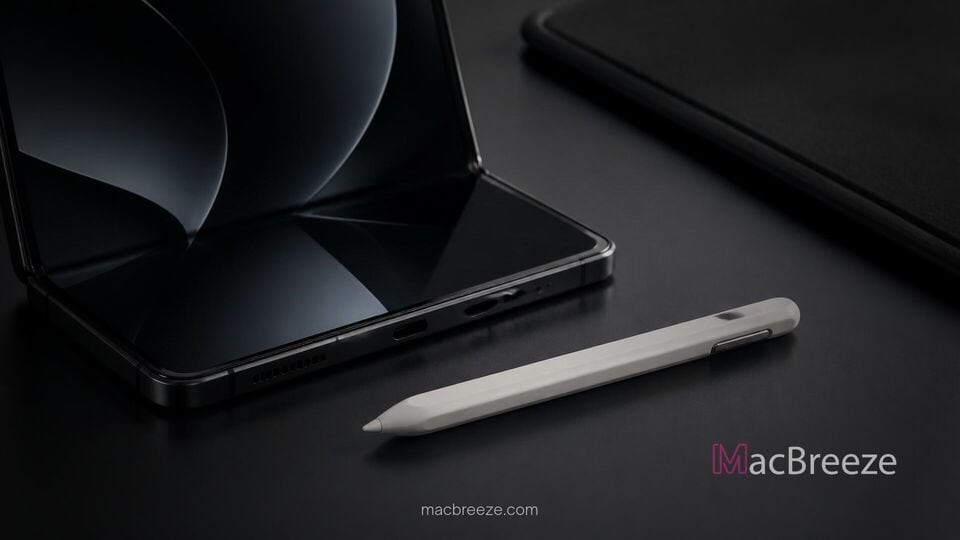
Apple has internally tested a compact, magnetic version of the Apple Pencil designed specifically to work alongside a prototype foldable smartphone. Industry reports indicate that engineering teams built short-form stylus prototypes to evaluate drawing and navigation on flexible display substrates.
While stylus support has remained an exclusive hallmark of the iPad family for years, internal testing shows Apple actively explored extending active pen capabilities to a smaller form factor. The project highlights how the company continues to evaluate specialized accessories as part of its broader research into foldable mobile devices.
Leaks Reveal Stubby Apple Pencil for Foldable iPhone
According to supply chain leaks, the prototype stylus featured a significantly shorter footprint than existing tablet accessories like the Apple Pencil USB-C or Apple Pencil Pro. Designed with a stubby profile, the compact pointer was engineered to match the dimensions of a folded smartphone chassis without extending past the outer edges of the enclosure.
The compact design aimed to preserve portability while retaining core functionality, including pressure sensitivity and low-latency digital ink tracking. Testers experimented with reduced battery capacities and custom internal circuit layouts to achieve the necessary weight and balance for single-handed use on a pocketable display.
Design and Magnetic Attachment Details
To keep the smaller stylus secure when not in use, Apple evaluated custom magnetic mounting mechanisms integrated along the flat side of the smartphone chassis. The prototype featured localized magnet arrays aligned to hold the accessory firmly in place along the outer frame, similar to how modern iPads store and charge accessories.
Engineers also tested inductive charging coils calibrated specifically for the tighter internal layout of a folding phone. Rather than relying on wired pairing, the compact stylus maintained a seamless wireless link, allowing users to snap the pen onto the side of the chassis to top up its battery during transportation.
Compact Apple Pencil Foldable iPhone Ultra Testing Explored
The internal testing focused heavily on evaluating how a specialized input tool would integrate with high-end mobile hardware. As expectations build surrounding a potential flagship device often referred to in industry discussions as a foldable iPhone Ultra, hardware teams have scrutinized every detail of the user experience, from multi-tasking software interface tweaks to dedicated input accessories.
Despite the functional hardware prototypes, engineers encountered several technical trade-offs during testing. Integrating specialized digitizer layers into flexible OLED panels presents distinct mechanical challenges compared to rigid glass covers found on traditional smartphones. Industry observers note that while hardware prototypes were successfully assembled, commercial viability requires solving long-term display durability hurdles.
In addition, users facing peripheral issues on existing tablets often search for guides on how to fix Apple Pencil disconnecting or not pairing on iPad, underlining the importance of reliable wireless performance in any new form factor.
Why the Foldable Stylus May Be Delayed or Shelved
Although Apple built working prototypes of the stubby stylus, recent reports suggest the project may be delayed or shelved ahead of any initial foldable hardware launch. Primary concerns center around screen longevity, as repeated tip pressure on soft plastic-based flexible protective layers can lead to micro-dents or visible creasing over extended periods.
Furthermore, internal user experience testing revealed mixed feedback regarding small-screen stylus interactions. With mobile operating systems tailored primarily for capacitive touch, navigating compact screens with a miniature stylus offered limited ergonomic benefit over traditional finger taps for everyday task management.
Screen Durability and Usability Concerns
Flexible display panels utilize thin glass and polyimide structures that are inherently softer than the tempered cover glass used on non-folding phones. Applying a rigid plastic tip directly to these delicate surfaces creates localized pressure points, raising concerns over long-term cosmetic and structural degradation.
While competing manufacturers have introduced active pens for foldable devices by utilizing specialized softer nibs and reinforced digitizers, Apple maintains strict internal thresholds for display resilience. Until ultra-thin flexible glass technology advances to withstand heavy stylus drag without showing wear, a dedicated pen accessory remains high risk for mass production.
Future Outlook for iPhone Stylus Accessories
While a compact magnetic stylus may not accompany the debut of Apple's first flexible phone, the existence of working prototypes confirms that pencil input remains an active area of exploration. Similar high-end engineering explorations have surfaced across other product lines, such as rumors surrounding a potential touchscreen MacBook Ultra above MacBook Pro, reflecting ongoing research into touch-based input methods.
For now, Apple appears focused on perfecting the core folding display mechanism, hinge reliability, and software optimization ahead of any major hardware announcement. As rumors build regarding future product keynotes, such as potential updates detailed in coverage of an Apple event to launch flagship hardware, accessory support will likely depend on future breakthroughs in display material science.
Apple's prototype testing confirms that a compact magnetic Apple Pencil remains technically feasible, even if commercial deployment waits for stronger display materials.