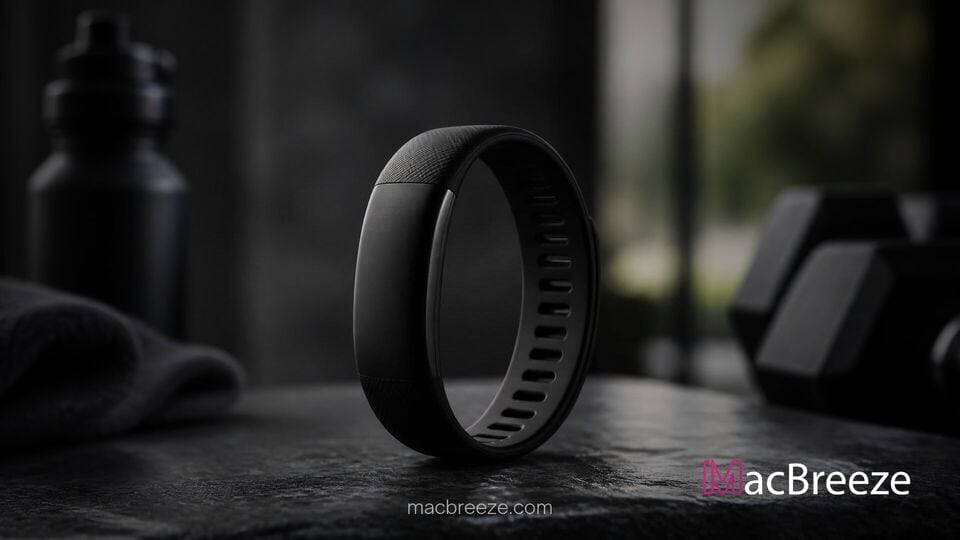
Recent industry reports reveal that Apple is actively prototyping an all-new screenless wearable fitness band designed to collect continuous biometric data. According to leaks from Bloomberg, the project signals an experimental pivot toward minimal, non-disruptive hardware that could compete directly with passive fitness trackers like Whoop.
The reported device trades the notification-heavy interface of the traditional smartwatch for a lightweight sensor pod mounted on a fabric strap. While the hardware remains in an early investigative phase inside Apple's industrial design labs, its development highlights a growing trend among consumers seeking dedicated recovery metrics without screen fatigue.
Leaked Details Point to Screenless Apple Fitness Band Development
According to supply chain sources and internal project leaks, Apple has spent several months refining early prototypes under an internal project phase known as a technology investigation. Rather than replacing the Apple Watch, this proposed screenless fitness band focuses strictly on background data collection, offering low-profile ergonomics that allow users to wear standard mechanical timepieces alongside their fitness tracker.
The prototype hardware features a compact computing module embedded into a soft fabric band. Lacking an OLED or LCD screen, the device relies on companion software running on an iPhone or iPad to display activity metrics, sleep phases, and body temperature trends. By eliminating display power requirements, engineers can push battery performance significantly beyond the daily charging requirements typical of multi-purpose smartwatches.
Industry analysts note that senior leadership inside Apple has taken a personal interest in the development path. Senior Vice President of Services Eddy Cue, who assumed direct oversight of Apple's health software initiatives, is reported to be advocating for simpler wearable interfaces that strip away unnecessary software clutter. Members of Apple's Vision hardware team have also reportedly lent engineering support to the compact sensor design.
How a Dedicated Wearable Targets the Growing Whoop Market
The decision to explore a screen-free form factor reflects changing dynamics in the health device market. While smartwatches remain dominant for general consumers who value wrist notifications, music control, and app ecosystems, specialized fitness platforms like Whoop and Oura have built devoted followings among athletes. These users prioritize accurate strain monitoring, heart rate variability, and uninterrupted sleep tracking above all else.
For Apple, entering this space addresses a rare gap in its ecosystem. Many health enthusiasts currently wear a Whoop band alongside an traditional watch or switch off their Apple Watch at night because of bulk or battery constraints. A light, fabric-based band that seamlessly feeds biometric inputs into the Apple Health database could capture users who prefer dedicated recovery hardware over interactive smartwatches.
Integration With Apple Watch and Health Ecosystem Features
Although a screenless band might appear to compete with the Apple Watch, the two products could serve complementary roles within the ecosystem. Recent updates across Apple's software stack show clear preparation for passive tracking. For instance, the iOS 27.2 beta reveals a redesigned Health app with longevity metrics and updated AI recovery guidance, providing a comprehensive hub for incoming sensor data.
Similarly, Apple has continued expanding its software reach across desktop platforms. Features like the macOS 27 update with resizable iPhone Mirroring support allow users to keep close tabs on incoming health metrics and recovery trends directly from their primary workstation displays.
By using unified synchronization protocols, an athlete could wear a lightweight fitness band to bed and during high-impact training sessions, while relying on an Apple Watch during office hours. Data collected by either device would aggregate inside Apple Health, maintaining continuous records without missing biometric gaps during charging windows.
Readiness Scoring and On-Device Sensor Capabilities
The potential band is expected to leverage advanced optical sensor arrays developed for recent flagship hardware. Advanced photoplethysmography (PPG) sensors measure blood oxygen saturation, skin temperature, and micro-changes in heart rate variability. These data points form the basis for Apple's daily Readiness score, which offers guidance on whether a user should push for peak exertion or prioritize rest.
Unlike third-party hardware platforms that enforce recurring monthly subscriptions to unlock core recovery insights, Apple could package advanced algorithmic guidance within its broader digital services ecosystem. That approach could create significant value for consumers who dislike ongoing hardware membership fees.
Target Launch Timeline and Apple's Wearable Strategy
While prototype testing is underway, observers caution that the device remains in early development. Internal sources emphasize that Apple routinely evaluates hardware concepts during technology investigations without bringing every design to retail shelves. If the screenless band clears internal product hurdles, supply chain forecasts suggest a commercial launch would not arrive before 2028 at the earliest.
In the near term, Apple's wearable hardware roadmap prioritizes other major releases, including AI-assisted smart glasses and updated camera-equipped AirPods. Meanwhile, engineers are also preparing a substantial industrial redesign for the main Apple Watch hardware lineup.
Nevertheless, the existence of these prototypes demonstrates that Apple recognizes the shifting needs of fitness-focused consumers. As passive biological tracking becomes a focal point of personal healthcare, a dedicated screenless band could prove to be a logical evolution for the company's expanding health strategy.