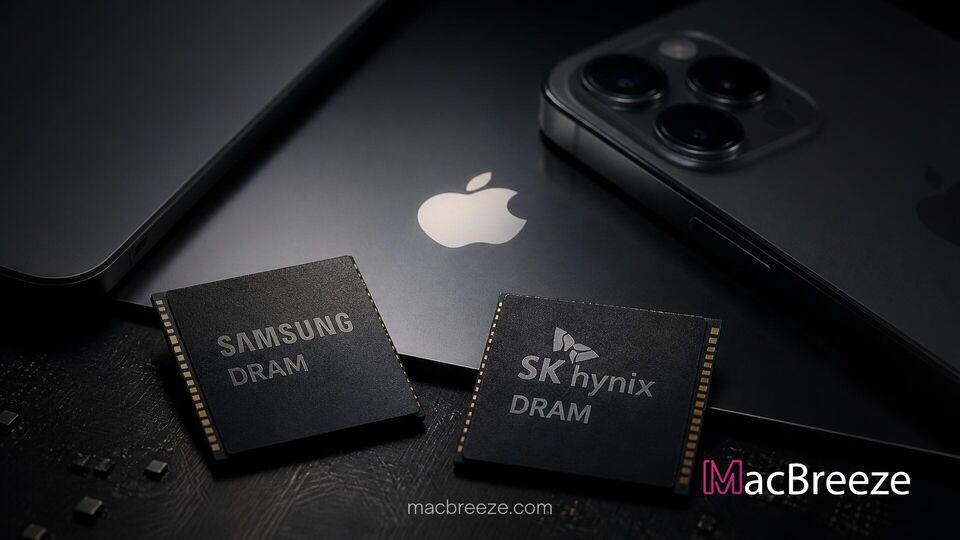
Apple is entering into multiyear dynamic random access memory agreements with key semiconductor suppliers Samsung Electronics and SK Hynix to guarantee chip allocations for future hardware lineups. The long term commitments mark a major departure from Apple's traditional procurement model, prioritizing guaranteed component volumes as artificial intelligence infrastructure demands reshape global supply chains.
Apple Samsung SK Hynix DRAM Memory Supply Deal
Industry reports indicate that Apple is finalizing a four to five year long term agreement with Samsung Electronics set to take effect in the first half of 2027, following a similar multiyear arrangement already reached with SK Hynix. Under the terms of the proposed deals, memory manufacturers will commit to minimum supply volumes for Apple, while pricing will adapt periodically based on prevailing market conditions rather than remaining locked at fixed rates.
Apple Secures Multiyear Memory Supply Contracts
For decades, Apple operated as a premier buyer in the global technology sector, using its massive purchasing scale and annual shipment volumes of over 200 million smartphones to negotiate short term contracts. This approach enabled the company to press component vendors for price reductions during cyclical industry downturns. By avoiding long term volume floors, Apple retained maximum flexibility to shift orders between vendors.
The decision to abandon that strategy in favor of structured multiyear commitments underlines how significantly memory availability has tightened. Rather than constantly driving down unit prices, Apple is focusing on supply chain certainty. Securing direct access to high density mobile and system DRAM ensures that upcoming assembly runs for flagship products remain uninterrupted, even as global memory availability remains constrained.
Rising AI Demand Shifts Bargaining Power to Memory Makers
The core catalyst behind this shift is the aggressive expansion of artificial intelligence data centers across the tech industry. Hyperscale cloud providers such as Amazon, Google, and Microsoft are allocating massive capital budgets toward server infrastructure, driving unprecedented demand for server DRAM and High Bandwidth Memory.
Because B2B server memory yields higher profit margins, major manufacturers like Samsung, SK Hynix, and Micron have reallocated significant wafer production capacity toward server chips. Data from market research firm TrendForce highlights that server DRAM's share of total global memory demand has grown to 43 percent, while mobile DRAM's share has fallen to 32 percent. This reallocation has drastically reduced the supply of conventional consumer memory, shifting bargaining leverage decisively toward chipmakers.
Details of Proposed Four-to-Five-Year Supply Agreements
According to sources familiar with the negotiations, Apple's proposed contract with Samsung covers a period spanning 2027 through at least 2031. The structure guarantees that Samsung will reserve dedicated production capacity for Apple's baseline requirements. In return, Apple accepts flexible pricing formulas tied to quarterly market benchmarks rather than demanding rigid discount guarantees.
This approach mirrors the long term supply agreement SK Hynix disclosed with key global clients, covering multiyear capacity through 2028 and beyond. By establishing volume floors across both major South Korean suppliers, Apple insulates its core manufacturing operations against sudden supply shortfalls.
Strategic Impact on Mac Hardware Availability and Pricing
Securing multiyear DRAM allocations is particularly crucial for Apple's Mac family. Apple Silicon relies heavily on high-speed Unified Memory Architecture integrated directly into processor packages, requiring steady access to high-density LPDDR modules. Recent product roadmaps demonstrate how baseline memory configurations are expanding, such as early reports of the MacBook Neo 2 with a 12GB memory upgrade.
Without guaranteed DRAM volumes, Apple would face risk when scaling up production for consumer notebooks like the entry-level MacBook Neo or high-performance workstations. Enterprise deployments where teams configure a Mac Studio as an on-premises AI server also rely on predictable hardware availability and stable component pricing.
Securing RAM Supplies Across Future MacBook and Mac Lines
By locking in baseline memory volumes through 2031, Apple aims to avoid localized component shortages that could delay device launches. Industry analysts note that while flexible pricing structures mean Apple may absorb higher component costs during periods of peak memory demand, guaranteed supply prevents costly manufacturing downtime.
As memory intensity increases across consumer electronics, other device categories are adapting as well. Mobile hardware plans continue to shift, as seen in reports where Apple delays the base iPhone 18 launch to 2027 due to broader supply chain realignments. Meanwhile, specialized form factors like the future iPhone Duo foldable lineup will depend on these secured memory pipelines to deliver complex, multi-tasking software features smoothly.
Apple's move to sign multiyear DRAM supply agreements with Samsung and SK Hynix marks an important strategic pivot. By choosing long term volume guarantees over short term price leverage, Apple ensures that its global hardware supply chain remains resilient amid an ongoing AI driven memory shortage.