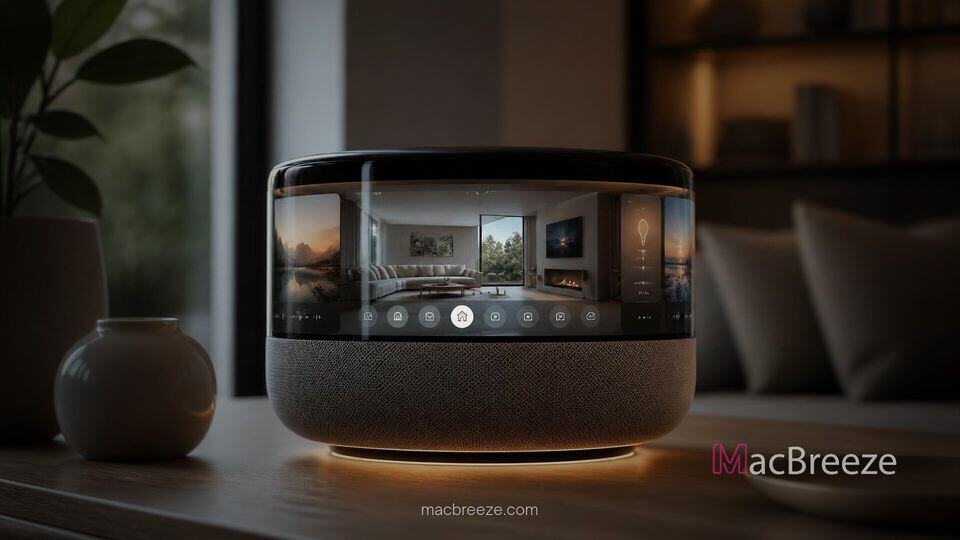
Apple is reportedly working on a flagship edition of its smart display hardware, featuring a 9-inch panel attached to a motorized robotic arm that swivels a full 360 degrees. Codenamed J595, the premium device is expected to serve as an advanced command center for smart home control and personal assistance.
Building on the foundation laid by recent hardware releases, this upcoming device aims to elevate user interactions through spatial awareness and intelligent voice tracking. Industry reports suggest that Apple intends to position this higher-end tier above its standard countertop displays, offering full-room tracking and dynamic screen positioning.
Leaked Details on Apple HomeView Max Smart Display
Fresh supply chain reports and regulatory leaks indicate that Apple is actively testing an upgraded smart home hub, referred to in reports as the prospective Apple HomeView Max, designed around a 360-degree display. The device reportedly incorporates an automated swivel mechanism that allows the screen to physically rotate toward whoever is actively speaking in a room.
Unlike stationary desktop displays or fixed wall-mounted consoles, this robotic platform relies on integrated microphone arrays and acoustic localization algorithms. When a user calls out to Siri or initiates a hands-free action, the motor smoothly pivots the central display to face the speaker. This motorized design ensures optimal viewing angles during video calls, media playback, and interactive smart home management, solving traditional visibility limitations associated with static tabletop screens.
According to reports from Bloomberg analyst Mark Gurman, the unit acts as a top-tier companion to Apple's newly announced fixed smart screens. The hardware layout features a sturdy desktop base housing elevated acoustic drivers, serving as both an audio transducer and the mechanical pivot point for the screen arm.
Design and 360-Degree Screen Capabilities
The centerpiece of the upcoming hardware is its 9-inch multi-touch display, expanding beyond the 7-inch Liquid Retina panel found on standard desktop models. The display assembly mounts directly onto a polished, multi-axis robotic arm capable of continuous horizontal rotation alongside precise vertical tilt adjustments.
This dynamic positioning system provides several key operational advantages:
- Active Speaker Tracking: Utilizing localized voice recognition, the motorized arm aligns the display toward active conversation partners across a 360-degree plane.
- Center Stage Integration: The front-facing FaceTime camera coordinates with motorized physical rotation, ensuring video call participants remain centered even while moving across large living spaces.
- Adaptive Glare Reduction: Sensors detect ambient lighting conditions and shift the screen angle slightly to minimize unwanted reflective glare from windows or indoor light fixtures.
- Privacy Controls: Users can manually tilt or direct the screen and camera sensor away toward neutral surfaces when the system enters private modes.
The overall aesthetic language draws clear inspiration from iconic historical designs, echoing the articulated chrome neck of the classic iMac G4 while updating the base with modern aluminum finishes and acoustic mesh wrap. The device relies entirely on direct power via a continuous USB-C connection, ensuring uninterrupted operational readied states without battery longevity concerns.
Integration With Siri AI and Apple Home Ecosystem
At the software level, the robotic hardware is engineered to run a tailored variation of homeOS powered by Apple Silicon. Deep integration with Apple Intelligence allows Siri AI to process complex multi-step voice prompts locally, coordinating connected accessories across Matter and HomeKit standards.
Thanks to facial recognition technology via the front-facing camera, the system automatically adapts its interface based on who is looking at the screen. If multiple family members share a living room, the hub adjusts personalized widgets, calendar reminders, and recently played media tracks depending on individual biometric identification. The device also complements existing Apple hardware, acting as an ambient controller alongside connected audio setups where Macs gain support for full system audio output to HomePod configurations.
This expansion comes at a pivotal moment for the company's hardware division. While recent market analysis showed strong performance in core product categories where Apple gained PC market share despite shipment falls worldwide, expanding into dedicated smart home fixtures allows the brand to capture deeper presence inside residential spaces. Earlier corporate milestones, including the official Welcome Home event announcement in NYC, paved the way for this broader home hardware strategy.
Furthermore, local AI performance remains central to Apple's strategy. By taking advantage of on-device processing capabilities similar to those seen in collaborative technical efforts where engineers optimized open AI models on Mac Studio, the upcoming command center handles real-time spatial computer vision and speech recognition directly on its internal processor without sending sensitive home telemetry data to external cloud servers.
Expected Announcement Timeline and Market Positioning
Industry watchers project that while the standard entry-level HomeView model is scheduled to begin consumer deliveries shortly, the premium robotic arm variant requires extended manufacturing validation. Current internal schedules point toward an official launch window between late 2027 and early 2028.
Given the inclusion of motorized actuators, specialized gearing, and a larger screen, industry analysts expect the price point to sit significantly higher than baseline smart home hubs. Rather than replacing entry-level options, the robotic unit will serve as a luxury centerpiece for automation power users and high-end residential setups.
As smart home technology transitions from basic voice commands toward fully ambient computing, Apple's investment in motorized hardware highlights a broader industry movement toward proactive, context-aware devices. If finalized for commercial release, the 360-degree smart hub could re-define how users interact with screens throughout their daily home routines.