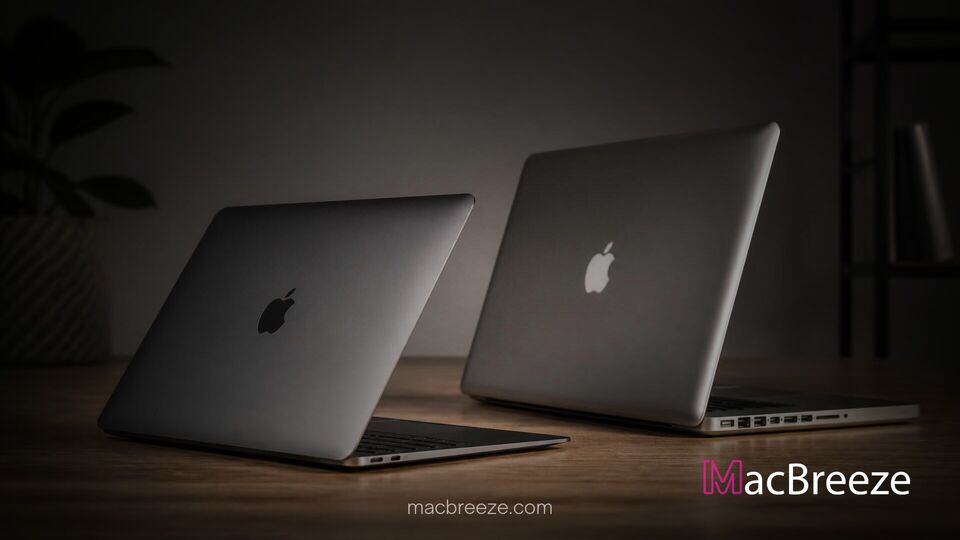
Apple has officially updated its support documentation, designating the 2018 Retina MacBook Air alongside two older 13-inch MacBook Pro models as obsolete worldwide. The change marks the conclusion of standard hardware support and official component production for these legacy Intel-based laptops.
The revised classification applies to the original 2018 Retina MacBook Air, the 13-inch 2018 MacBook Pro equipped with four Thunderbolt 3 ports, and the 13-inch 2017 MacBook Pro featuring two Thunderbolt 3 ports. All three models were previously assigned to Apple's vintage catalog before reaching the crucial seven-year post-distribution threshold.
apple classifies 2018 macbook air obsolete in latest hardware support update
Under its long-standing service guidelines, Apple classifies products as vintage once five years have elapsed since they were last distributed for sale. After seven years, the company transitions those devices into its obsolete category, effectively ending hardware servicing at Apple Stores and Apple Authorized Service Providers. The update means that Apple technicians will no longer order replacement parts or perform hardware repairs on these specific Intel notebooks.
Owners using these laptops should note that obsolete status does not render the machines immediately unusable. Computers will continue to function normally, but users seeking future hardware maintenance must rely entirely on independent repair facilities or secondary component markets. Furthermore, these legacy notebooks face growing software limitations as Apple focuses operating system releases and security updates primarily on modern hardware.
Apple Expands Obsolete Hardware List With Older MacBooks
The latest update to Apple's legacy support roster reflects the natural lifecycle transition of the company's hardware catalog as older Intel chips are retired. Over the past few years, Apple has systematically shifted its focus toward custom silicon platforms. As older laptops age past their service life, maintaining part supplies for complex logic boards and display assemblies becomes impractical.
By shifting these models to obsolete status, Apple concentrates its technical infrastructure on recent Apple Silicon Mac generations. System administrators and long-time users tracking hardware lifecycles can reference official support channels alongside recent software developments like Asahi Linux preparing official launch for M3 Apple Silicon Macs to see how legacy and modern architectures diverge over time.
Affected 2017 and 2018 MacBook Models
The newly designated machines played notable roles in Apple's notebook history. The 2018 Retina MacBook Air was a major release, introducing the first high-resolution Retina display, Touch ID integration, and a slimmer chassis to the lightweight Air lineup. It served as a bridge between classic portable design and modern input features, despite carrying the controversial third-generation butterfly keyboard design.
The 2017 and 2018 13-inch MacBook Pro models also marked an era defined by Intel processors and Thunderbolt 3 expansion. The 2017 two-port variant relied on Intel Kaby Lake architecture, whereas the 2018 four-port version introduced True Tone display tech and quad-core processing enhancements. Operating system support for these models has largely stalled, leaving the 2017 MacBook Pro capped at macOS Ventura and the 2018 Air restricted to macOS Sonoma.
What Obsolete Status Means for Service and Repairs
When Apple classifies a laptop as obsolete, the primary operational impact involves official repair availability. Authorized service networks can no longer order genuine replacement motherboards, top cases, or display panels directly from Apple warehouses. If a primary component fails due to physical damage or wear, official channels will turn the repair request away.
Users who run into software anomalies or system glitches can still utilize basic troubleshooting resources. Standard system recovery tools remain operational, and owners experiencing wireless display issues can consult guides on how to fix AirPlay not working or screen mirroring issues for software guidance. However, physical hardware failures will require third-party intervention.
Exceptions for Laptop Battery Replacement Coverage
Despite strict hardware service cutoffs, Apple maintains a notable exception regarding notebook power systems. Apple offers an extended battery repair policy for Mac laptops, providing standalone battery replacements for up to 10 years from the date a model was last distributed for sale, subject to parts availability.
This extended battery coverage offers relief to owners whose laptops are otherwise healthy but suffer from diminished cell capacity. Provided the internal enclosure, trackpad, and logic board remain functional and require no additional service, owners of the 2018 Retina MacBook Air and 2017/2018 MacBook Pro models may still schedule battery servicing through authorized channels.
Upgrading Options for Affected Mac Owners
For users looking to replace their aging Intel hardware, modern Mac alternatives offer significant performance and efficiency upgrades over 2017 and 2018 models. Modern Apple Silicon chips deliver vastly improved battery endurance, lower thermal output, and significantly faster processing capabilities compared to legacy dual-core and quad-core Intel chips.
Consumers considering desktop alternatives can keep an eye on hardware announcements, such as reports of retailers offering early deals on new Mac Mini models like the pre-order discounts on Apple's new M6 Mac Mini. Meanwhile, laptop users can explore current M-series MacBook Air and MacBook Pro configurations that feature advanced efficiency and longer software support windows.
Ultimately, the transition of the 2018 Retina MacBook Air and 2017/2018 13-inch MacBook Pro models into obsolete status reinforces the steady shift toward Apple Silicon. While existing machines will continue performing daily tasks, owners should plan their long-term hardware upgrades accordingly.