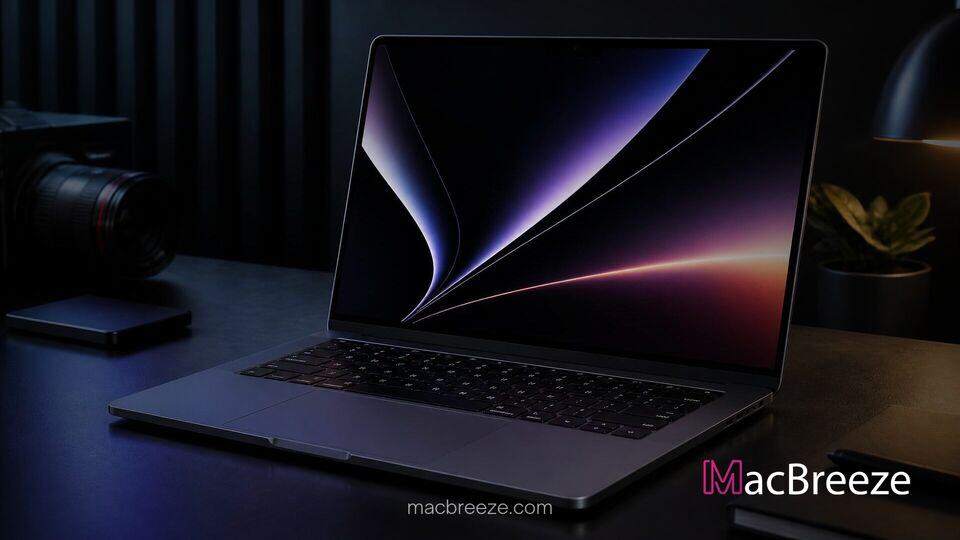
Apple has officially introduced its newly redesigned laptop lineup, offering custom configurations that reach unprecedented price points for mobile workstations. For buyers looking to max out every available specification on the top-end 16-inch model featuring the all-new touchscreen display, the final bill comes to $14,549.
While the addition of direct multi-touch controls marks a historic milestone for macOS, it is not the display technology driving the near-$15,000 price tag. Instead, massive upgrades in unified memory and solid-state storage account for the vast majority of the overall hardware cost.
Touchscreen MacBook Pro 16TB Max Spec Price Reaches Record Highs
The headline price of $14,549 applies to the flagship 16-inch model equipped with Apple's M5 Max silicon, featuring an 18-core CPU and a 40-core GPU. While the base 16-inch tier starts at a much lower entry point, stacking every available custom order choice rapidly inflates the invoice.
The single most expensive component option is the newly introduced 16TB solid-state drive. Moving from the standard 2TB baseline storage up to the full 16TB capacity adds a staggering $7,000 to the total cost. That single storage upgrade represents nearly half of the laptop's final price. Furthermore, choosing the maximum 128GB of unified memory adds another $2,000, meaning RAM and storage together account for over 60 percent of the total build.
Fully Configured 16-Inch MacBook Pro Breaks Price Records
To put the top configuration into perspective, a non-touch version configured with similar core specifications comes in slightly lower, demonstrating that the touch capability itself is a relatively modest portion of the total cost. Apple's new tandem OLED screen technology, marketed as the PROLED XDR Display, delivers up to 2,000 nits of peak brightness along with built-in touch recognition. Adding the optional glare-reducing nano-texture glass overlay requires an extra $150 fee.
For users looking to understand how the hardware pricing stacks up, here is a quick look at the major upgrade costs on the top-tier 16-inch model:
- Base M5 Max (40-core GPU, 48GB RAM, 2TB SSD): Starts at $4,799
- Memory Upgrade (48GB to 128GB Unified Memory): +$2,000
- Storage Upgrade (2TB to 16TB SSD): +$7,000
- Nano-Texture Display Option: +$150
Smaller 14-inch configurations top out slightly lower. A fully loaded 14-inch model with the same M5 Max chip, 128GB of unified memory, and 16TB SSD hits $14,249.
Breakdown of the $14,549 Maxed-Out Hardware Spec
Apple charges a consistent linear rate for its high-capacity internal storage. Upgrading from 2TB to 4TB costs $1,000, moving from 2TB to 8TB costs $3,000, and stepping all the way up to 16TB requires $7,000. This works out to approximately $500 per additional terabyte without any bulk discount tiers.
Memory configurations carry their own set of prerequisites. High-end creative professionals who need the full 128GB of unified RAM are required to select the top-tier 40-core GPU version of the M5 Max chip first, as lower-tier chip configurations restrict memory caps to 36GB or 64GB.
Impact of Unified Memory and 16TB SSD Storage Options
The option to pack 16TB of internal storage into a portable machine doubles the previous generation's 8TB limit. For digital imaging specialists, film editors working with uncompressed 8K video, and machine learning researchers, localized high-speed storage eliminates the need to carry external RAID arrays during field shoots.
Software ecosystem partners are already taking advantage of these hardware developments. Developers have updated major creative suites to utilize direct touch interactions alongside traditional inputs. For instance, Maxon brings touch controls for Cinema 4D to touchscreen MacBook Pro workflows, allowing artists to manipulate 3D viewports and sculpt models directly on the OLED panel.
High Component Costs Driven by Global Memory Demands
Industry analysts note that high-end flash memory and high-bandwidth memory chips remain expensive across the entire tech sector. Combined with Apple's proprietary unified memory architecture, where RAM is soldered directly onto the system package, post-purchase upgrades remain impossible. Users must select their required storage and RAM at the point of sale.
This pricing strategy reflects broader market shifts. Component supply squeezes have impacted hardware lines across the industry. Earlier this year, reports noted how Apple raises MacBook Neo education price to $649 amid memory shortages, highlighting how rising memory procurement costs influence pricing across both budget and ultra-premium tiers.
Target Audience for the $15,000 Touchscreen MacBook Pro
Apple is not aiming a $14,549 laptop at general consumers or everyday office workers. The target market consists of enterprise production studios, independent film crews, data scientists handling massive datasets, and software engineers running heavy virtualization environments.
For studio production environments, purchasing enterprise workstations at these prices is standard practice. Having 16TB of internal NVMe-grade storage allows creators to offload camera cards directly to internal storage while maintaining read and write speeds high enough to edit multiple streams of raw media simultaneously.
The machine also introduces structural improvements over prior designs. The overall chassis is thinner and lighter than previous generations, and the display features Apple's Dynamic Island integration alongside macOS optimizations. Technical analysis shows how Apple details how macOS adapts UI controls for touchscreen MacBook Pro interactions without sacrificing traditional keyboard and trackpad precision.
Market Availability and Configurator Options
The new touchscreen MacBook Pro family is available for order through Apple's online store and retail channels. Standard configurations with base storage options ship immediately, while highly customized orders such as the 16TB SSD tier are built to order.
While buyers who do not require enterprise-grade storage can secure a 16-inch touchscreen model starting at $3,399, those who require maximum performance and uncompromised internal capacity now have an option that stretches the boundary of laptop pricing. As software applications continue adapting to touch input and higher memory bandwidth, Apple's top-spec mobile workstation stands as one of the most capable and expensive laptops on the market.