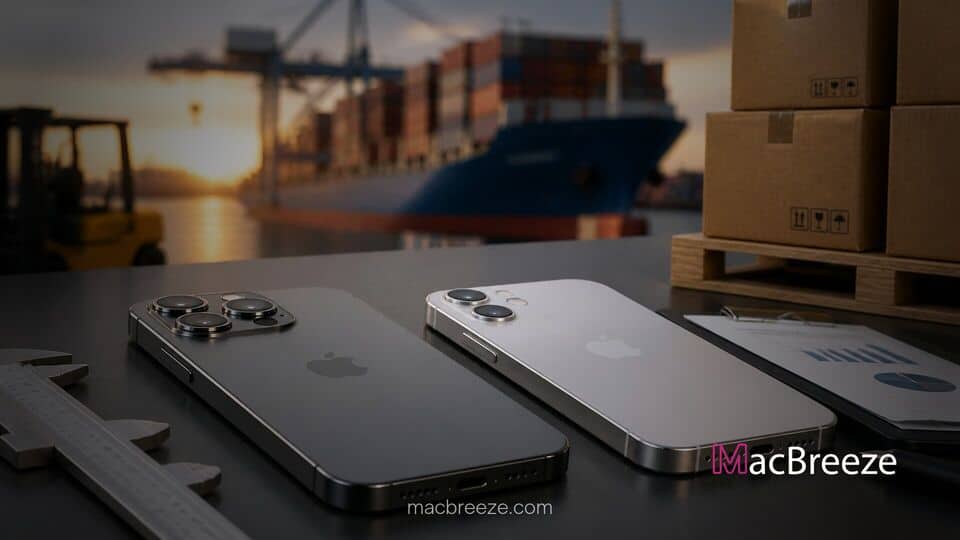
Supply chain challenges are threatening to pinch launch availability for Apple's first foldable smartphone. Industry analyst Jeff Pu of GF Securities has reduced his 2026 shipment projection for the device from 7 million down to 6 million units.
The updated forecast indicates that high technical precision standards around the internal folding hardware are restricting initial manufacturing speeds, even as market interest remains high following the flagship's official unveiling.
Hinge constraints lower iPhone Duo shipment estimates as manufacturing slows
>Following Apple's unveiling of the foldable iPhone Duo, market watchers have turned their attention from hardware specifications to manufacturing capacity. In a research note distributed to investors, GF Securities analyst Jeff Pu lowered his full-year shipment expectations by approximately 14 percent. Pu highlighted component bottlenecks rather than lukewarm consumer demand as the core driver behind the downward revision.
Unlike standard bar-style smartphones, book-style foldables depend heavily on intricate mechanical assemblies to ensure fluid motion and panel longevity. The current production constraints stem from assembly tolerance requirements and component yield rates for the multi-gear titanium hinge mechanism. These delays mean Apple could face constrained stock during the initial retail wave despite strong consumer interest.
Jeff Pu Lowers 2026 Shipment Projections
In his revised assessment, Pu estimates Apple will deliver roughly 6 million iPhone Duo units through the end of 2026. To put this volume into perspective, Pu projects that conventional flagship models like the iPhone 18 Pro and Pro Max will reach 72 million units over the same timeframe. The foldable model represents less than 10 percent of premium iPhone production for the year, underscoring the conservative scale of the initial ramp.
The revised figure still places Apple in a strong competitive position within the nascent folding market. Supply chain analysis firm TrendForce previously projected around 5 million units, indicating that analyst expectations broadly align around a modest initial release volume capped primarily by manufacturing throughput.
Technical Challenges With the Foldable Hinge Mechanism
The core difficulty lies in balancing structural rigidity with a minimal display crease. Apple's design uses a Grade 5 titanium housing and frame surrounding an internal multi-link gear system. This design supports a 7.6-inch inner OLED screen composed of a 10-layer ultra-thin material stack.
Manufacturing reports suggest that tight quality checks on crease visibility and long-term tension durability are contributing to lower yield rates at component factories. As early production testing progressed throughout the summer, suppliers encountered minute assembly tolerances, where tiny variations in gear positioning or adhesive thickness required manual adjustment or recalibration.
Because the hinge must open flat while sitting flush when closed to maintain IP68 water resistance, Apple has implemented rigorous stress-testing standards before units leave final assembly lines. These rigorous standards inevitably restrict daily output volumes during the early manufacturing phase.
Impact on Launch Availability and Order Delivery Timelines
Apple has already outlined a staged release calendar for its autumn lineup. While conventional flagship models arrive in retail channels during September, pre-orders for the iPhone Duo do not open until Friday, October 16, with initial retail deliveries starting on Friday, October 23.
With pre-orders fast approaching, constrained initial stock could lead to rapidly slipping delivery dates once online ordering begins. Customers who do not secure early launch-day allocations may face extended waiting windows stretching into late November or December, mirroring historical patterns seen with high-demand hardware redesigns.
Similar logistics trends occurred during previous flagship releases, such as when iPhone Pro shipping estimates slipped to October within minutes of pre-order windows opening. For the $1,999 base-tier iPhone Duo, limited physical retail inventory could make in-store pickup options difficult to secure during launch week.
Market Context for Apple's First Foldable Device
Despite early production speed bumps, industry research firm Counterpoint Research expects Apple to capture approximately 25 percent of the global foldable market by the end of 2026, placing it second behind market leader Samsung. The premium hardware specifications, which include an A20 Pro processor built on a 2nm node and specialized software integration in iOS 27, have generated strong interest among early adopters.
Software optimizations like video call lighting enhancements, including findings where iOS code hints Mac Edge Light features could land on the foldable screen, demonstrate Apple's attempt to justify the device's premium pricing through tailored user experiences.
Ultimately, component suppliers are expected to improve manufacturing yields as assembly processes mature throughout late 2026 and early 2027. For now, buyers planning to purchase Apple's first foldable device should prepare for tight opening-day inventory and act quickly when orders open in mid-October.