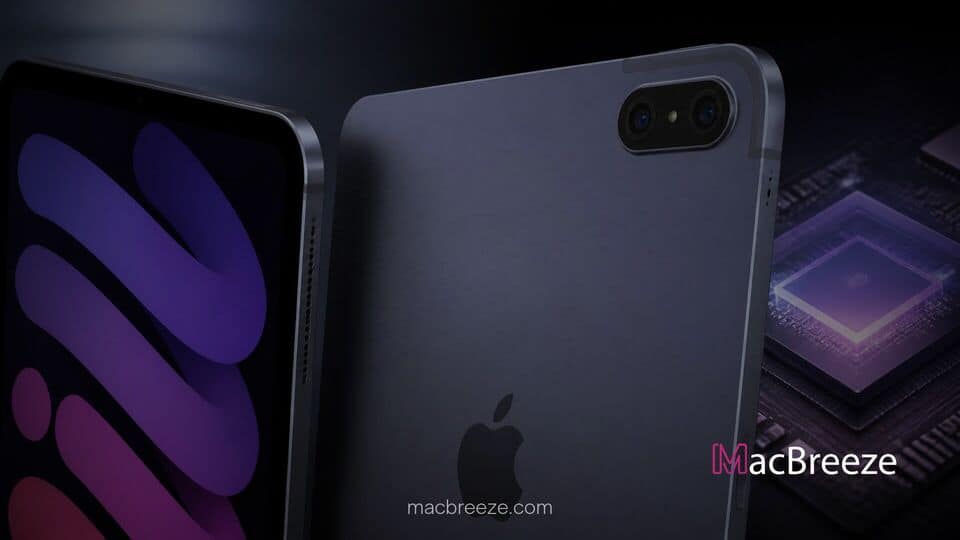
Internal Apple code and hidden product assets have uncovered comprehensive details about Apple's upcoming eighth-generation iPad mini. The discovery confirms the compact tablet will adopt an advanced A20 Pro processor alongside a re-engineered front camera positioned for horizontal landscape orientation.
The leak offers a clear breakdown of hardware enhancements planned for Apple's smallest tablet form factor. Alongside internal silicon upgrades, the software findings show notable adjustments to the physical housing and speaker assembly. Discovered backend code hints at several unannounced Apple devices, confirming that software builds often reveal upcoming hardware configurations well before public unveilings.
Leaked Code Points to Major Upgrades for iPad Mini 8
Key Specifications Discovered in Apple Software
References embedded deep within official operating system builds contain technical schematics and preliminary renders intended for system onboarding. Discovered by independent developers analyzing early update packages, these files explicitly associate the upcoming iPad mini model with Apple's cutting-edge silicon architecture.
The system files clarify lingering questions regarding processor selection. Earlier supply chain rumors debated whether the device would feature an intermediate chip or jump directly to flagship phone-grade silicon. The software identifiers directly link the tablet to the A20 Pro system-on-chip, aligning it performance-wise with flagship mobile hardware. Apple introduced the iPhone 18 Pro featuring a 2nm A20 Pro chip, indicating that the new iPad mini will share high-efficiency semiconductor technology with the latest phone lineup.
A20 Pro Chip and Landscape Camera Layout Details
Performance Impact and Front Camera Repositioning
The integration of the A20 Pro processor brings a massive performance boost to the mini series. Moving up from the A17 Pro chip used in the previous revision, the new silicon delivers significant processing improvements for artificial intelligence tasks, graphical rendering, and multi-tasking operations. The tablet is also anticipated to feature expanded unified memory capacity to support local Apple Intelligence processing without bottlenecks.
Equally significant is the relocation of the front-facing camera. The product assets reveal that the FaceTime lens has shifted from the short vertical top bezel to the long horizontal side bezel. This adjustment brings the smallest iPad into visual symmetry with the rest of Apple's tablet ecosystem. Positioned along the long edge, the camera keeps video calls naturally centered when the device rests horizontally or attaches to magnetic stand accessories.
Vibration-Based Speaker System and Water Resistance
Beyond screen layout adjustments, the leaked imagery highlights a subtle groove cut into the top perimeter of the glass enclosure. Technical analysis indicates this structural change is directly connected to a revamped audio delivery mechanism. Rather than relying on open, traditional speaker grilles cut directly through the aluminum casing, Apple appears to be implementing a vibration-based speaker system that projects sound through micro-grooves and structural resonance.
Eliminating wide speaker perforations serves a dual purpose. Aside from creating a cleaner exterior aesthetic, sealing off acoustic cavities substantially enhances ingress protection. Industry analysts suggest this acoustic redesign will help the new iPad mini achieve superior water and dust resistance ratings, making the compact device far more resilient during outdoor and portable use.
Release Timeline and Expected Market Positioning
The appearance of fully finalized artwork and hardware identifiers inside system code usually signals an imminent launch window. Apple traditionally introduces tablet hardware updates during autumn product announcements. Industry observers anticipate an official announcement before the end of the current quarter. Apple confirmed iOS 27 and iPadOS 27 public release dates for mid-September, establishing the operating system foundation required to support new hardware features.
Alongside the raw processing power of the A20 Pro, display technology updates are widely expected. Multiple supply chain sources suggest Apple will transition the compact model to an OLED panel. Switching from traditional LCD to OLED will grant higher contrast ratios, deeper black levels, and improved battery efficiency. Discovered Apple code confirms iPad specs across multiple models, illustrating how software updates systematically prepare the broader iPadOS ecosystem for display and processor architectural shifts.
Reaction from the developer community and consumer forums has been largely positive. Users who utilize the compact tablet for handheld gaming and on-the-go productivity have long called for a landscape camera alignment and faster processing power. While pricing details remain undisclosed, the inclusion of premium silicon and display upgrades suggests Apple will position the upcoming tablet as a premium mobile device for power users.
With software preparations nearing completion, Apple appears ready to modernize its smallest tablet form factor. The combination of A20 Pro performance, centered landscape video calling, and upgraded audio sealing marks one of the most substantial updates to the iPad mini lineup in years.