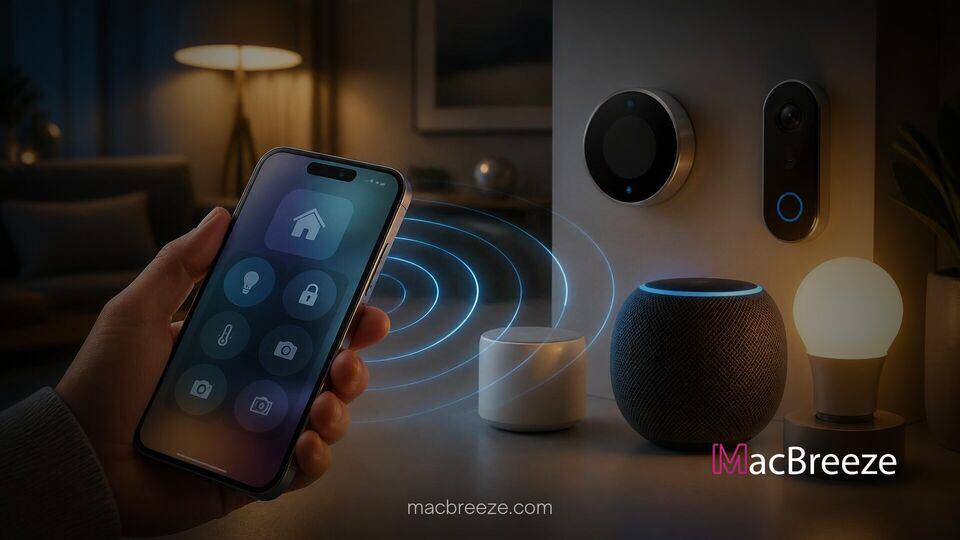
Code references discovered in the latest developer builds of iOS 27.2 reveal an upcoming HomeKit framework designed to transform how users interact with nearby smart home hardware. The underlying software reveals system-level proximity controls that allow users to manage connected hardware simply by bringing their iPhone close to a device, completely eliminating the need to search through the Home app manually.
This development comes as Apple prepares for its upcoming product ecosystem expansion, pointing toward deeper hardware and software integration across future smart home lineups. The technical groundwork laid out in the update highlights both touchless interaction modes and pre-power pairing capabilities.
iOS 27 2 Code Proximity Controls Smart Home
The discovery in the iOS 27.2 code outlines a dedicated proximity management system within HomeKit that detects nearby smart home hardware using a combination of Near Field Communication (NFC) and Bluetooth Low Energy (BLE) broadcasts. When an iPhone comes within close range of a supported accessory, the system instantly triggers interactive shortcuts on screen. Thermostats surface immediate temperature adjustments, while smart deadbolts and security cameras trigger video previews or unlock triggers without forcing the user to manually launch an application.
iOS 27.2 Code Discovers Touchless Proximity Controls
According to findings shared by software researchers Aaron Perris and pdfu, the new proximity system represents a significant shift toward ambient computing inside the home. Rather than relying solely on automated routines or manual taps, the operating system uses spatial awareness to surface relevant controls right when a user physically approaches a fixture.
When an iPhone user walks up to a connected wall unit or door fixture, the device recognizes the hardware identity payload embedded in the accessory. This triggers an immediate, context-aware interface card tailored specifically to that piece of hardware. The feature mirrors the handoff experience previously reserved for HomePod audio transfers, adapting that seamless physical interaction to broader home automation management.
Instant Accessory Interface Without Opening Home App
In practice, bringing an iPhone near a connected fixture provides immediate access to primary device functions. Rather than navigating menus, tapping a smart thermostat prompts an action panel directly over the current screen, allowing quick temperature or fan adjustments. Similarly, approaching a smart lock presents an instant tap-to-unlock trigger.
Users retain full granular authority over how these interactions behave. Within the Home app settings in iOS 27.2, Apple has added dedicated toggles that allow homeowners to turn proximity controls on or off per device. This ensures that high-traffic areas do not produce unwanted prompts every time someone walks past a sensor.
Dynamic Island Integration and Notification Popups
For modern iPhone models, proximity alerts reside seamlessly within the Dynamic Island. When near a compatible device, the Dynamic Island expands slightly to display a subtle device icon alongside an action prompt such as "Open Controls" or a live camera preview feed.
On iPads or older iPhone models lacking the Dynamic Island cutout, the system delivers an elegant 30-second interactive banner notification across the top of the screen. Tapping the prompt immediately expands the full HomeKit control card, maintaining feature parity across Apple's multi-device portfolio.
Pre-Power Pairing Mechanism via Near Field Communication
Beyond proximity controls for active accessories, inspection of the iOS 27.2 frameworks revealed a revolutionary setup process that allows smart home hardware to pair before receiving electrical power. This zero-power commissioning capability utilizes passive NFC tags built into the hardware components.
By tapping an iPhone against an unboxed smart light switch, thermostat, or deadbolt, the operating system pre-loads network credentials, HomeKit identities, and cryptographic keys onto the accessory's secure element chip while it remains completely unpowered in its packaging. Once installed and powered on, the accessory instantly attaches to the local Thread or Wi-Fi network and completes its Matter registration in the background without requiring manual code scanning or setup delays.
Ecosystem Impact for LG and Schneider Smart Devices
Code references inside the HomeKit database, specifically within a internal table designated for second-party products, point to extended partnerships with prominent hardware manufacturers. The database explicitly lists upcoming hardware co-developed with LG, including smart deadbolts, video doorbells, wall thermostats, and security cameras. Additionally, entries indicate integration with Schneider Electric hardware, such as smart thermostats and climate sensors.
These specialized entries suggest that while basic Matter devices will operate normally across platforms, Apple is creating enhanced ecosystem privileges for select hardware partners. Apple's officially announced October 13 press event in New York is widely expected to showcase this broader vision alongside new central hub hardware, building upon earlier findings like the iMac G4-inspired smart home hub design leaks.
Furthermore, these system changes coincide with broader platform enhancements, such as iOS 27.2 beta granular controls and recent macOS 27.2 touch gesture support across Apple's software updates.
Availability and Expected Software Rollout
The proximity control frameworks discovered in iOS 27.2 remain under active internal testing during the current beta developer cycle. Because these software features rely heavily on upcoming hardware profiles and second-party firmware standards, Apple may activate these controls progressively alongside official hardware announcements.
As software updates progress through developer and public beta channels, iOS 27.2 continues to lay the foundation for an effortless, context-driven home setup that reduces friction for connected home environments.