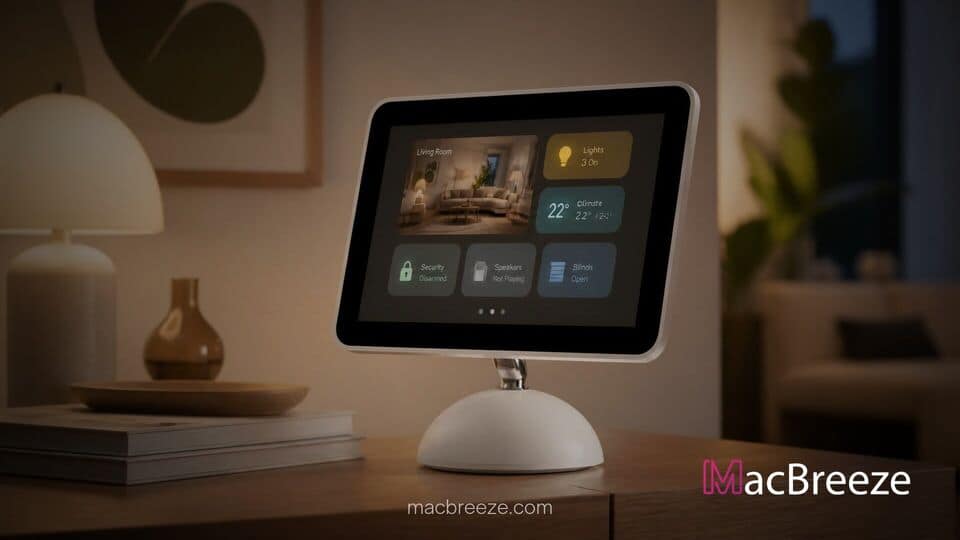
A fresh series of industry leaks indicates that Apple is preparing to enter the dedicated home display market with a hardware design heavily inspired by one of its most celebrated retro personal computers. According to detailed supply chain reports, the upcoming smart home hub features a compact screen mounted atop a rounded metallic base, evoking the memorable aesthetic of the 2002 iMac G4.
The upcoming product aims to serve as an command center for home automation, video calls, media playback, and household communications. By marrying nostalgic hardware choices with cutting-edge artificial intelligence, Apple hopes to establish a firm foothold in a category currently dominated by rival smart displays.
Report Details iMac G4-Inspired Smart Home Hub
Leaked details regarding the apple smart home hub imac g4 design suggest that Apple chose this specific form factor to provide maximum utility on kitchen counters, nightstands, and side tables. The primary tabletop model pairs a thin, square-ish panel with a hemispherical base that houses internal speaker drivers and directional microphone arrays. A short, polished metal arm connects the display to the base, allowing users to manually tilt the screen forward or backward for optimal viewing angles.
This retro-inspired silhouette pays homage to Steve Jobs' iconic sunflower-like desktop computer, which revolutionized desktop design over two decades ago. However, modern engineering permits a far sleeker profile, with display bezels and overall thickness comparable to modern iPad hardware. Additionally, reports indicate that Apple has developed a secondary variant, code-named J491, designed for direct wall mounting via custom magnetic hardware to suit different living spaces.
Display Specs, Camera, and Dome Stand Design
The device reportedly centers on a compact screen spanning approximately 6 inches, framed by clean, rounded corners and slim dark bezels. A single wide-angle camera is positioned on the front panel to enable FaceTime calls and spatial awareness features. Unlike portable tablets, the hub operates exclusively on external power supplied through a rear USB-C port, omitting an internal battery to keep weight low and maintain structural stability on its rubberized base.
Physical controls have been kept to an absolute minimum, with no dedicated power or volume buttons present on the exterior chassis. All audio adjustments, brightness settings, and system navigations are handled either through touch controls or hands-free voice commands. The circular base features concentric rings of micro-perforations to allow clear room-filling sound and accurate far-field voice detection across busy living environments.
Integration With Siri AI and Apple Home Ecosystem
At the heart of the smart display experience is a tailored operating system that blends elements of iOS, watchOS, and tvOS into an intuitive dashboard. The platform relies heavily on Siri AI to process complex multi-step voice requests, manage HomeKit and Matter accessories, and coordinate family schedules. Users can set customizable clock faces, view interactive widgets, check environmental sensors, and run home automation shortcuts.
Privacy and personalization are maintained through intelligent sensor recognition. Utilizing facial recognition and voice profiling, the hub automatically detects which family member is interacting with the device and instantly pulls up their personalized calendar events, personal music playlists, and private notifications. A guest mode is also included to ensure that personal data remains hidden when visitors enter the room. Beyond personal management, the software connects seamlessly with broader ecosystem features; developers can build specialized apps while software updates align with platform initiatives similar to those seen in macOS 27 Safari updates and modern mobile releases.
Expected Launch Timeline and Hardware Strategy
Industry insiders report that Apple is positioning the new smart hub as part of a broader revitalized strategy for living space technology. The launch timeline points toward an official announcement in October, alongside refreshed companion devices like an updated HomePod mini and a higher-performance Apple TV box designed to support local AI processing. Recent reports on Apple's silicon expansion, including leaks surrounding the iPad Mini 8 leak and A19 chip code discoveries, underscore the company's commitment to deploying efficient, on-device intelligence across its entire lineup.
By entering the dedicated smart display sector, Apple intends to establish a permanent physical presence in user households, serving as a primary node for HomeKit interactions. While earlier rumors suggested the company was testing complex robotic arms for high-end home displays, this iMac G4-style stationary hub represents a pragmatic, highly functional first step. Apple's willingness to experiment with unique form factors is visible across several hardware divisions, mirroring recent prototype explorations highlighted in reports on Vision Pro compute puck concepts and screenless wearable designs.
If the leaked details hold true, Apple's upcoming hub will offer a thoughtful blend of industrial design heritage and contemporary artificial intelligence. By combining retro design language with sophisticated Siri AI functionality, the device could prove to be an attractive entry point for users seeking a centralized smart home control center.