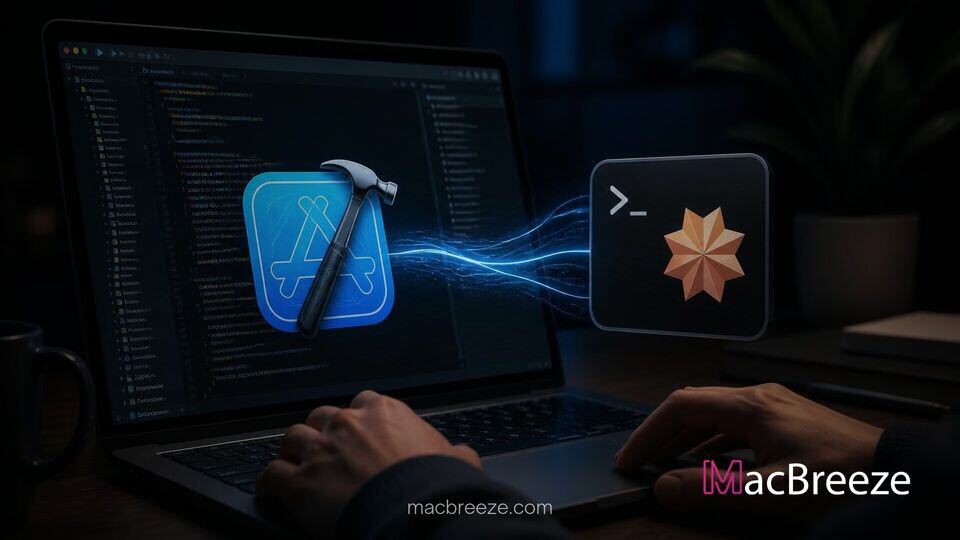
Apple has quietly expanded its developer tooling ecosystem by releasing an official Apple-authored plugin in Anthropic's official Claude Code marketplace. The new integration allows the Claude Code command-line AI agent to interact directly with local Xcode installations on macOS, giving the assistant full access to project builds, test runs, log outputs, and device simulators.
By establishing a direct bridge between command-line AI workflows and Apple's primary integrated development environment (IDE), the plugin eliminates friction for software engineers building applications across iOS, iPadOS, and macOS platforms.
Apple Launches Official Xcode Plugin on Claude Code Marketplace
The new apple xcode plugin claude code integration marks a significant shift in how Apple engages with external developer agents. Rather than requiring engineers to manually bridge terminal utilities or parse compiler output, the official plugin provides a structured interface that connects Claude Code directly to Apple's native build and diagnostic pipelines.
Available directly through Anthropic's official repository, developers running Claude Code on macOS can install the package using a simple marketplace command. Once activated on a system running a modern version of Xcode, the agent gains permission to inspect project configurations, trigger native compilation routines, and monitor app execution without requiring developers to constantly switch context between their terminal and the graphical Xcode interface.
Core Features and MCP Simulator Integration
The official plugin exposes a comprehensive set of capabilities designed to handle complex, end-to-end software engineering tasks on Apple platforms:
- Native Build Management: Executes target builds using local system tools and processes detailed output directly in the agent session.
- Automated Test Execution: Runs XCTest and Swift Testing suites, capturing detailed stack traces and reporting failure locations automatically.
- SwiftUI Preview Inspection: Interacts with rendered interface previews to identify layout discrepancies and evaluate visual UI changes.
- Simulator and Device Control: Boots, manages, and deploys builds to target Apple device simulators or attached hardware via standardized command channels.
- Documentation and Diagnostic Access: Queries internal project build logs and contextual platform documentation to assist with debugging complex runtime crashes.
Underneath the surface, the plugin leverages Apple's Model Context Protocol (MCP) bridge, connecting terminal-driven requests directly to underlying system utilities like xcodebuild, simctl, and devicectl. This architecture ensures that terminal operations run within authorized developer sandboxes without compromising system security.
Technical Requirements and macOS Implementation Details
To take advantage of the official integration, software engineers must run Claude Code on a Mac equipped with a recent release of Xcode and active developer command-line tools. The plugin relies on existing authorization options introduced in Xcode's platform settings, where developers specify permission levels for external AI agents attempting to perform workspace operations.
Under standard settings, developers can allow external agent access globally or restrict permission exclusively to windows where Xcode is currently open. This setup ensures that automated agent tasks cannot run silently in the background without explicit user awareness.
The release follows recent structural updates to Apple's development pipeline. As detailed when Mac revenue surged 24% as Apple reported $114.5 billion in Q4 2026, professional Mac usage remains at an all-time high, driven largely by software engineering teams adopting hardware powered by M-series silicon like the 14-inch M6 MacBook Pro.
What This Means for AI-Assisted Mac Software Development
For Apple platform developers, the launch of an official marketplace plugin represents a major quality-of-life improvement. Historically, using terminal-based AI coding agents to build native Apple software required custom shell scripts, third-party wrappers, or project generator files like XcodeGen to manage project files accurately.
With native plugin support, agents can modify .swift source files, recompile projects via target schemes, analyze compilation errors, and attempt automated code fixes entirely within a single interactive workflow loop. If a build fails due to a missing framework import or syntax mismatch, the agent immediately reads the raw build logs, identifies the problem line, applies the fix, and runs the build again to confirm resolution.
Furthermore, developers working within tight operational limits gain clearer oversight of background tasks. While news recently surfaced that Apple cut internal AI usage budgets for engineering teams to curb token costs, public platform updates like this plugin enable external developers to manage their own API budgets effectively while retaining full control over local build processes.
Looking Ahead at Apple AI Developer Ecosystem Tools
The release of the Xcode plugin for Claude Code reflects a broader industry movement toward agentic software development, where AI assistants transition from basic code completion windows into active co-developers capable of building, testing, and debugging full software projects.
Apple has consistently expanded its integration points across macOS developer tools, granting authorized third-party services standard access to system frameworks. Recent platform updates, such as when Apple opened Siri AI integration to third-party app developers in iOS 27.3 and issued new platform previews like macOS Golden Gate 27.3, emphasize Apple's ongoing commitment to building deeply interconnected platform tooling.
As developer adoption of autonomous coding agents continues to mature, official integrations from platform vendors will play a pivotal role in maintaining build reliability, protecting system security, and simplifying complex development workflows for software engineers globally.