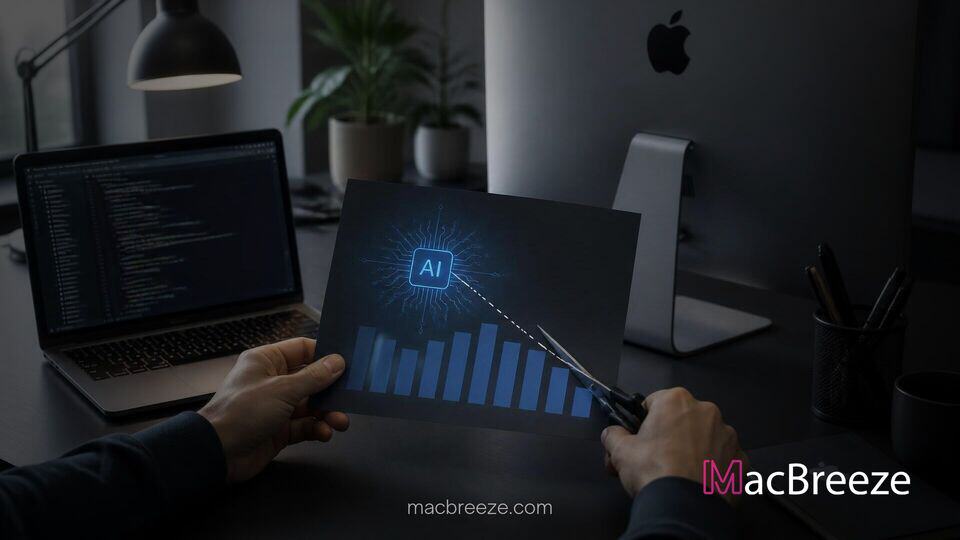
Apple has begun scaling back daily artificial intelligence spending allowances for its software development and engineering teams as part of a company-wide initiative to control rising operational costs. The decision reduces daily third-party AI model usage caps for select engineering groups from $300 down to $200 per employee, with further budget adjustments under consideration across multiple departments.
The internal spending adjustments arrive even as Apple continues to embed artificial intelligence tools into its core development processes, modernizing developer workflows and internal tools. While staff members are actively encouraged to leverage machine learning models to accelerate code generation, bug hunting, and software testing, corporate leadership is placing stricter boundaries around the financial costs associated with high-volume token consumption.
apple cuts internal ai spending limits
Apple has officially implemented new restrictions on internal artificial intelligence budgets, reducing the maximum daily token allowances for key technical staff to keep technology overhead manageable. Under the revised guidelines, daily developer spending caps for third-party AI models such as OpenAI's ChatGPT, Anthropic's Claude, and Google's Gemini have dropped from $300 per day to $200, with management planning potential future reductions to $100 for some engineering groups. Teams outside of core engineering functions, which currently operate under a $100 daily limit, may see their daily caps lowered to $25 per employee.
Apple Restricts Employee AI Spending Limits to Curb Costs
The decision to impose strict spending boundaries comes as corporate leaders balance massive long-term research investments with day-to-day operational efficiency. Third-party artificial intelligence providers charge enterprises based on token usage, which measures the volume of text, code snippets, and data processed during queries. Complex software engineering tasks, such as automated refactoring, continuous integration testing, and large-scale code analysis, naturally burn through millions of tokens rapidly, generating substantial recurring bills for large-scale enterprise deployments.
To ensure critical projects do not stall under the new policy, Apple has established an internal administrative process allowing staff members to submit exception requests. Developers working on resource-intensive initiatives can request higher daily limits directly from senior leadership when standard allocations prove insufficient for their specialized workflows.
Engineering Daily Allowances Cut From $300 to $200
The reduction from $300 to $200 represents a one-third cut in standard daily allowances for software engineers. Internal feedback regarding the policy change has been mixed across different divisions. Several internal developers reported that average daily usage rarely approached the previous $300 ceiling, making the cap reduction a practical realignment of unallocated capital rather than a hindrance to everyday tasks. However, heavy users engaged in constant automated code generation and continuous code reviews feel the squeeze more acutely.
The financial adjustments come during a period of leadership transition, following Apple CEO John Ternus outlining an on-device AI strategy focused on lean operational structures and reduced management complexity. As part of broader efficiency reviews, some business units have brought in external operations consultants, creating internal debate over whether token budget reductions hint at wider corporate restructurings or simple fiscal housekeeping.
Balancing Internal AI Spending With Consumer Product Features
The cost-containment measures highlight a strategic tension within major technology corporations: scaling up external customer-facing features while curbing internal operational overhead. Apple continues to expand its consumer ecosystem capabilities, as seen when Apple opened Siri AI integration to third-party developers in iOS 27.3 and confirmed broader international rollouts. However, management remains vigilant regarding server-side expenses and external vendor spending.
To reduce reliance on costly cloud-hosted models, Apple is increasingly urging engineering teams to transition toward internal foundation models and leverage local device hardware. High-performance Apple Silicon processors installed across the Mac lineup allow software engineers to run localized AI models directly on developer workstations, completely eliminating API token charges for routine tasks like basic syntax checking and documentation drafts.
Operational Impact on Developer Workflows and Token Usage
Apple is not alone in reassessing internal software tooling expenses. Across the broader technology landscape, enterprises that initially granted unrestricted access to external generative AI services during the initial adoption phase are now establishing structured spending guidelines. Industry peers including Meta, Tesla, Uber, and Microsoft have similarly introduced internal spending limits or monthly tool caps to prevent runaway token costs.
Despite these internal spending controls, Apple continues to post strong financial results across its core hardware segments. In recent financial reporting, Mac revenue surged 24% as Apple reported $114.5 billion in Q4 2026 revenue, demonstrating robust underlying business health. The internal daily token limits reflect proactive operational discipline rather than financial distress.
Moving forward, Apple's engineering teams will likely rely more heavily on optimized local models running on native hardware alongside selective usage of third-party cloud models for high-complexity code analysis. As artificial intelligence tools mature from novel experiments into standard developer utilities, tech giants will continue refining internal allocation policies to ensure productivity gains remain cost-effective.