Apple Chief Executive Officer John Ternus has articulated a clear, hardware-first vision for the company's artificial intelligence initiatives on the Mac platform. Speaking in recent executive interviews, Ternus explained how Apple intends to integrate local machine learning into macOS without compromising user privacy or shipping novelty software features.
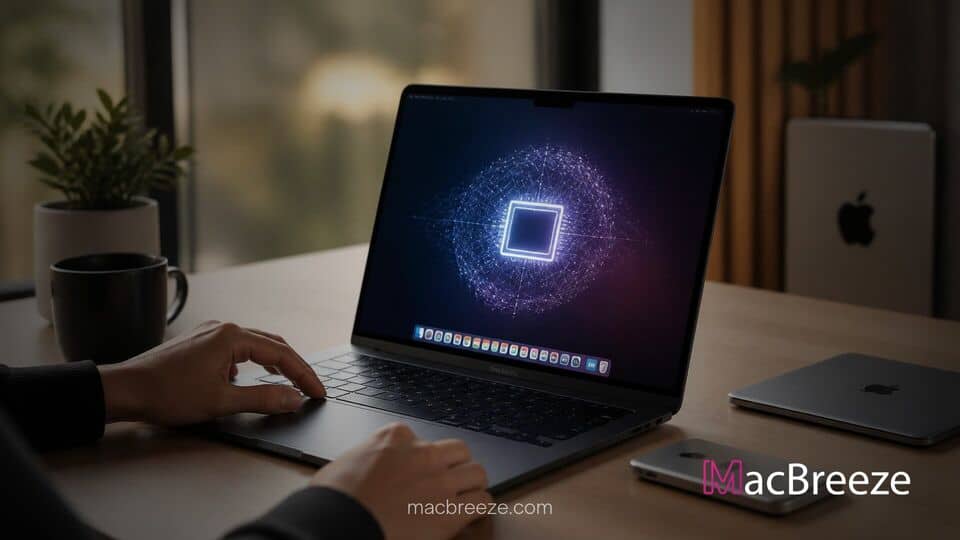
Rather than rushing cloud-heavy feature iterations into the market, Apple is focusing on optimizing local performance across its custom chip lineup. By combining unified memory architectures with dedicated Neural Engine cores, the Mac ecosystem is being tailored to execute complex AI workloads directly on user hardware.
Apple CEO John Ternus AI Strategy Focuses on Real-World Utility
Addressing widespread discussions surrounding generative tools and autonomous agents, Apple CEO John Ternus emphasized that the tech giant will not rush unpolished features to score short-term industry points. Ternus stated that Apple plans to deploy machine learning where it adds tangible daily value, maintaining that technology should serve the user seamlessly rather than demanding constant attention.
"We don't want to ship AI for AI's sake," Ternus noted during a recent discussion on product direction. He added that when background processing is designed correctly, users will judge the software by how much it enriches their workflow rather than whether a specific task relied on artificial intelligence or traditional algorithmic code.
John Ternus Defends Apple's User-Centric AI Philosophy
Under Ternus, who formally took over executive leadership following a long tenure leading Apple's hardware engineering division, the company continues to champion user experience and privacy over sheer feature count. While competing platforms have rushed cloud-hosted chat interfaces and autonomous desktop agents into their desktop operating systems, Apple has maintained a deliberate pace built around safety, data security, and systemic reliability.
Ternus defended this stance against claims that traditional application software could quickly be rendered obsolete by automated interfaces. He argued that human intent and deliberate creative software development remain essential elements of personal computing. Rather than delegating complete control to autonomous bots, Apple views machine learning as an invisible companion intended to boost human productivity and guard user security.
Rejection of Feature Velocity and AI Hype
Industry analysts have frequently contrasted Apple's measured deployment with rival tech firms spending tens of billions on remote server infrastructure. Ternus highlighted that rushing half-baked features out to meet market hype often leads to inconsistent software performance and severe privacy trade-offs. By focusing on deep system integration within macOS, Apple aims to deliver stable, offline-capable tools that execute instantly on the user's laptop or desktop hardware.
Leveraging Apple Silicon for On-Device Machine Learning
The foundation of Apple's intelligence road map rests squarely on Apple Silicon. From foundational desktop architectures to specialized portable hardware like the Apple MacBook Neo, hardware integration remains Apple's primary structural advantage. Recent hardware upgrades across Mac desktop and laptop lineups have expanded unified memory bandwidth specifically to accommodate local Large Language Models (LLMs) and diffusion pipelines.
System updates such as macOS 27.2 demonstrate how Apple is continuing to optimize system frameworks for local processing, expanding native language support and context processing without forcing every query through a remote data center. Devices like the high-end M6 iMac lineup and advanced pro laptops are designed to keep sensitive user data completely local. By executing model inferences directly on the Neural Engine, macOS limits external security vectors while ensuring ultra-low latency for native operating system tasks.
Strategic Implications for macOS and Mac Hardware
Apple's strategic reliance on local processing also influences how software updates are deployed across both modern and legacy hardware ecosystems. Even as system updates deliver targeted fixes, such as when macOS 27.2 prevents software upgrades from removing Rosetta for legacy app support, the core OS architecture is steadily shifting toward hardware-accelerated intelligence.
As Apple prepares future software iterations and explores new hardware form factors, including research into touchscreen MacBook Pro UI adaptations, local artificial intelligence will serve as an underlying framework rather than a standalone gimmick. For Mac owners, this approach ensures that new features remain fast, private, and deeply integrated into daily computer use.
By keeping product polish and on-device processing at the center of his operational roadmap, John Ternus is shaping an AI strategy that builds directly on Apple's traditional hardware strengths. As high-speed unified memory becomes standard across the Mac lineup, Apple is positioning its personal computers to handle demanding machine learning tasks while upholding strict user privacy standards.