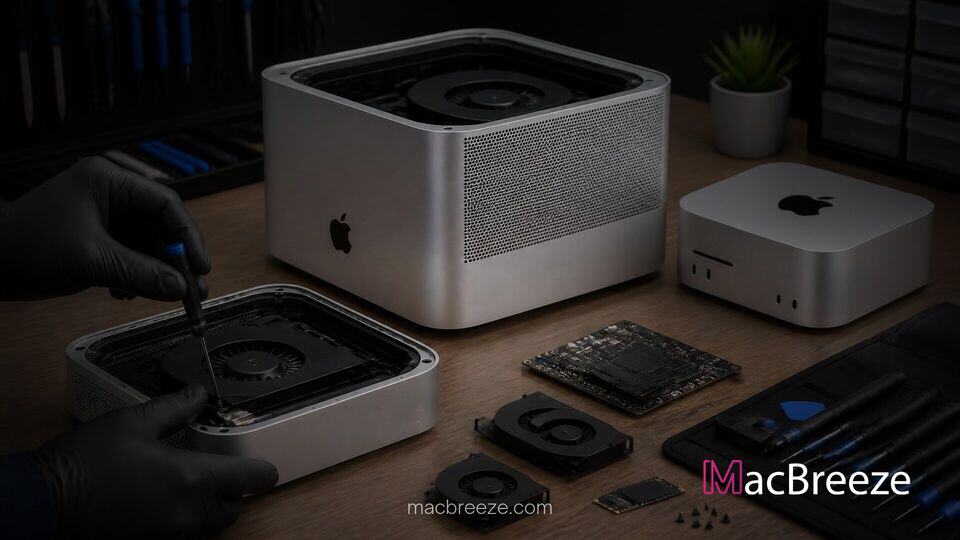
Apple has expanded its official Self Service Repair Store to support its latest desktop lineup, bringing genuine replacement components, official manuals, and repair tools to owners of M5 Mac Studio and M6 Mac Mini machines. The update allows independent technical experts, technicians, and experienced individual users across supported regions to perform out-of-warranty hardware fixes directly.
By bringing its high-performance desktop architectures into the DIY repair ecosystem, Apple is granting customers access to the exact components used by Authorized Service Providers. The program expansion reflects continuous pressure from international consumer protection regulators and right-to-repair advocacy groups advocating for longer product lifespans and accessible hardware maintenance.
apple self service repair mac studio mac mini parts
The latest update to Apple's DIY catalog introduces a broad selection of official repair components tailored to the internal layouts of modern Apple Silicon desktops. For the high-end M5 Mac Studio (available in M5 Max and M5 Ultra configurations), customers can order items ranging from cooling fan assemblies and power supplies to internal SSD modules, Thunderbolt ports, audio boards, and full logic board replacements.
Meanwhile, the parts catalog for the M6 and M5 Pro Mac Mini features critical internal components, including thermal management fans, speakers, power supplies, logic boards, and CMOS backup batteries. Customers seeking to fix hardware issues without visiting an Apple Store can now purchase these parts directly online or rent specialized tool suites tailored to complex desktop teardowns.
Available Components and Required Tools
Working on compact desktop chassis requires specialized gear to safely open enclosures and maintain thermal connections. Alongside individual components, Apple provides specific tool kits and diagnostic equipment on a rental or purchase basis. These toolkits include specialized torque drivers, nylon spudgers, adhesive cutters, and custom lifting handles required to open the compact frames of the Mac Mini and Mac Studio safely.
Prior to purchasing any component, Apple requires customers to review the official digital repair manual for their specific model. Each manual contains a unique document ID that must be entered during the checkout process on the Self Service Repair Store, ensuring that buyers purchase the exact parts compatible with their machine's hardware revision.
Repair Credit Program and Cost Breakdown
To encourage responsible electronic waste disposal and component recycling, Apple offers return credits when users send back replaced original parts. These credits can substantially offset total repair expenses. While major modules like logic boards remain expensive due to integrated system-on-chip architectures, minor fixes such as internal fans, auxiliary ports, and power supply units present a cost-effective alternative to complete unit replacements.
This repair pricing structure aligns with Apple's broader service strategy across mobile and desktop hardware. Customers faced with out-of-warranty hardware failures can now evaluate self-repair against out-of-warranty service fees charged by official repair centers, providing a clearer financial picture for tech-savvy hardware owners.
Impact on Independent Repairs and Mac Longevity
The addition of recent Mac desktops marks another milestone in the gradual expansion of right-to-repair choices across consumer electronics. For independent repair shops, the availability of original parts reduces reliance on third-party salvage components, ensuring higher repair reliability and preserving system security functions. System Configuration tools built into macOS allow users to initiate part pairing directly on their machines without calling Apple support agents, streamlining final post-repair calibration steps.
Enabling direct repairs helps delay hardware obsolescence by keeping powerful workstation hardware operational for years. While older models eventually reach the end of their service lifecycle—much like when Apple classified the 12-inch Retina MacBook as obsolete—access to official replacement modules significantly extends the active lifespan of modern Mac Studio machines and desktop systems.
Apple maintains that Self Service Repair is primarily designed for individuals with technical experience in repairing delicate electronic assemblies. For the vast majority of consumers, visiting an Apple Authorized Service Provider remains the recommended path. Nevertheless, expanding genuine parts and official manuals to the M5 Mac Studio and M6 Mac Mini gives power users and repair technicians greater control over maintaining their hardware.