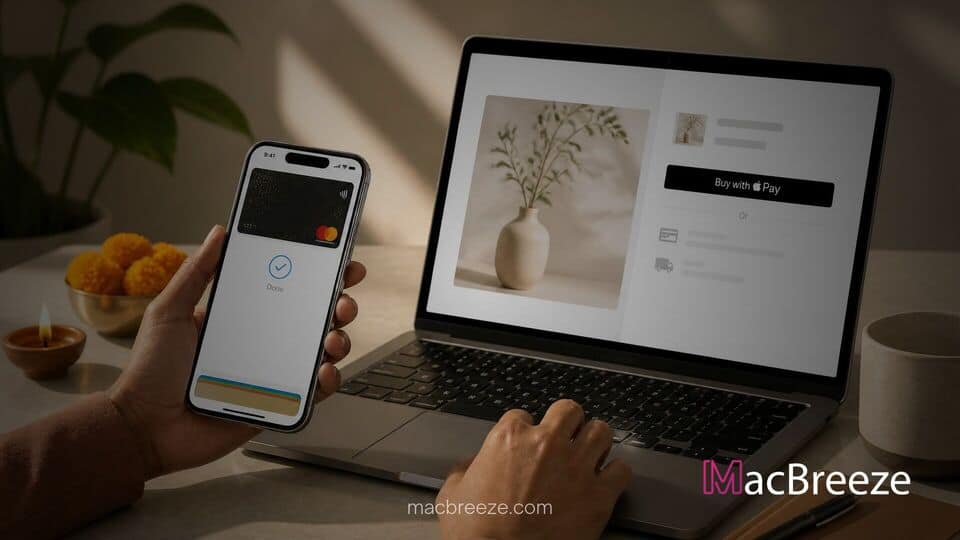
Apple has officially expanded its contactless digital payment platform to India, enabling iPhone, iPad, and Apple Watch users across the nation to make secure tap-to-pay transactions in physical stores, on websites, and within mobile applications. The long-awaited deployment debuts in partnership with major local banking and payment institutions, with web checkout support on Mac slated to arrive in an upcoming software release.
The introduction of the service brings standard Apple Wallet card integration to millions of device owners in one of the world's fastest-growing smartphone markets. While mobile users can immediately provision eligible cards to complete purchases using biometric authentication like Face ID and Touch ID, desktop and laptop users will soon gain identical functionality through native Safari integration on macOS.
apple pay india launch mac support
The apple pay india launch mac support roadmap highlights Apple's phased strategy to bring high-security card tokenization to Indian consumers. Initially launching with support for Visa and Mastercard credit cards issued by Axis Bank, the system allows device holders to make seamless in-store taps at contactless point-of-sale terminals and complete checkout inside iOS apps. Web checkout for Mac computers is scheduled to go live shortly, completing the cross-platform ecosystem rollout across Apple hardware.
Under this launch implementation, shoppers no longer need to enter physical card numbers, security codes, or wait for one-time passwords (OTPs) sent via SMS during online or in-store purchases. Instead, each transaction is authorized directly on the device using a unique hardware-encrypted Device Account Number stored securely inside the processor's Secure Element.
Bank Partnerships and Supported Merchant Networks
At launch, Axis Bank serves as Apple's premier card-issuing partner in India. Customers holding eligible Axis Bank Visa or Mastercard credit cards can instantly provision their cards within the Apple Wallet app. Apple is actively collaborating with additional domestic banking institutions to broaden card support in the coming months as financial integration expands.
To ensure widespread acceptance from day one, Apple has partnered with leading Indian payment service providers and aggregators, including Razorpay, Paytm, Pine Labs, PayU, JusPay, Cashfree, and Worldline. Major merchant brands and platforms supporting the payment method at launch include the Apple Store, Zomato, Blinkit, Croma, Tata 1mg, Chaayos, and Ixigo. Standard credit card reward programs, cashbacks, and points continue to accumulate seamlessly when transacting via Apple Wallet.
Navigating the UPI Digital Landscape
The arrival of Apple Pay in India comes at a pivotal moment for the country's financial technology landscape, which is predominantly driven by the National Payments Corporation of India's Unified Payments Interface (UPI). UPI processes tens of billions of peer-to-peer and merchant transactions every month via QR code scans and phone numbers. Rather than competing directly as a account-to-account transfer mechanism, Apple Pay acts as a dedicated digital wrapper for credit and payment card infrastructure.
The frictionless tap-to-pay functionality bridges a critical gap for premium cardholders who prefer utilizing card rewards over direct bank account transfers. Recent updates to regulatory guidelines by the Reserve Bank of India permitting biometric authentication for tokenized transactions have enabled Apple to bring its native hardware-level authentication to local shoppers without requiring secondary SMS verification codes.
This seamless cross-device authentication strategy aligns with Apple's continuous software integration efforts across platforms. Recent ecosystem additions, such as macOS resizable iPhone Mirroring features and continuous updates to macOS Safari web management capabilities, highlight the company's focus on uniting mobile and desktop workflows.
Hardware Authentication and Mac Integration Ahead
For iPhone and Apple Watch users, making a payment requires double-clicking the side button and holding the device near a contactless merchant terminal. On iPad, shoppers can complete web and app purchases by selecting the dedicated payment button in Safari or supported software.
When Mac web checkout goes live in the upcoming software update, users on Apple silicon hardware will be able to complete Safari web checkouts using Touch ID built directly into the Magic Keyboard or MacBook palm rest. Mac models lacking integrated Touch ID hardware will seamlessly route biometric verification prompts to a nearby paired iPhone or Apple Watch.
This integration reflects Apple's ongoing effort to refine desktop payment workflows while maintaining strict privacy standards. Similar to how recent security updates like macOS security patches and core graphics updates protect system memory, the payment framework ensures that actual primary account numbers are never exposed to merchants, web servers, or cloud storage platforms.
Strategic Significance for Apple in India
India represents one of Apple's fastest-growing regional markets for hardware sales and customer acquisition. The introduction of first-party payments enhances the value proposition of owning an iPhone or Apple Watch, giving local consumers another compelling reason to remain within Apple's integrated ecosystem.
As developer adoption grows, more Indian e-commerce web platforms are expected to incorporate Apple Wallet payment buttons directly into their web checkouts ahead of the upcoming macOS rollout. While Apple continues to evaluate broader financial feature expansions, such as dedicated hardware architecture updates and broader software capabilities, the entry of Apple Pay marks a foundational step for the company's financial services division in Asia.
In summary, the official arrival of Apple Pay gives Indian consumers a faster, privacy-focused way to complete card-based transactions. With initial support for Axis Bank live on iPhone, iPad, and Apple Watch, the stage is set for a full cross-platform experience as Mac web support rolls out to users nationwide.