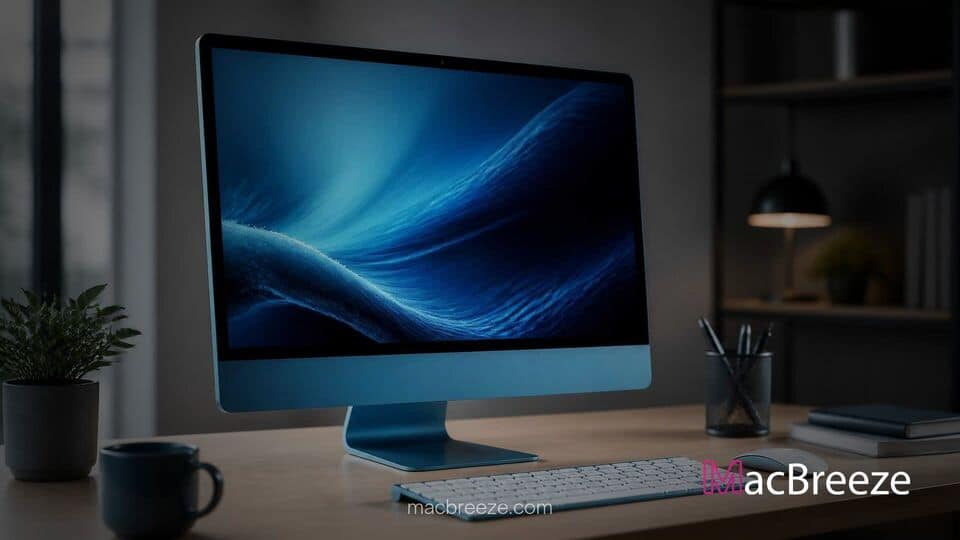
Apple is reportedly conducting a thorough review of its desktop display hardware strategy, leading executives to reconsider the rollout of an OLED-equipped iMac. Industry reports indicate that steep component manufacturing costs and market adoption dynamics have prompted ongoing discussions with key display suppliers regarding schedule adjustments or potential cancellation.
While premium display technologies continue to expand across mobile and laptop lines, integrating high-end panels into larger desktop form factors presents unique economic and manufacturing challenges. Supply chain sources suggest that Apple is closely monitoring component yield rates and consumer price elasticity before committing to a commercial release.
Apple Reevaluates OLED Technology for Desktop Mac Lineup
The decision to revisit the iMac display roadmap comes as Apple assesses the financial viability of bringing organic light-emitting diode panels to all-in-one desktop computers. Incorporating multi-layer OLED architecture into larger screens requires substantial capital investment, and current yields make large-format display panels significantly more expensive to manufacture than conventional LCD alternatives.
As part of this corporate evaluation, Apple is examining consumer demand patterns across its broader product portfolio. While mobile devices benefit from lower power consumption and peak brightness in handheld settings, desktop systems operate under different thermal and operational constraints, making the margin profile for an OLED all-in-one desktop far tighter for Cupertino's supply chain partners.
Supply Chain Reports Highlight High Panel Production Costs
Reports originating from South Korean display supply chains reveal that Apple has engaged in strategic talks with manufacturing partners, including Samsung Display, to re-examine development timelines. The cost structure for producing large OLED panels remains a primary bottleneck. High manufacturing expenses, combined with rising memory chip prices across the semiconductor sector, have increased total bill-of-materials costs across the hardware ecosystem.
Unlike standard consumer monitors, high-performance desktop panels must meet stringent uniform brightness, color accuracy, and lifespan benchmarks. Achieving these standards on large-format glass substrates incurs elevated scrap rates during initial production runs, passing higher overhead down to device makers.
Sales Volume Differences: iPad Pro and MacBook Pro vs. iMac
Another major factor driving Apple's strategic hesitation is the relative shipment volume of all-in-one desktops compared to portable computers and tablets. While premium products like the iPad Pro and high-end laptops justify specialized display investments through massive global production volumes, desktop computers operate on smaller overall unit scales.
This dynamic makes it difficult to absorb expensive component overhead without passing substantial price increases on to standard retail buyers. Recent market trends in tablet display shipments demonstrate that steep consumer price points can temper overall sales momentum. Hardware updates across portable lines, including developments like the PROLED MacBook Pro, show how Apple tests cutting-edge display upgrades in higher-volume portables before trickling technology down to specialized form factors.
Impact on Apple's Future Mac Desktop Display Roadmap
The potential delay or cancellation of an OLED iMac highlights a broader shift in how tech hardware manufacturers approach desktop updates. For years, industry analysts expected a predictable transition from LCD screens toward organic display panels across every Apple product line. However, shifting economic priorities and supply chain realities are forcing a more pragmatic posture.
Apple has consistently managed production shifts with caution, as seen in wider supply timelines such as the base iPhone 18 launch delay. Rather than forcing costly technology upgrades prematurely into niche desktop segments, internal planning teams are prioritizing price competitiveness and baseline user performance.
Meanwhile, high-performance computing tasks remain anchored around powerful enterprise desktop setups. Organizations increasingly configure dedicated Mac hardware for compute workloads, such as using a Mac Studio as an on-premises AI server, where raw processing power and thermal headroom take priority over ultra-premium display glass.
Evaluating Future LCD and Tandem OLED Alternatives
As Apple pauses its aggressive desktop OLED push, display engineering teams are evaluating alternative screen technologies. Reports suggest Apple has issued technical inquiries to major LCD suppliers like BOE and LG Display to develop next-generation oxide LCD panels. Advanced LCD panels offer improved refresh rates, stronger energy efficiency, and enhanced color accuracy at a fraction of the cost of large-scale tandem OLED displays.
At the same time, hardware engineers are continuing research into tandem OLED stack architectures for future premium hardware revisions. However, unless manufacturing yields improve significantly and supplier prices decline, Apple appears content to rely on refined LCD screen technologies for its desktop lineup in the medium term.
Overall, Apple's recalibration of its iMac display roadmap reflects a disciplined balance between technical innovation and unit economics. While panel technology continues to advance across portable devices, desktop consumers can expect Apple to focus on cost-effective, high-quality LCD solutions until large OLED manufacturing becomes commercially scalable.