Apple has announced a major overhaul of its Health app for iPhone and iPad, introducing a dedicated Longevity tab to provide users with deeper context regarding their long-term health metrics. Powered by Apple Intelligence, the revamped experience translates continuous biometric data into actionable recommendations to help users track how well their body is aging over time.
The updated application arrives alongside hardware developments like the Apple Watch Series 12 and Apple Watch Ultra 4, which feature enhanced biometric sensors. With the integration of continuous heart rate tracking, improved cardiovascular readings, and expanded lab data, Apple aims to shift its personal health experience from reactive fitness tracking to proactive, preventative wellness management.
apple health app redesign longevity tab
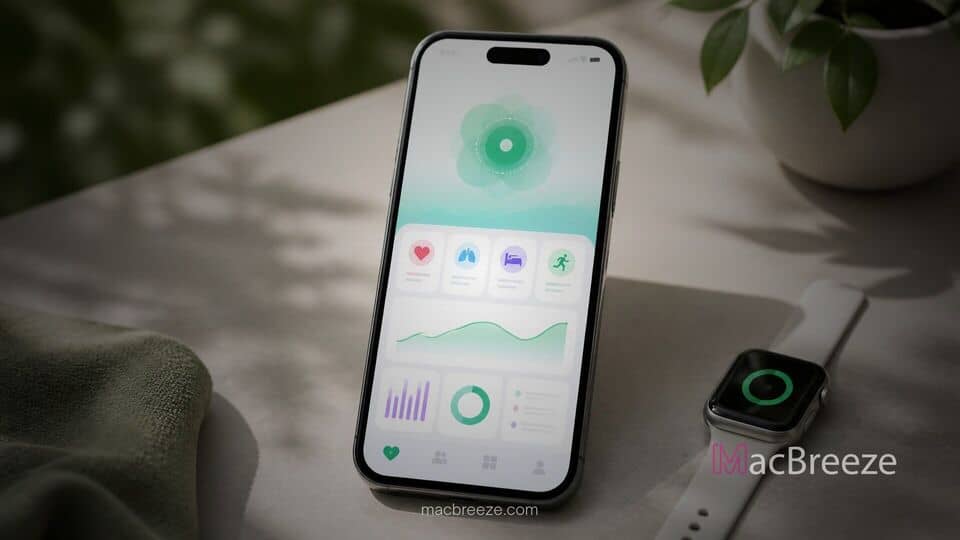
The redesign of the Apple Health app centerstage around a newly created Longevity tab, establishing a dedicated space for tracking long-term biological trends alongside daily health activities. Rather than burying long-term vital statistics across disparate menus, the tab brings together cardiovascular health, movement, sleep quality, mental wellbeing, metabolic metrics, hearing, and nutrition into a unified interface. Apple leverages this consolidated data to generate a Health Age metric, allowing users to evaluate how their body is functioning relative to their chronological age.
Major Changes Coming to the Apple Health App
The redesigned Health app features a simplified layout structured around three key navigation areas: Summary, Longevity, and Sharing. By placing longevity at the core of the app navigation, Apple is encouraging users to look past immediate calorie targets and evaluate long-term wellness trends.
To support this shift, Apple has integrated new movement assessments that utilize the iPhone camera and on-device machine learning to assess flexibility, balance, and strength. Users can perform guided physical tests to receive customized feedback regarding joint health and injury prevention. Furthermore, Apple has expanded its partnership network by integrating direct lab panel orders through Quest Diagnostics, permitting users in supported regions to request a 50-biomarker blood test directly within the app for $119 to supplement their digital health profile.
These software improvements complement Apple's broader platform updates, aligning with recent announcements such as iOS 27 and iPadOS 27 release schedules. Together, these updates establish a central hub for personal wellness across all compatible mobile hardware.
Health Age Metrics and Chronological Comparisons
The centerpiece of the Longevity tab is the Health Age feature. This score utilizes algorithms trained on extensive physiological data to compare a user's health metrics against expected standards for their age demographic. The system evaluates key data points including VO2 max, resting heart rate, sleep regularity, and heart rate variability (HRV) measured via Apple Watch.
Users can further refine their Health Age score by manually entering or syncing external blood lab results, such as HbA1c glucose levels and LDL cholesterol. If a user's cardiovascular indicators and metabolic numbers reflect optimal health, their estimated Health Age may reflect a younger score than their actual calendar age. Conversely, if metrics drop below healthy thresholds, the app provides targeted suggestions to help bring those markers back into balance.
New Longevity Tab for Recovery Insights
Beyond static health scoring, the Longevity tab incorporates daily context through specialized recovery metrics. By examining continuous heart rate variability data, the application calculates a daily Readiness Score rated from 0 to 10. This score informs users whether their body is primed for high-intensity training or if it requires rest and active recovery.
Heart rate variability is separated into short-term Recovery HRV and overall Baseline HRV. Short-term readings assist in identifying temporary physiological fatigue caused by poor sleep, intense workouts, or mild illness. Baseline HRV tracks broader cardiovascular adaptations over several months, offering users clear feedback on how lifestyle modifications alter their long-term recovery capacity.
Integration With S11 Silicon and Apple Intelligence
The new capabilities in the Health app rely heavily on hardware advancements introduced in Apple's latest wearable lineup. The Apple Watch Series 12 and Ultra 4 are powered by the S11 chip, which supports an upgraded Health Sensing System. This hardware architecture includes expanded electrode surface areas for faster electrocardiogram (ECG) readings, redesigned photodiode rings, and power-efficient green LEDs that capture heart rate readings every five seconds throughout the day.
Data collected by these sensors is processed by Apple Intelligence running on-device to generate personalized guidance in an Insights section. Rather than presenting static graphs, the app provides natural language summaries. For instance, if the system detects declining sleep trends alongside decreased HRV, it may suggest adjusting evening exercise routines or incorporating interval workouts on recovery days.
This deep hardware and software integration builds on Apple's broader artificial intelligence strategy, similar to capabilities detailed in updates for watchOS 27 launch features and system-wide intelligence implementations across macOS 27 compatible devices.
"At Apple, we believe technology can empower everyone with actionable, science-based insights built with privacy at the core," said Dr. Sumbul Desai, Apple's vice president of Health and Fitness. "By combining breakthrough sensing on Apple Watch with Apple Intelligence in the Health app, we are able to translate complex biometric data into clear guidance for users, building a strong foundation for a healthier future."
Availability and Software Update Timeline
The redesigned Health app will roll out as part of upcoming software updates scheduled for release later this year. Primary longevity features, including the Insights tab and AI guidance, will be available on all Apple Intelligence-compatible iPhone and iPad models. However, specialized real-time metrics such as continuous five-second heart rate monitoring and high-frequency HRV tracking require the new sensor suite found on Apple Watch Series 12 and Apple Watch Ultra 4.
As Apple expands its footprint in preventative medical technology, the addition of longevity tracking marks a strategic pivot toward long-term health management. By combining on-device artificial intelligence with advanced health sensors and clinical lab integrations, Apple provides users with a comprehensive toolset to monitor, understand, and improve their long-term health trajectory.