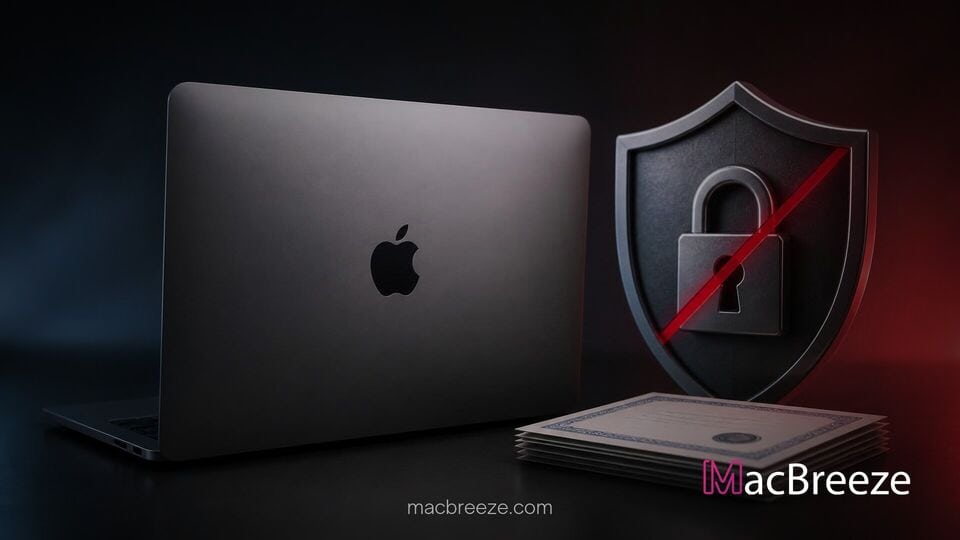
Apple will officially discontinue trust for all emSign digital security certificates across iOS, iPadOS, and macOS starting November 30. The security enforcement comes in response to a major compromise involving intermediate Certificate Authorities operated by Indian digital trust firm eMudhra.
Websites and enterprise services that still rely on emSign TLS security certificates risk becoming entirely unreachable on Apple hardware when the deadline arrives. Visitors attempting to access un-migrated sites through Safari or system-native applications will encounter blocking SSL warnings.
apple emsign tls security certificate trust
The upcoming complete drop of apple emsign tls security certificate trust marks the final phase of a industry-wide effort to isolate weak cryptographic infrastructure. While Google Chrome and Mozilla Firefox restricted trust for newly issued emSign G1 certificates earlier in November, Apple chose a comprehensive revocation strategy. Effective November 30, all certificates issued under the emSign hierarchy will cease to be trusted on Apple platforms regardless of their issuance date.
Apple Discontinues Trust for emSign Root Certificates
Impact on macOS and iOS Web Browsing
The enforcement directly affects Safari, Mail, and all third-party applications built on native Apple security frameworks. When an end-user navigates to a domain secured by an affected emSign root, the operating system will flag the connection as untrusted. Unlike standard SSL expiration warnings where users can bypass security alerts, framework-level certificate distrust prevents connection establishment altogether.
The broader ecosystem impact spans web browsing, background app sync APIs, and software update downloads. Operating system components designed for enterprise fleet management and institutional authentication networks are equally subject to the restriction, prompting widespread concern across university networks and corporate systems.
Why Apple Is Revoking Certificate Trust
Background on the eMudhra Security Vulnerabilities
The distrust timeline stems from a critical vulnerability discovered in eMudhra intermediate Certificate Authority private keys. Security researchers identified eight intermediate CA keys generated with insufficient entropy, rendering them vulnerable to key recovery attacks. Holding an intermediate CA private key enables bad actors to generate unauthorized TLS certificates for any domain on the internet.
Following public disclosure of the weak key generation script, eMudhra promptly revoked the affected intermediate certificates and announced plans to exit the global public TLS certificate business. Although major platform vendors quickly blocked the compromised G3 intermediate certificates in October, the broader G1 root authority was slated for phased retirement due to ecosystem reliance.
This incident reflects broader shifts across Apple software infrastructure, where swift security mitigations regularly reshape developer requirements. Similar swift adjustments occur when Telegram urges iPhone users to update iOS over drive-by cyberattacks, underscoring Cupertino's zero-tolerance stance on underlying cryptographic risks.
What Mac Users and Website Administrators Should Do
How to Identify Affected Sites and Prevent Outages
System administrators running websites, web portals, or internal APIs must verify their certificate chains immediately. Any server serving an emSign G1 or G3 certificate must replace it with a certificate from a fully trusted Certificate Authority, such as SSL.com or Let's Encrypt. Organizations using institutional certificate aggregators like the InCommon Certificate Service have already begun reissuing assets.
For standard Mac users, everyday browsing safety requires updating to the latest macOS versions. While GUI-based web browsers enforce certificate updates via background security pushes, command-line utilities like curl or git rely on local root bundles located in /etc/ssl/cert.pem. System updates ensure command-line developer tools do not bypass safety protections.
Maintaining security integrity across Apple hardware remains essential as platform features rapidly expand, whether managing enterprise certificates or keeping track of new software capabilities like when iPadOS 27.3 beta brings Camera Visual Intelligence and Siri mode to iPad.
As the November 30 deadline arrives, web service providers must ensure replacement certificates are active. Administrators who act quickly can avoid unexpected service outages and security warnings for millions of Apple device users worldwide.