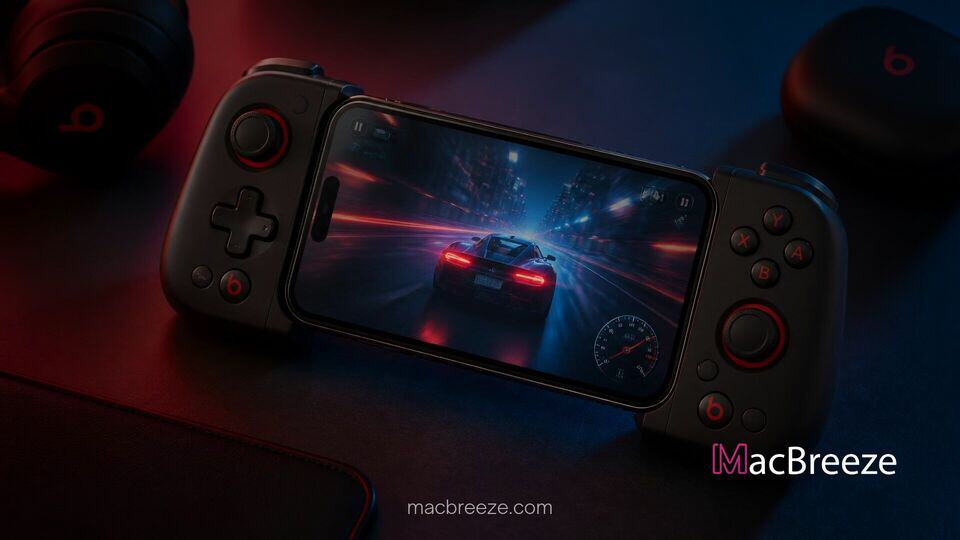
Apple is expanding its push into mobile gaming by developing first-party game controllers designed primarily for the iPhone ecosystem. According to recent industry reports, the hardware is expected to launch under the Beats brand rather than carrying direct Apple branding.
apple beats iphone game controllers
Internal operating system code and reporting from Bloomberg's Mark Gurman indicate that Apple has spent over a year working on two distinct mobile gaming controllers. The devices, currently being engineered under the supervision of Beats leadership, aim to deliver dedicated hardware controls for iOS gamers while targeting a broader consumer market.
Apple Reportedly Planning Beats-Branded Mobile Game Controllers
Initial evidence of the project surfaced when developer framework profiles for two unreleased hardware accessories were spotted in release candidate code for macOS. The profiles detailed physical controller configurations featuring standard inputs, including a directional pad, dual clickable thumbsticks, shoulder buttons, analog triggers, and dedicated navigation keys.
Reporting from Bloomberg confirmed that the project has been in active development for more than a year. Rather than debuting as official Apple-branded peripherals, the controllers are positioned to launch under the Beats sub-brand. Beats executives have reportedly taken charge of product conception and engineering, allowing Apple to tap into the brand's established identity in youth culture and mobile accessories.
Beats Expansion Into Mobile Gaming Hardware
Since Apple acquired Beats in 2014, the subsidiary has expanded its catalog beyond high-end headphones to encompass Bluetooth speakers, charging accessories, and protective smartphone cases. Introducing dedicated game controllers marks a major evolution for Beats into interactive entertainment hardware.
The decision to leverage Beats gives Apple greater flexibility in product design and pricing. Accessories carrying the traditional Apple logo usually feature premium metals and minimalistic aesthetic choices that drive up manufacturing costs. By offering a Beats gaming controller, the company can utilize durable plastics and vibrant color palettes, resulting in a more accessible price point for everyday mobile gamers.
Integration With iPhone and iOS Gaming Features
Code findings suggest the two codenamed models, T6502 and T1057, cater to different technical tiers. The T6502 model appears focused on low-latency wired connectivity over USB, featuring a multi-channel haptic feedback system across two internal vibration motors. In contrast, the T1057 model adds Bluetooth wireless capability alongside an integrated accelerometer and gyroscope for spatial motion controls.
Both models are designed to integrate directly with standard iOS framework features. As Apple pushes high-end gaming experiences across its device lineup, native controller support plays a central role. Users running recent platform updates, such as those seeing iOS 27 rollout features, stand to gain optimized button mapping and immediate pairing through system-level game controller frameworks.
Why Apple Is Choosing Beats for Mobile Gaming Accessories
Strategic brand segmentation is a common approach for technology companies testing new product categories. Using the Beats brand offers Apple an effective shield against potential market missteps, allowing the company to evaluate consumer demand for gaming peripherals without risking the core Apple hardware reputation.
Furthermore, the demographic overlapping with mobile gaming strongly aligns with Beats target consumers. Gamers often prefer high-contrast designs, tactile grips, and aggressive styling that might feel out of place next to sleek aluminum MacBooks or polished smartphones. Beats branding grants the design team freedom to adopt bold aesthetics tailored to modern gaming culture.
This entry also fits into Apple's broader ambition to capture a larger share of gaming revenue. While Apple continues to expand features across flagship hardware like the foldable iPhone Duo, providing tailored physical controllers enhances the overall experience for titles requiring precise input.
Expected Market Availability and Competitive Landscape
Apple's online storefront already distributes popular third-party mobile gamepads, such as the Backbone One and SteelSeries Nimbus+. Developing first-party controllers under the Beats umbrella will put Apple in direct competition with established third-party accessory manufacturers.
While third-party devices often require dedicated companion apps to adjust settings or access game launchers, a Beats controller could feature seamless native pairing and deeper platform integration. Features such as automatic device switching across hardware, system-level button remapping, and Find My network tracking are potential additions that could set these accessories apart.
The push toward physical gaming gear aligns with recent software and accessibility initiatives across Apple ecosystem platforms. The company previously expanded accessory choices by confirming Sony Access Controller support across mobile operating systems. First-party Beats gamepads would further broaden input choices for players.
Although Apple has not officially announced product availability or pricing details, the presence of refined controller profiles in operating system builds indicates hardware testing is well underway. A Beats-branded controller lineup could provide an appealing blend of platform integration and competitive pricing as mobile gaming hardware demand continues to grow.