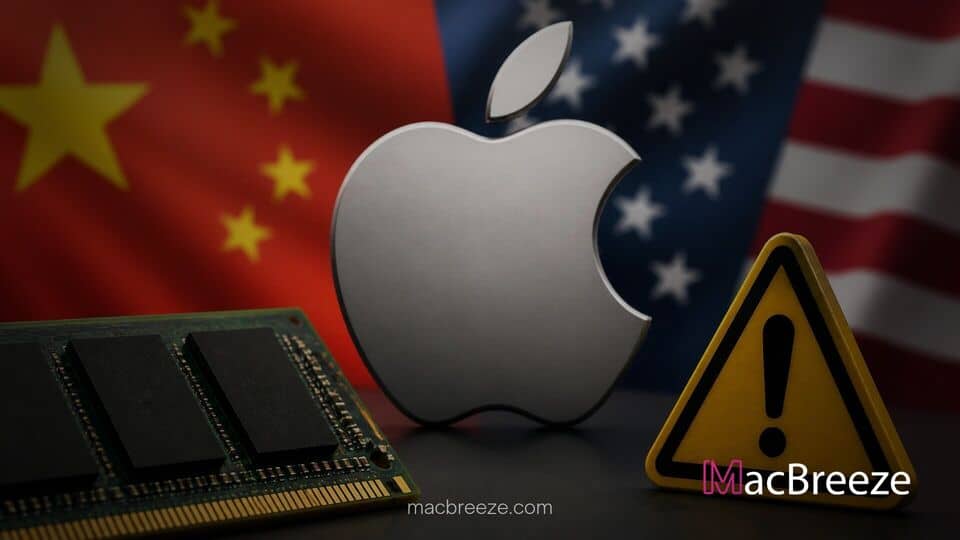
The United States Department of Commerce has issued a clear warning to Apple regarding its potential plans to source memory components from Chinese semiconductor manufacturers. Commerce Secretary Howard Lutnick publicly expressed opposition to major American technology firms procuring memory chips from China, citing national security priorities and domestic manufacturing objectives.
The policy stance comes as tech manufacturers face rising hardware expenses and tightening component allocations caused by surging global demand. As artificial intelligence infrastructure development consumes a growing portion of worldwide memory output, major consumer electronics companies are exploring alternative suppliers to stabilize their production supply chains.
US Government Issues Warning Over Chinese Memory Supplier
In recent discussions, government officials reiterated that American technology leaders should refrain from integrating components produced by Chinese chipmakers into their global hardware lineups. Federal policymakers argue that reliant purchasing strategies risk weakening long term domestic semiconductor capabilities while exposing consumer devices to potential supply chain disruptions.
Commerce Department leadership communicated the position directly to executive leadership at Apple, stressing that alternative sourcing solutions must be pursued. While federal regulations require specific export licenses before domestic companies can share proprietary product specifications or customized designs with designated overseas firms, standard off the shelf components operate under different compliance guidelines. This distinction has created an ongoing policy debate regarding how federal oversight should apply to standardized hardware purchases.
Risks of Sourcing DRAM from Blacklisted CXMT
A primary focal point of government concern centers on dynamic random access memory suppliers such as ChangXin Memory Technologies. CXMT, alongside NAND flash manufacturer Yangtze Memory Technologies, has emerged as a key domestic semiconductor champion within China. However, several Chinese technology entities remain subject to stringent United States trade restrictions or designated defense lists due to national security considerations.
Industry analysts note that incorporating memory components from firms under federal scrutiny carries operational and reputational risks for global brand operators. Lawmakers across both political parties have voiced concern that substantial purchase contracts from major American consumer brands could grant overseas manufacturers economic momentum, potentially undercutting legislative efforts to reshore high tech manufacturing capabilities.
Ongoing Memory Chip Shortages and Impact on Mac Supply
The policy pressure from Washington coincides with an intense, industry wide allocation squeeze. Rapid expansion in artificial intelligence data center construction has driven unprecedented demand for advanced memory architectures, including high bandwidth memory and enterprise grade storage modules. Because semiconductor foundries have shifted significant wafer capacity toward server grade products, supply for standard consumer electronics hardware has tightened noticeably.
This structural market shift has placed sustained upward pressure on dynamic random access memory and flash storage pricing. Computer manufacturers, including those producing consumer desktop and laptop lineups, face elevated bill of materials costs. For consumer platforms like the Mac ecosystem, persistent component shortages complicate efforts to manage manufacturing overhead without adjusting retail pricing structures.
Apple Options for Securing Next Generation Mac Hardware Components
To mitigate supply chain risks, supply chain executives are examining multiple operational strategies. Apple leadership has acknowledged that the sheer scale of global component shortages requires comprehensive review of all viable procurement channels. Options under consideration include helping existing domestic and allied international partners expand production capacity to meet growing consumer volume requirements.
Established DRAM and NAND suppliers operating out of the United States, South Korea, and Taiwan continue to serve as the main pillars of global consumer hardware production. However, expanding output at domestic fabrication facilities requires significant time and financial capital. While government incentives under recent industrial initiatives aim to boost onshore manufacturing, new production capacity will take time to fully operationalize, leaving consumer electronics makers to navigate immediate component constraints.
As federal authorities maintain close oversight of high tech supply chains, technology companies must balance corporate cost efficiency against evolving geopolitical expectations. The ongoing dialog between federal trade officials and private industry underscores the strategic complexity of managing global manufacturing operations during periods of supply constraints and shifting regulatory frameworks.