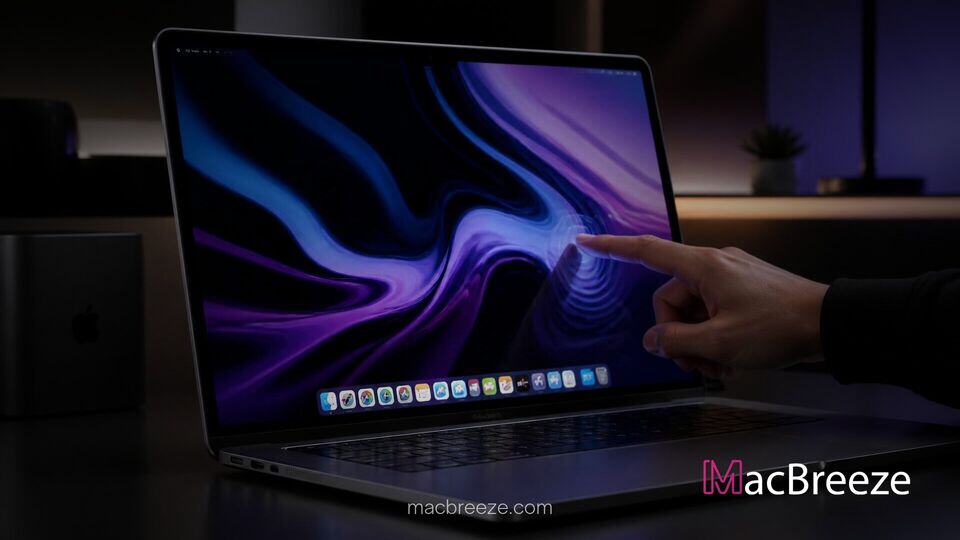
Apple's upcoming redesigned flagship laptop lineup will introduce major hardware changes, including touch screen support and OLED displays, while retaining the current processor family. According to recent supply chain reports and industry insiders, the touch-enabled 14-inch and 16-inch laptops will rely on M5 Pro and M5 Max chips rather than debuting next-generation M6 architecture.
The decision marks an unusual strategy for Apple, which traditionally aligns major chassis overhauls with raw compute performance upgrades. While standard entry-level machines may receive updated base chips, the flagship touchscreen hardware will rely on existing silicon capabilities to drive its updated display tech and physical redesign.
M5 Pro and M5 Max Chips Expected for Redesigned MacBook Pro
The decision to feature the touchscreen macbook pro m5 pro m5 max chips configuration within a brand-new physical design highlights a tactical focus on display and interaction rather than processing power. Industry analysts suggest that keeping the established M5 Pro and M5 Max system-on-chip (SoC) platforms allows Apple to focus manufacturing capacity and development resources on the complex display pipeline.
By utilizing proven silicon platforms, Apple avoids thermal and engineering variables while introducing its first laptop touchscreen interface. The existing M5 Pro and M5 Max chips already provide high-performance CPU cores, multi-core GPUs, and dedicated neural acceleration engines capable of supporting interactive touch gestures across macOS. Reports indicate that software optimizations in current operating system builds are specifically tailored to leverage this chip architecture for real-time touch input rendering.
Key Features of the Rumored Touchscreen OLED Redesign
Despite staying on current-generation silicon, the upcoming laptops represent one of the most substantial visual and structural overhauls in years. Central to the upgrade is the transition from Mini-LED to dual-layer tandem OLED displays. This shift yields deeper black levels, higher contrast ratios, and better power efficiency during HDR workflows.
Beyond the display panel itself, the physical structure has undergone a comprehensive engineering overhaul:
- Capacitive Touch Screen: Direct multi-touch input integrated directly into the display surface, supported by specialized anti-fingerprint coatings.
- Dynamic Island Interface: Replacement of the traditional screen notch with an interactive Dynamic Island area for notifications, system status, and biometrics.
- Lighter Enclosure: A reengineered internal layout that miniaturizes auxiliary components to yield a significantly lighter design overall.
- Reinforced Display Hinge: Redesigned hinge mechanics engineered to minimize screen wobble when users tap or swipe the display surface.
These structural refinements address longstanding ergonomic concerns associated with laptop touchscreens. By reducing overall system mass and stiffening the display hinge, the new design seeks to maintain stability during direct screen interactions without sacrificing classic trackpad and keyboard usability.
Strategic Implications of Skipping M6 Pro and Max Processors
Reports detailing Apple's chip roadmap indicate the company plans to bypass an intermediate M6 Pro and M6 Max generation entirely. Instead, high-end chip development resources are being redirected toward the future M7 silicon generation, which is expected to move to advanced manufacturing nodes featuring greater transistor density.
This processor schedule creates a unique split across Apple's hardware portfolio. While entry-level models like the standard 14-inch laptop and desktop systems may receive base-tier M6 chips, professional user workflows requiring heavy multi-threaded compute will remain on the M5 Pro and M5 Max silicon. Prospective buyers tracking Apple's Q4 hardware schedules will need to evaluate whether immediate access to OLED touchscreen hardware outweighs waiting for next-generation silicon shifts.
This multi-tier approach reflects similar resource adjustments across the product catalog. Similar decisions have surfaced in other product categories, such as reports that Apple has delayed entry-level iPad refreshes to streamline component production lines.
Expected Launch Timeline and Pricing Outlook
Industry sources point toward a late autumn reveal for the touchscreen laptop lineup, coinciding with media events detailed in recent Apple showcase announcements. Retail shipments are anticipated shortly after the initial unveiling, setting up launch availability ahead of the holiday shopping period.
Pricing for the redesigned machines is widely expected to carry a premium over existing models. The inclusion of advanced tandem OLED display panels, capacitive touch layers, and structural redesigns increases production costs. Analysts anticipate the entry configuration for the touch-enabled OLED series will sit above standard pricing tiers, positioning the device as a specialized flagship option for creative professionals.
As Apple prepares its hardware lineup, consumers are presented with a clear choice: adopt the first touchscreen Mac featuring high-tier M5 silicon now, or wait for future silicon architecture cycles further down the line. The incoming redesign represents a notable shift in how users interact with macOS, prioritizing new display technologies over pure generational processor bumps.