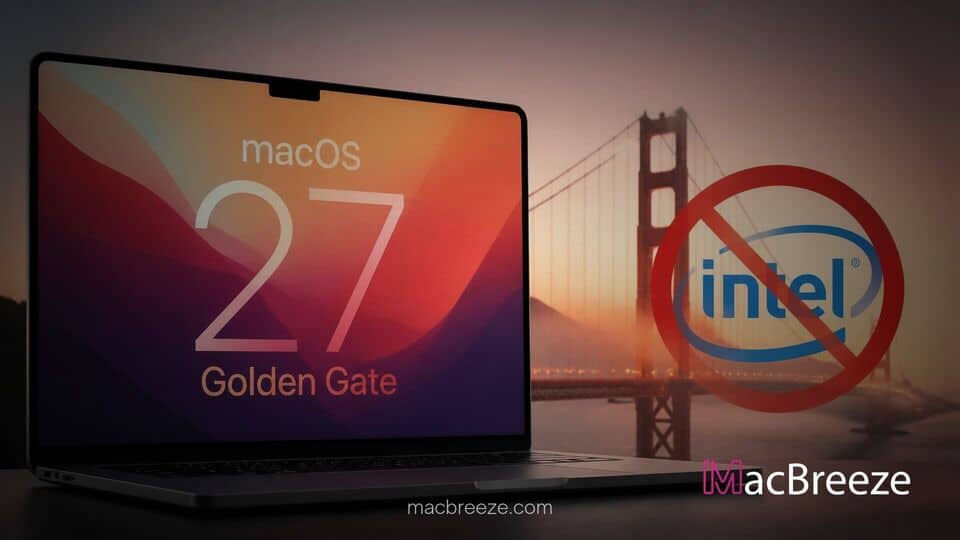
Apple is officially preparing to complete its transition away from legacy x86 processors by dropping software compatibility for all remaining Intel-powered Mac computers in its next major desktop operating system update. The upcoming release, internal documents suggest, will run exclusively on Apple Silicon architecture, ending a multi-year deprecation period for the older chip architecture.
With this landmark decision, owners of older Mac models equipped with Intel processors will no longer receive major feature updates or annual platform upgrades. The operating system update represents the final step in a strategic hardware migration that began half a decade ago, signaling a unified software ecosystem tailored specifically for custom-designed chips.
macOS 27 Golden Gate Drops Intel Mac Support for Legacy Systems
The upcoming operating system codenamed Golden Gate represents a total shift in software engineering priorities for the tech giant. By ending compatibility with x86 hardware, developers and software engineering teams are focusing their resources on maximizing performance, battery efficiency, and machine learning capabilities exclusively on M-series chips.
For users running legacy hardware, macOS 27 Golden Gate drops Intel Mac support entirely, meaning that even high-end configurations like the 2019 Mac Pro or late-era Intel iMacs will be unable to install the new operating system. While these machines will continue to function on earlier versions of the software, they will be excluded from the newest user interface refinements, systemic productivity features, and deep hardware-level software optimizations.
Apple Ends Intel Mac Upgrade Cycle With macOS 27 Golden Gate
When Apple announced its transition to custom silicon during the 2020 Worldwide Developers Conference, the company outlined a broad two-year target to shift its entire product line to M-series processors. Although hardware manufacturing transitioned relatively quickly, software support for legacy devices persisted over several annual releases to ensure business continuity and customer satisfaction across enterprise and creative sectors.
Over recent years, the company gradually narrowed the list of compatible Intel computers, systematically dropping support for older MacBook Pro, MacBook Air, and Mac mini models. The arrival of macOS 27 Golden Gate marks the definitive conclusion of this multi-year support curve, drawing a firm boundary between x86 legacy hardware and the modern Apple Silicon ecosystem.
Final Intel Models Losing macOS Support
The decision impacts the last remaining Intel computers that managed to maintain compatibility with recent system updates. Specifically, the affected machines include:
- 2019 Mac Pro: The modular desktop designed for heavy professional workloads, which was the last major system to ship with high-core-count Intel Xeon processors.
- 2020 13-Inch MacBook Pro: The final compact professional laptop powered by 10th-generation Intel Core chips prior to the introduction of the M1 architecture.
- 2020 Intel iMac: The 27-inch all-in-one desktop featuring high-resolution Retina displays and dedicated graphics cards.
- 2018 Mac mini: The space gray desktop node that remained in the official retail lineup for several years as an entry-level server option.
Owners of these specific configurations will find that system software checks will flag their devices as incompatible during the software update process, preventing installation of the new platform release.
The Complete Transition to Apple Silicon Architecture
By restricting installation to M-series processors, Apple simplifies its operating system codebase significantly. Operating system engineers no longer need to maintain parallel kernel builds, dual-architecture driver sets, or specialized translation layers designed to bridge x86 instruction sets with ARM-based structures.
This unified hardware baseline allows developers to integrate advanced neural processing routines, unified memory optimizations, and hardware-accelerated media engines without compromising performance for older instruction sets. The move also enables tighter integration between desktop software and mobile operating systems, streamlining application development across the broader ecosystem.
Key Software and Security Implications for Intel Mac Users
While the news marks the end of functional upgrades for x86 devices, existing Intel Mac owners will not experience an immediate shutdown of their devices. Apple historically maintains a multi-year window of security maintenance for legacy platforms, ensuring that hardware remains safe to operate on local networks and the public internet even after major operating system updates cease.
Industry analysts note that this approach mirrors previous architecture transitions, such as the shift from PowerPC to Intel processors in the mid-2000s. The clear deprecation timeline provides IT administrators and personal users with a predictable window to plan hardware refreshes and budget for hardware upgrades.
Legacy Patching and Security Support Timeline
Users who remain on the final Intel-compatible operating system release can expect to receive regular security updates, critical bug fixes, and Safari browser patches for approximately two to three years following the launch of Golden Gate. These updates ensure that critical vulnerabilities are patched promptly, though no new desktop capabilities or high-level operating system APIs will be backported to the legacy platform.
Enterprise organizations utilizing large fleets of older desktop hardware are advised to audit their device inventory to determine which systems will require replacement ahead of software vendor support deadlines. Many third-party software developers are expected to follow Apple lead by winding down x86 application maintenance in upcoming software releases.
Trade-In and Upgrade Recommendations for Older Macs
For consumers and professionals currently relying on Intel hardware, the shift highlights the growing performance gap between older chips and current M-series processors. Modern entry-level M-series laptops consistently outperform top-tier legacy desktops in single-core speeds, multi-threaded rendering, energy efficiency, and thermal management.
Industry experts recommend that users currently operating Intel systems evaluate trade-in programs, secondary market values, or corporate refresh cycles. Upgrading to modern Apple Silicon hardware restores full access to annual operating system upgrades, extended device battery life, and advanced machine learning acceleration for modern workflows.
Looking Ahead to the Future of the Mac Platform
The complete retirement of x86 software support brings a historic era of personal computing to a close. By focusing entirely on unified silicon, Apple enters a new phase of hardware and software co-design, setting a distinct path forward for desktop computing performance and platform integration.
While the change requires remaining Intel Mac owners to plan their next hardware upgrade, it ultimately paves the way for faster operating system iterations, deeper intelligence features, and streamlined software development for years to come.