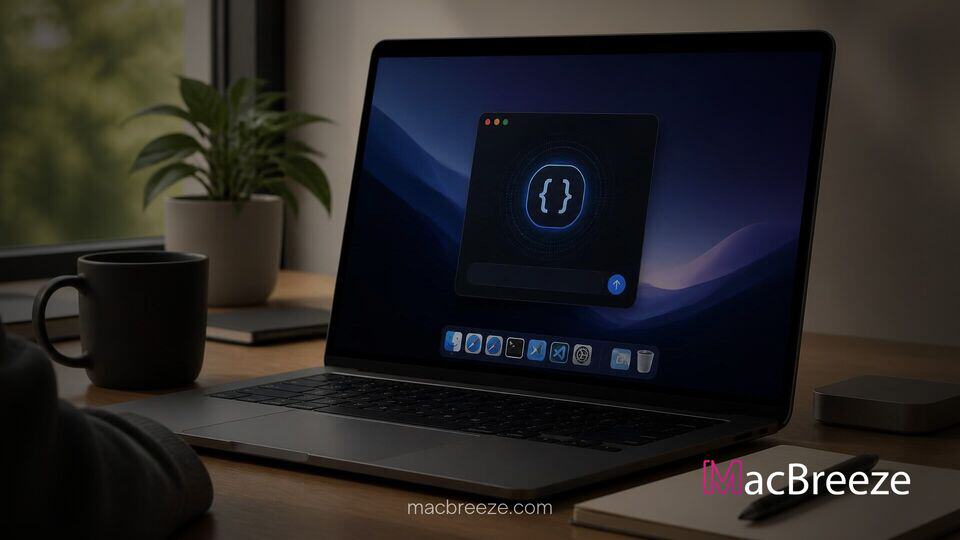
The creators of the popular open-source image generation app Draw Things have launched Local Code, a free and private AI tool designed specifically for Apple Silicon hardware. The new application lets Mac users download, manage, and run powerful artificial intelligence models directly on their computers without relying on cloud servers or external API subscriptions.
Free Local AI Assistant Tool Local Code Debuts on macOS
Local Code enters the growing ecosystem of privacy-focused software by providing an all-in-one desktop assistant that runs entirely on-device. Optimized for Apple Silicon architectures, the application allows users to execute local code, interact with multimodal AI models, and automate day-to-day workflow tasks without sending sensitive data over the internet. The launch highlights an increasing industry pivot toward local AI solutions where computation takes place locally on unified memory rather than inside remote data centers.
Unlike traditional AI clients that mandate account registration, API keys, or monthly platform fees, Local Code operates as a standalone desktop utility. Users can download open-source language and vision models through an intuitive built-in model library and begin running prompts instantly. The software targets both general Mac power users seeking secure automation and software developers looking for offline assistance.
Key Capabilities and Apple Silicon Optimization
Engineered to maximize the processing capabilities of Apple's Neural Engine and Metal graphics frameworks, Local Code delivers responsive performance across a wide spectrum of tasks. Beyond text generation and programming tasks, the app supports complex workflows including spreadsheet analysis, document editing, and offline image creation.
The application includes execution sandboxes for Python and JavaScript, allowing the local assistant to write, test, and debug scripts directly within the environment. It also introduces automated browser interaction capabilities, allowing users to request tasks such as web navigation or form filling without leaving their local setup. Apple system integrations permit optional read and edit permissions for local desktop apps like Notes, Mail, Messages, Photos, and Calendar, helping users summarize personal archives while maintaining absolute data control.
Enhancing Developer Privacy Without Cloud Subscriptions
Data security concerns have prompted many organizations and independent developers to reconsider third-party AI services. For engineers handling proprietary codebases, sending source code to external servers presents potential compliance and security risks. As Apple expands native system capabilities through updates like macOS terminal access to local foundation models, third-party software developers are similarly rushing to provide flexible open-source alternatives.
By keeping model weight execution and prompt history strictly within local hardware storage, Local Code eliminates third-party telemetry, data harvesting, and per-token usage costs. This design choice is particularly relevant as enterprise environments evaluate potential risks around macOS disk access and privacy controls when interacting with AI frameworks.
"You can trust it with your data because it runs the smartest and largest model your Mac can handle today, locally, without sending your prompts or files to a cloud AI provider," the development team shared during the official announcement.
System Requirements and Supported Open-Source AI Models
Local Code is built from the ground up to take advantage of Apple's Unified Memory Architecture. While basic chat and code completion models can run comfortably on standard Mac hardware with 16 GB of RAM, larger parameter models naturally benefit from expanded memory configurations. Hardware setups like the M-series Pro, Max, and Ultra chips, or workstations like the Mac Studio, enable high-speed token generation for large quantized open-weight models. This memory efficiency aligns with recent developments where tech leaders collaborate to optimize open AI models for Mac Studio via Apple MLX.
The app supports a broad selection of open-source architectures, including popular choices like DeepSeek, Qwen, Gemma, and Llama. A built-in model manager handles weight quantization, downloading, and memory allocation automatically, ensuring that users do not need to configure command-line environments manually to start testing models.
Local Code is currently available as a free download from its official website, with a native release planned for the macOS App Store in the near future. As open models continue to close the gap with proprietary cloud services, Local Code offers Mac users a capable, private, and subscription-free gateway to on-device artificial intelligence.