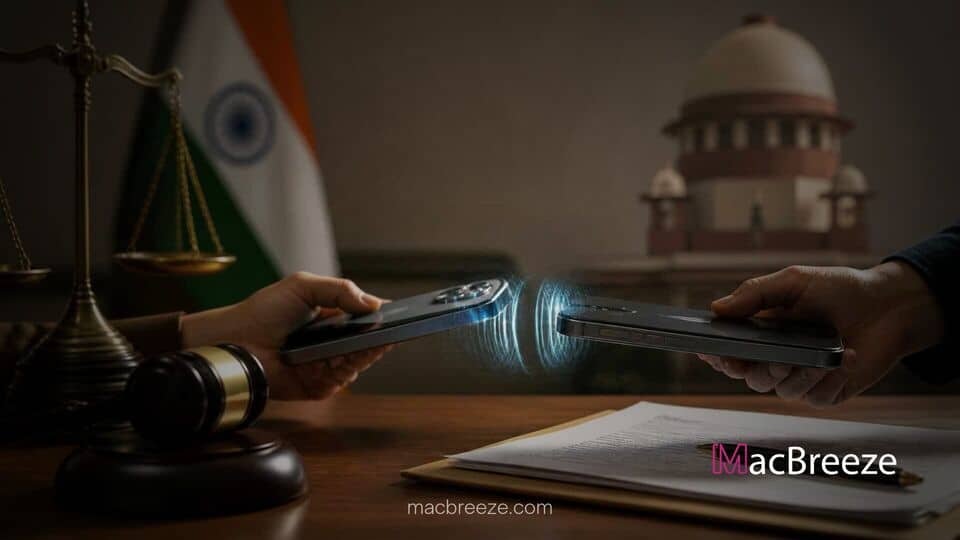
A United States-based startup has launched a major legal action against Apple in India, alleging that the tech giant's proximity-based contact-sharing feature infringes on its registered intellectual property. GG Technologies, the developer behind the contact-transfer application StayTouch, is seeking 15 billion Indian rupees (approximately $162 million) in damages and an injunction that could restrict the sale and importation of affected iPhones and Apple Watches in the country.
The move marks a significant legal challenge for Apple in one of its key growth markets. The suit follows a mandatory pre-institution mediation period that ended without a settlement, prompting the startup to take its claims directly to Indian courts.
Patent Lawsuit Filed Against Apple in Bombay High Court
GG Technologies filed a comprehensive 781-page complaint with the Bombay High Court in October, charging Apple with infringing its Indian patent for proximity-based contact exchange. The startup claims that Apple's NameDrop feature, introduced alongside iOS 17 in mid-2023, utilizes proprietary technical mechanisms developed years earlier by GG Technologies.
The primary keyword focus of the dispute, an iphone namedrop patent lawsuit india ban request, centers on restricting Apple from selling, importing, or distributing devices that come preloaded with the infringing contact-sharing functionality. Beyond financial restitution, GG Technologies told reporters that it is seeking an injunction to restrict the native usage of NameDrop across Apple's mobile hardware in the region.
Details of the StayTouch NameDrop Patent Claims
Founded in 2018 by Gaurav Goel, an Indian Institute of Technology (IIT) Delhi alumnus and former investment banker, GG Technologies created StayTouch as a modern alternative to traditional paper business cards. The app, available on iOS and Android, enables two nearby mobile devices to exchange contact details without going through manual setup or pairing procedures.
According to court documentation, GG Technologies first applied for patent protection in the United States in 2019. It subsequently submitted its Indian patent application in 2021, culminating in the formal grant of Indian patent protection titled Method and System for Proximity-Based Contact Transfer in July 2024.
By contrast, Apple publicly unveiled NameDrop at its Worldwide Developers Conference (WWDC) in June 2023. The system allows users to bring two iPhones or compatible Apple Watches into close proximity to share contact cards and select specific details to transfer. Independent technical assessments commissioned by the startup allege that Apple's underlying detection, consent, and transfer workflows mirror the patented procedures outlined in GG Technologies' IP filings.
Potential Impact on iPhone and Apple Watch Availability in India
If the court decides to act on the injunction requests, the proceedings could complicate operations for Apple in South Asia. India serves not only as a rapidly expanding consumer market for premium smartphones but also as a core manufacturing hub as Apple diversifies global supply chains.
While the court has not yet scheduled a formal preliminary hearing, an adverse ruling or temporary order could disrupt shipments of current hardware generations. Consumers in the region frequently encounter native features like NameDrop out of the box, and disabling or modifying operating system components specifically for one region could necessitate tailored software builds.
The legal situation arises during a period of active hardware testing across Apple's supply operations. For instance, recent reports indicate how Apple Negotiates Multiyear DRAM Supply Deals With Samsung and SK Hynix to secure vital components for future device generations. A widespread retail interruption in India could create friction across both local sales strategies and overall distribution schedules.
Background Context and Ongoing Legal Proceedings
The litigation in the Bombay High Court is not an isolated incident. GG Technologies initiated a parallel patent infringement suit against Apple in the United States in April. Following that complaint, the U.S. International Trade Commission (ITC) instituted a formal investigation in August to examine whether Apple violated trade laws by importing devices that allegedly incorporate protected inventions.
In India, commercial law mandates pre-institution mediation to encourage out-of-court settlements before full litigation begins. GG Technologies confirmed that discussions initiated in April officially concluded without resolution in September, clearing the way for the Bombay High Court filing.
The legal pressure comes amidst wider software shifts across Apple's ecosystem, including regulatory adjustments and routine feature updates. Devices running modern versions of iOS routinely balance operating system additions with security fixes, such as when OpenAI Security Model Uncovers 35 Flaws in iOS and iPadOS Systems during external evaluations.
As the Bombay High Court prepares to list the case for its initial hearing, industry observers are closely monitoring whether the legal challenge will reach a court-mandated trial or resolve through a licensing settlement. Apple has not yet issued a public statement regarding the Indian court filing.