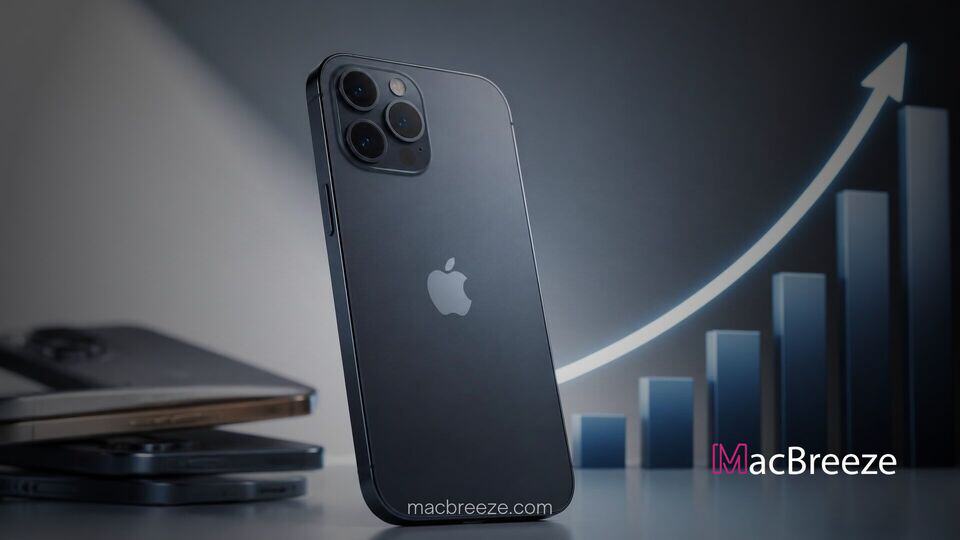
Apple captured an unprecedented 22 percent share of the global smartphone market in the third quarter of 2026, marking its highest third quarter share on record. Industry analytics firm Counterpoint Research reports that Apple achieved this milestone even as total worldwide smartphone shipments plummeted 20 percent year over year to a 14 year low.
The global smartphone contraction stems primarily from an ongoing component supply squeeze, particularly severe shortages in DRAM and NAND memory chips redirected toward artificial intelligence data centers. Despite overall unit volume dropping across the mobile ecosystem, Apple managed to expand its footprint significantly from its 18 percent share recorded in the third quarter of 2025.
Counterpoint Reports Record Q3 Smartphone Market Share for iPhone
The report from Counterpoint Research highlights how resilient premium demand helped Apple weather a difficult environment for hardware vendors. Industry-wide smartphone shipments fell sharply as manufacturers faced skyrocketing bill-of-materials costs, forcing price hikes that cooled consumer demand in budget-sensitive regions. While total market volume hit its lowest third-quarter point since 2012, Apple stood out by expanding its market share.
According to market analysis, Apple held second place globally with its 22 percent shipment share, narrowing the gap against market leader Samsung, which retained first place with a 23 percent share. Major Android original equipment manufacturers faced steep drops; Xiaomi saw its share drop to 10 percent following a double-digit shipment decline, while OPPO and vivo rounded out the top five with 9 percent and 8 percent shares respectively.
Global Market Contraction and Regional Demand Factors
The overarching story of the quarter remains the severe memory crisis affecting technology supply chains. As semiconductor fabricators prioritized high-margin high-bandwidth memory for AI infrastructure, standard mobile DRAM prices climbed drastically. These rising hardware expenses forced manufacturers across the industry to pass costs along to buyers, resulting in average retail price increases of nearly 20 percent across the smartphone landscape.
Regional dynamics played a significant role in Apple performance during this slump. Developed markets in North America and Western Europe proved far more resilient to component inflation. Carrier financing, trade-in subsidies, and higher average household incomes allowed premium buyers in these regions to absorb price adjustments far more effectively than consumers in emerging economies.
Key Drivers Behind Strong iPhone 18 Pro Performance
The primary catalyst for Apple performance during the quarter was robust consumer demand for its high-end flagship devices. Early uptake for the iPhone 18 Pro and iPhone 18 Pro Max proved particularly strong in key expansion markets, including China and India. The momentum from these premium units helped offset lower initial channel fill volumes that resulted from a staggered product rollout strategy.
Apple decision to delay the entry-level base model release meant overall iPhone unit shipments declined slightly year over year. However, because competing vendors experienced far more severe drop-offs, Apple smaller shipment decline translated into a historic share gain. Furthermore, continued sales of previous-generation devices supported baseline hardware volume. Industry dynamics also mirrored broader trends across consumer hardware, echoing reports where Apple expanded its PC market share despite global shipment declines in personal computing.
While component inflation eventually led Apple to make selective retail adjustments in late September, the company avoided early price increases seen elsewhere in the industry. This pricing stability during the initial launch window encouraged early upgrades among brand loyalists.
Market Outlook for Apple Ahead of Q4 Product Releases
Looking toward the final quarter of the year, industry analysts anticipate persistent supply chain pressures. Counterpoint Research noted that smartphone manufacturers are increasingly prioritizing operational profitability over sheer unit volume. High component costs and reduced consumer affordability mean lower-tier segments will remain under margin pressure for the foreseeable future.
For Apple, the upcoming holiday quarter presents both opportunities and potential volatility. The market is preparing for the consumer debut of new form factors, such as the foldable hardware line. As manufacturing processes mature, including developments around the replaceable inner display cover layer, market watchers are waiting to see if premium foldable devices can sustain consumer upgrades during an inflationary period.
Simultaneously, software integration continues to play a pivotal role in maintaining user retention. Enhanced cross-platform connectivity introduced in macOS 27 Golden Gate iPhone Mirroring updates reinforces hardware lock-in across the ecosystem. How well Apple navigates supply chain inflation during the holiday shopping rush will determine whether it can maintain its historic momentum into 2027.
In conclusion, Apple record 22 percent share in Q3 2026 underscores the strength of its premium brand position. By leveraging strong demand for Pro models and leaning on resilient buyer demographics, Apple successfully expanded its market footprint during one of the most severe industry downturns in over a decade.