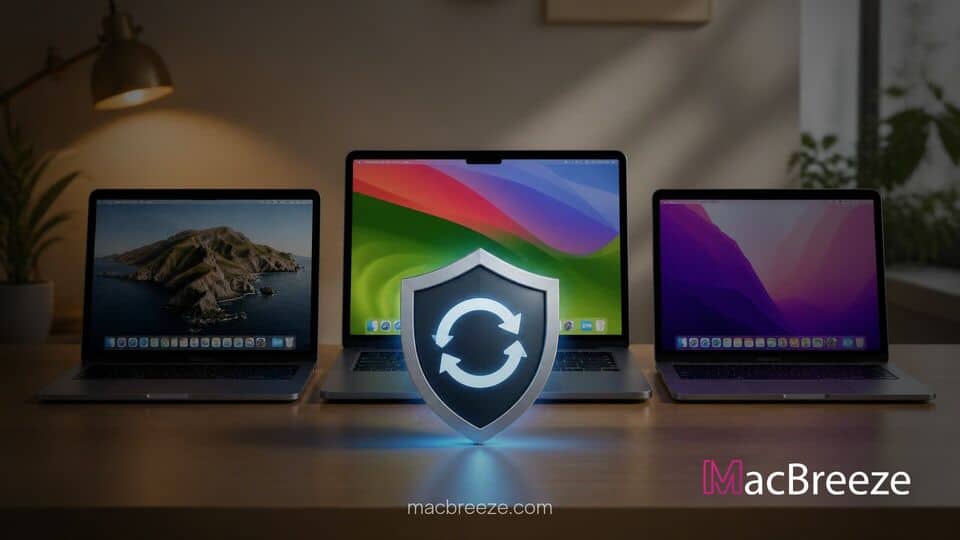
Apple has deployed a coordinated series of security updates across three generations of its desktop operating system, ensuring legacy and current hardware remain protected against newly identified vulnerabilities. The synchronized rollout delivers essential security patches to active Mac installations just as the company prepares to introduce its next major desktop release.
By issuing concurrent fixes for macOS Tahoe, macOS Sequoia, and macOS Sonoma, Apple maintains its commitment to supporting a broad user base regardless of hardware age. This comprehensive patching strategy addresses critical system vulnerabilities while maintaining stability across multiple hardware generations.
apple patching three macos versions simultaneously
Apple patching three macOS versions simultaneously demonstrates a strategic focus on cross-generational security hygiene. By delivering synchronized updates across macOS Tahoe 26.6.1, macOS Sequoia 15.7.9, and macOS Sonoma 14.8.9, the company closed system-level security gaps across all actively supported desktop branches. This unified approach ensures that millions of users running older hardware or intentionally delaying major upgrades remain protected against remote vulnerabilities.
Apple Maintains Three Concurrent macOS Operating System Branches
While Apple routinely pushes users toward its newest operating system releases, the tech giant quietly operates under an effective 'N-2' support model. Under this structure, Apple maintains the current primary release alongside the previous two generations. This policy acknowledges that organizational environments, legacy software dependencies, and older Mac computers require ongoing maintenance long after a newer operating system arrives.
Maintaining three concurrent branches presents a complex engineering challenge, as security engineering teams must backport code fixes across distinct codebases. Despite the architectural differences between releases, Apple regularly aligns these releases so that security patches ship on the exact same calendar day. This practice ensures enterprise IT administrators can deploy updates systematically without leaving older Mac workstations exposed during multi-stage rollouts.
Security Updates for Older macOS Versions Ahead of macOS 27
The timing of these updates comes at a pivotal moment in the Mac software cycle. As Apple releases macOS 27 Golden Gate Release Candidate ahead of launch, engineering focus naturally shifts to the next-generation operating system platform. However, releasing maintenance updates for older software iterations ensures that the existing install base remains stable and secure before public attention moves fully to the new release.
Primary among the issues addressed in recent multi-branch updates was a zero-day credential bypass in the Screen Sharing framework, alongside critical memory corruption vulnerabilities within kernel components. Because many of these security flaws stemmed from shared core libraries across macOS generations, unpatched older versions would have remained susceptible to exploitation had Apple not issued these updates simultaneously.
Strategic Reasons for Multi-Branch macOS Support
The practice of maintaining multi-branch security updates is essential for business and institutional adoption. Enterprise IT departments often operate on strict validation cycles, testing bespoke corporate software against new operating systems for months before authorizing company-wide upgrades. Simultaneous patching allows enterprises to uphold compliance standards without forcing immediate, risky OS upgrades.
Furthermore, hardware support boundaries play a major role in this multi-tiered approach. Certain older Mac models capable of running macOS Sonoma or macOS Sequoia lack support for newer operating systems or advanced platform features. Providing security coverage across three branches prevents these functional devices from becoming security liabilities overnight.
This approach aligns with broader ecosystem efforts across consumer products. For instance, as Apple confirms iOS 27 and iPadOS 27 public release date, older mobile branches frequently receive parallel security revisions. Additionally, hardware-focused updates like when Apple releases firmware update 1.4.90 for 140W USB-C Power Adapter demonstrate how security and stability updates span both software and hardware ecosystems.
What Intel and Apple Silicon Mac Owners Need to Know
For everyday Mac users, the release of simultaneous updates serves as a critical reminder to keep system software up to date. Users running older versions of macOS who see pending software update notifications should apply them promptly, as these builds contain crucial security patches.
Apple Silicon Mac owners benefit from advanced system architecture security features, but underlying operating system code still requires regular security maintenance. Intel-based Mac owners, many of whom remain on earlier macOS versions due to hardware support lifecycles, should prioritize these security updates to guard against network-based vulnerabilities.
Users can check for and apply updates by navigating to System Settings > General > Software Update on their Mac. Setting updates to download and install automatically helps ensure that critical patches are applied without delay.
By issuing coordinated updates across three generations of macOS, Apple ensures that all supported Mac hardware maintains strong security defenses. As the public launch of macOS 27 approaches, this multi-branch patching strategy keeps current and legacy systems protected against emerging threats.