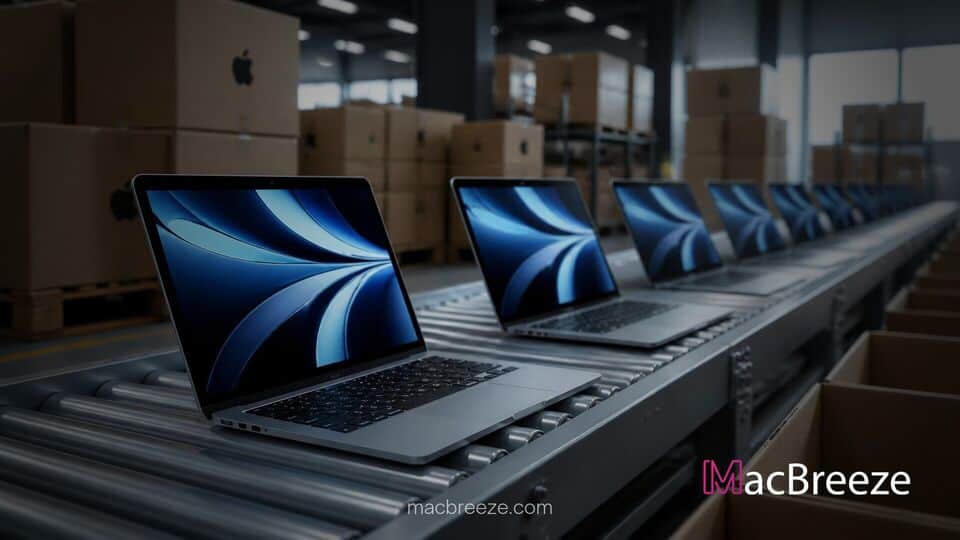
Apple has instructed its component manufacturing and assembly partners to prepare for approximately 16 million MacBook Neo shipments throughout 2027, according to industry sources cited by DigiTimes. The ambitious projection effectively doubles the estimated 8 million units planned for 2026, signaling strong corporate confidence in the entry-level notebook line.
Supply Chain Forecast Points to Doubled MacBook Neo Output
Reports from Taiwan-based supply chain publications indicate that Apple has updated its long-term component procurement targets for the MacBook Neo family. Component suppliers have reportedly received updated rolling forecasts that scale up total production orders for the 2027 calendar year. The target represents one of the fastest production ramps for a new Mac product line in recent years.
Industry observers note that while the jump from 8 million to 16 million units is described as a doubling of output, the initial 2026 volume covered roughly ten months of availability following the device's launch. Nevertheless, expanding to a 16 million baseline indicates that Apple expects sustained, high-volume consumer demand rather than a post-launch slowdown.
The revised manufacturing volume coincides with a period of broader momentum for the Mac hardware ecosystem. In recent financial reporting, Mac revenue surged 24% as Apple reported $114.5 billion in Q4 2026, fueled in large part by expanded adoption of entry-level and mainstream laptops across consumer and education sectors.
DigiTimes Report Details 16 Million Unit Target
According to the DigiTimes report, suppliers across display panels, aluminum enclosures, and logic board components are expanding production capacity to meet the 16 million quota. Assembly partners such as Foxconn and Quanta Computer are expected to maintain elevated output levels to prevent supply bottlenecks.
Apple originally introduced the MacBook Neo as its most accessible macOS laptop, utilizing smartphone-class architecture to lower production costs while maintaining core software compatibility. The initial launch exceeded internal sales expectations, prompting Apple to adjust its factory orders upwards within months of release to keep pace with retail demand.
The success of the platform was highlighted earlier in the year when TechRadar named the Apple MacBook Neo as Laptop of the Year 2026, pointing to its balance of energy efficiency, aluminum design, and competitive price point. The positive market reception provided the baseline for Apple to order higher component volumes for the next hardware generation.
Factors Driving Growth for Apple's Budget Laptop
Several market dynamics are contributing to Apple's aggressive growth projections for 2027. Price adjustments across competing Windows laptops, driven by global memory cost pressures, have made Apple's budget hardware increasingly competitive in the sub-$700 market segment.
Institutional adoption has also played a critical role in expanding total shipment numbers. Educational institutions and government procurement offices have increasingly selected the low-power laptop for large-scale deployments. For example, earlier this year Apple signed a deal to supply 170,000 MacBook Neos to the Philippines DepEd, marking one of the company's largest bulk public sector Mac deployments.
In executive commentary regarding company direction, Apple CEO John Ternus outlined an on-device AI strategy for Macs that relies heavily on spreading Apple Silicon processing power across all price tiers, ensuring entry-level users can run local machine learning features smoothly.
Expanding Education Contracts and First-Time Buyer Demand
Market research data indicates that the MacBook Neo has captured a high percentage of first-time Mac buyers, attracting customers migrating from Windows PCs and Chromebooks. During initial retail earnings discussions, executive leadership highlighted that launch week sales for the line represented a record volume for new buyers entering the Mac ecosystem.
Education contracts represent a stable foundation for the 2027 shipment targets. School districts purchasing devices in multi-year refresh cycles require steady inventory guarantees, leading Apple to secure higher long-term manufacturing allocations from suppliers.
However, supply chain planning has not been without hurdles. Industry-wide component challenges have periodically impacted manufacturing schedules across multiple product categories, as seen when Apple warned Mac and iPad stock would face holiday season shortages due to global memory constraints. Securing double the production capacity for 2027 is intended to mitigate similar availability bottlenecks.
What to Expect from the Next-Generation MacBook Neo
Industry analysts expect the 16 million target to encompass both the ongoing sales of the original model and the introduction of a second-generation hardware refresh planned for the first half of 2027.
While the first-generation model utilized an A18 Pro processor paired with 8GB of unified memory, supply chain leaks suggest the updated hardware will introduce notable performance enhancements to maintain competitiveness.
Rumored A19 Pro Chip and Memory Upgrades for 2027
Reports from technology analysts, including Bloomberg's Mark Gurman, indicate that the second-generation MacBook Neo will transition to an A19 Pro system-on-chip. The new processor is expected to offer higher single-thread and multi-thread performance, narrowing the gap with M-series chips while preserving fanless thermal efficiency.
Additionally, the next-generation laptop is rumored to increase the base unified memory from 8GB to 12GB. This memory upgrade is designed to better support background AI tasks and heavier multitasking workflows without pushing the hardware into premium price categories. Expanded color options are also expected to accompany the hardware refresh to appeal to consumer and student demographics.
Apple's plan to double MacBook Neo output to 16 million units in 2027 underlines a clear strategy to dominate the budget laptop sector. By combining updated internal components with expanded supply chain capacity, the company is positioning its entry-level hardware as a central driver of future Mac volume growth.