Apple retail locations have started using specialized hardware tools capable of running wireless diagnostic checks on iPhones while they remain inside sealed packaging. The system is engineered to help store employees spot return fraud before issuing refunds or taking back devices, ensuring that missing components or empty boxes are identified instantly.
By conducting full system scans without opening factory seals, Apple aims to eliminate inventory waste and simplify the overall return process. Devices that successfully pass the automated checks can be returned straight to saleable store stock, avoiding unnecessary transfers to offsite refurbishment centers.
Retail Deployment of In-Box iPhone Diagnostic Hardware
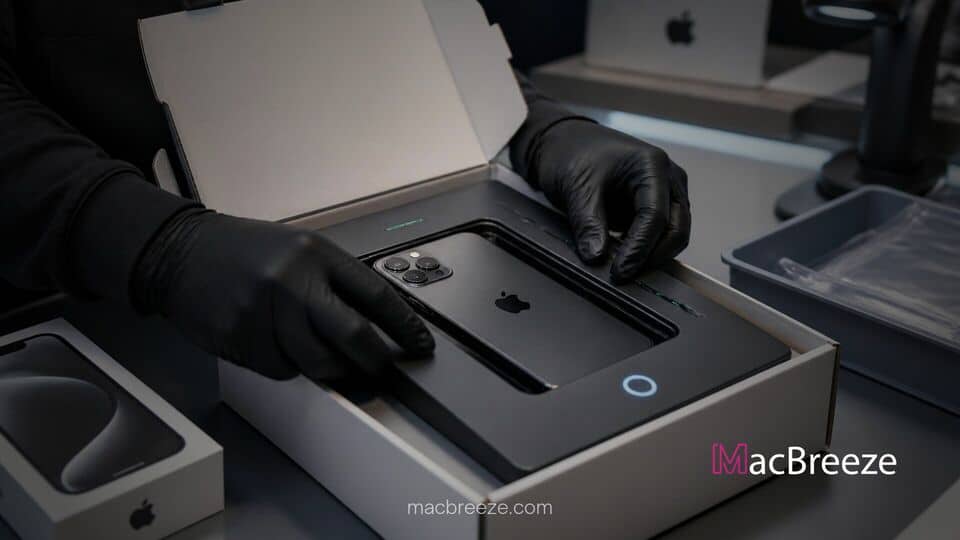
According to reports detailing internal retail updates, Apple has begun deploying a specialized diagnostic tool across its brick-and-mortar storefronts. The proprietary hardware enables retail specialists to place an unopened iPhone retail box onto a diagnostic pad to evaluate the internal handset. The system verifies hardware presence, checks key operational parameters, and confirms that internal modules match expected factory specifications.
Previously, retail team members handling questionable returns had to break open factory packaging to inspect the device and its included accessories manually. While manual inspection stopped fraudulent refunds, opening the box meant the item could no longer be sold as factory-sealed stock. Such units had to be written off or sent back to central facilities for repackaging and testing, adding operational costs and reducing immediately available store inventory.
How Presto-Based Scanning Checks Devices Without Breaking Factory Seals
The newly deployed diagnostic apparatus expands upon Apple's internal Presto framework. Initially designed to update unboxed devices to the latest software release before sale, Presto uses custom wireless pads powered by Mac mini hardware and integrated MagSafe arrays. The pad wakes the sealed iPhone, runs necessary software instructions over high-speed wireless protocols, and powers the phone down without breaking the exterior seal.
The upgraded version of this system shifts focus from software provisioning to comprehensive component verification. When a customer presents a sealed package for return or exchange, store staff place the box directly onto the Presto scanner. The machine communicates with the iPhone inside to query its serial number, check hardware integrity, and verify that critical components such as the logic board, camera modules, and battery are present and functioning properly.
This automated diagnostic routine ensures that the box contains an authentic, untampered iPhone rather than a dummy unit or a stripped chassis. The deployment comes alongside broader retail software enhancements that support initial setup personalization and hardware checks for flagship models. Store employees can also maintain reliable service standard records through automated device logs, matching retail tools seen across Apple Self Service Repair programs.
Addressing the Growing Surge in iPhone Return Fraud
Retail fraud has become a persistent challenge for consumer electronics manufacturers and major retail chains worldwide. Criminal networks and unscrupulous buyers have exploited return policies by purchasing high-value smartphones, carefully extracting internal parts or original accessories, and resealing the boxes using aftermarket wrapping equipment. In extreme cases, the entire phone is replaced with equivalent dead weight or counterfeit shells before being brought back for a full refund.
The stolen original components and pristine handsets are frequently funneled into grey market repair channels or resold online. Because legitimate consumers occasionally return genuine, unopened devices after changing their minds, store representatives faced a difficult dilemma. Opening every box protected against fraud but forced the business to send pristine units into secondary processing streams, while accepting sealed returns without verification exposed inventory to significant financial loss.
Impact on Apple Store Operations and Resaleable Inventory
By implementing the apple in box iphone diagnostic scanner return fraud prevention tool, retail locations gain a fast and reliable way to screen incoming returns. The diagnostic routine takes only a short moment to run at the counter, giving team members immediate confirmation before finalizing cash or credit transactions. If the scanner flags missing internal modules or fails to establish a secure wireless handshake with the device, staff can refuse the return or escalate the case to loss prevention.
For verified returns, the operational benefits are immediate. Genuine unopened stock can be returned to active store inventory right away, keeping popular configurations available for customers. This efficiency helps store teams maintain optimal inventory levels during busy launch windows, such as retail shifts following updates to the primary product line and specialty hardware releases like the iPhone Duo foldable.
Broader Rollout Timeline for Retail Location Diagnostics
Retail deployment of the updated Presto diagnostic scanner began expanding across international markets earlier this month. Initial installations have been observed across primary retail regions, including pilot programs in Australia and select stores in North America. Additional locations are receiving the hardware upgrades as part of scheduled store operations updates.
Industry analysts note that while the technology is currently tailored for direct corporate store locations, Apple could eventually extend similar diagnostic capabilities to authorized service providers, carrier partners, and major retail affiliates. Expanding the system to third-party distribution channels would help address return fraud throughout the entire retail supply chain.
The initiative reflects a broader corporate strategy focused on leveraging proprietary hardware technology to safeguard retail operations, manage store supply chains, and cut down on physical inventory loss. Similar security engineering efforts have been integrated into operating system builds, such as administrative access management in macOS system tools and cryptographic protections that automatically neutralize compromised security certificates across hardware platforms.
As retail fraud techniques continue to evolve, Apple's investment in non-invasive diagnostic scanning offers a practical technological solution to protect store inventory. By combining wireless hardware checks with existing Presto infrastructure, the company protects its supply chain while keeping genuine returns available on store shelves.